
If your team's WhatsApp inbox, CRM, and shared lead queues still depend on whoever happens to be online, you already know the pattern. The good leads don't wait politely, reps duplicate effort, and by the time someone claims ownership, the prospect has often moved on. Lead assignment rules exist to stop that drift, but the main challenge isn't turning them on, it's keeping them accurate, fair, and useful once they're live.
Agencies feel this more sharply than in-house teams because they're juggling client workspaces, multiple inboxes, and different routing logics at the same time. A setup that looks tidy in a sandbox can become messy the moment one client needs territory routing, another needs round robin, and a third wants WhatsApp messages split by campaign source. The operational gap is usually not configuration. It's governance.
Table of Contents
- Why Lead Assignment Rules Matter for Modern Agencies
- How Lead Assignment Rules Actually Work
- Common Routing Strategies and When to Use Each
- Configuring Assignment Rules in WhatsApp Inboxes and CRMs
- Troubleshooting Rules That Work Technically but Fail Operationally
- KPIs to Measure Lead Assignment Success
- Your Action Plan for Better Lead Routing
Why Lead Assignment Rules Matter for Modern Agencies
A hot lead pings a shared WhatsApp inbox at 9 PM. Nobody owns it, the alert gets buried under routine messages, and by morning the prospect has already booked a call elsewhere. That is the operational cost of unstructured routing, and it shows up fast in agencies that manage multiple client workspaces without a real ownership system.
Lead assignment rules turn that chaos into a clear chain of responsibility. In CRM terms, they route records through ordered criteria such as source, geography, or company size, then hand the lead to a user or queue. They are built for inbound lead routing and usually fire at lead creation time, which makes them the foundation for any agency that wants routing to happen without manual triage.
Why agencies feel the pain first
Agencies do not just need speed, they need consistency across clients. One workspace may sell to local SMBs, another to enterprise prospects, and another to community leads coming through WhatsApp broadcasts. Without a routing rule, every lead introduces a manual decision, and every manual decision adds delay, inconsistency, and a higher chance that the wrong person follows up.
That delay matters because lead management is tied to the broader pipeline health conversation. If you want a useful lens on the downstream effect, the trustworthy sales pipeline KPIs resource is a helpful companion for understanding how routing, ownership, and pipeline reporting connect in practice.
Agencies also have a governance problem that most routing guides skip. Once the rule goes live, someone still has to watch for broken paths, stale queues, and client-specific exceptions that never made it into the original setup. White-labeled WhatsApp inboxes make that more visible, because a lead can look active in the inbox while still lacking a named owner inside the CRM.
What changes when routing is structured
Structured assignment does not just move leads faster. It makes ownership visible, which means managers can see who is carrying what, clients can trust that inbound demand is being handled, and reps stop asking who should respond next. It also gives agencies a way to onboard new accounts without immediately adding more manual coordination.
It also gives operators something they usually do not get from raw inbox activity, a way to govern the routing process after launch. The agencies that do this well track whether a lead was assigned correctly, whether it was handled quickly, and whether the assigned owner moved the record forward. That is where trustworthy sales pipeline KPIs become part of the routing conversation instead of a separate reporting exercise.
Practical rule: if a lead can sit in an inbox without a named owner, your routing system is already leaking revenue.
That is why assignment rules matter for modern agencies. They are the backbone of predictable follow-up, clearer accountability, and scalable client operations. When they are designed well and monitored after launch, the inbox feels smaller even when volume grows.
How Lead Assignment Rules Actually Work
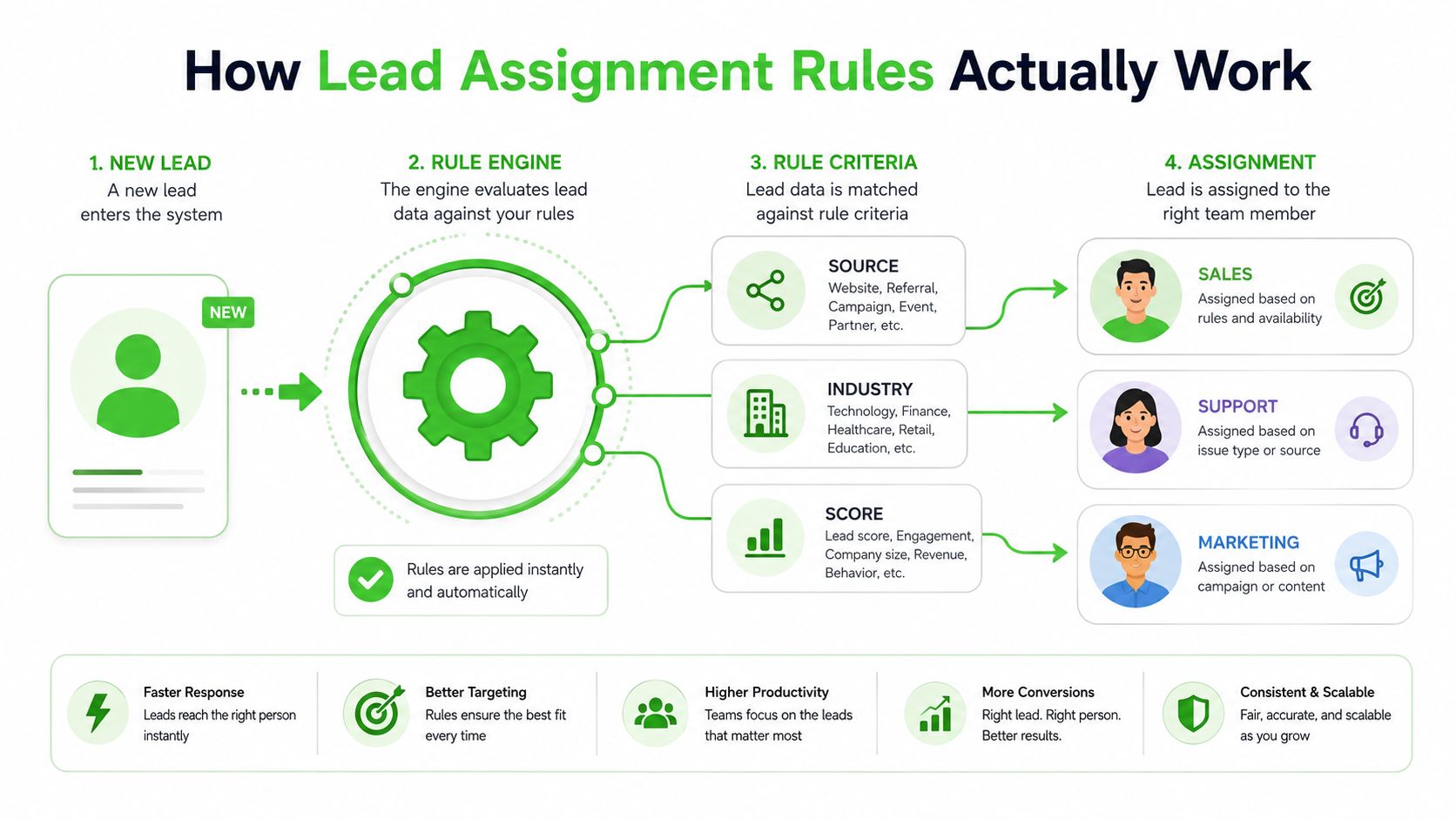
A lead comes in, the rule engine checks the record against the criteria you set, and the first matching rule routes it to a user or queue. That sounds simple, but the operational detail matters. In production, the system is only as good as the fields you trust, the order you define, and the exceptions you remember to handle. For agencies running white-labeled WhatsApp inboxes, that difference shows up fast, because a conversation can look active in the inbox while the CRM still has no clear owner.
Ordered logic matters more than teams expect
Routing depends on sort order, not just on how clean the conditions look. Salesforce-style rules process entries in sequence, so the first match wins, and a rule can include up to 25 filter criteria. If a broad rule sits above a narrower one, the broader rule takes the lead and the specific case never gets a chance to run.
That is why rule order is not a cosmetic detail. Place specific rules first, keep fallback rules last, and audit the list anytime a new source, region, or offer goes live. If “enterprise demo request” and “all web leads” both match, the one higher in the order decides ownership. That is where a lot of routing systems break after launch, because the logic still works technically while the business intent has already drifted.
Round robin and load balancing solve different problems
The two main distribution models handle different operating realities. Round robin assigns the next lead based on when a seller was last assigned a record. Load balancing looks at capacity, meaning how many active records a rep is already handling, according to Microsoft Dynamics 365 documentation (Microsoft lead distributions and assignment rules).
That difference changes how teams should set up routing. Round robin is about rotation and fairness, while load balancing is about workload awareness. If rep availability is fairly even, round robin stays easy to explain and audit. If workloads swing during the day, load balancing does a better job of matching assignment to real bandwidth instead of assuming every rep is equally free.
The best routing logic matches the team's operating model, not the admin screen layout.
Salesforce-oriented setups often use deterministic formulas to keep routing auditable. One common pattern is a remainder-based sequence for a 5-rep and 12-lead scenario. Another uses a formula like MOD(VALUE(Lead_Number), 3) + 1 for a 3-rep setup. Those examples matter because they show how lead assignment rules replaced manual handoffs with repeatable automation in major CRM systems, and why the same idea now shows up in WhatsApp-native inboxes and other shared workspaces.
For teams comparing inbox automation patterns, Halo AI's assignment automation guide is a useful reference point for how assignment logic translates into day-to-day operations.
The broader point
Assignment is a processing layer, not just a destination. Oracle's CRM framing includes routing for rank, sales resource allocation, scoring, and qualification, so mature teams treat the rule set as part of the operating system around the pipeline. Once that is clear, the essential question becomes which criteria deserve to drive ownership, how exceptions are handled, and whether the routing logic is still healthy after the team starts using it.
Common Routing Strategies and When to Use Each
No single routing model works for every agency account. The right choice depends on the client's sales motion, rep availability, and how much specialization the team needs. The mistake I see most often is people forcing one strategy to do the job of three.
The main strategies side by side
| Strategy | Best For | Common Failure Mode |
|---|---|---|
| Round robin | Small or mid-sized teams with similar rep capacity | Uneven response quality when some reps are overloaded |
| Load balancing | Teams with fluctuating workloads or mixed rep availability | Can overfit to capacity and ignore specialization |
| Territory-based routing | Geographic accounts with clear regions or market ownership | Conflicts when territory rules overlap or markets expand |
| Source-based routing | Channel-specific specialists handling WhatsApp, webinars, paid media, or referrals | Becomes brittle when source tags are inconsistent |
| Skill-based routing | Complex sales motions that need language, product, or vertical expertise | Routing logic gets hard to maintain as exceptions grow |
Where each one wins
Round robin works when fairness matters more than specialization. It's easy to understand, easy to explain to clients, and easy to audit. The failure mode is subtle, though. A fair split on paper can still create unfair outcomes if one rep is buried under active deals and another is underutilized.
Load balancing is better when capacity varies day to day. It's the right move for agencies with shared SDR pods or teams that cover multiple clients at once. The risk is that capacity-only logic can ignore fit. A rep with room in their queue isn't automatically the right rep for a technical, high-intent lead.
Territory-based routing fits geographic coverage, especially when local knowledge or time-zone alignment is part of the sales motion. It breaks when territories become too rigid, because growth tends to create edge cases faster than routing rules can absorb them.
Source-based routing is valuable when one channel deserves a different handler. WhatsApp leads, paid search leads, and referral leads often need different follow-up playbooks. The failure mode is dirty source data. If tags aren't consistent, the rule engine starts making bad decisions correctly.
Skill-based routing is the strongest option for complex accounts where expertise really changes outcomes. It's also the easiest to overcomplicate. Every added exception makes the logic harder to maintain, especially if the agency hands the system off between teams.
Hybrid routing is usually the real answer
Most production setups end up layered. A practical pattern is territory first, then round robin inside each territory, then a fallback queue if no one is available. That structure respects both ownership and workload, which is why newer routing guidance increasingly favors fairness rules, capacity thresholds, and nested flows over brittle one-rule-fits-all logic (NC Squared on lead assignment in Salesforce).
Configuring Assignment Rules in WhatsApp Inboxes and CRMs
WhatsApp-native routing changes the job a little. You are not only assigning a CRM record, you are deciding who owns the conversation thread, who sees the context, and whether the handoff feels smooth to the prospect. In agency setups, that usually means a shared inbox, tags, and a fallback path that does not depend on someone remembering to check the right channel.
Start with the trigger, not the team chart
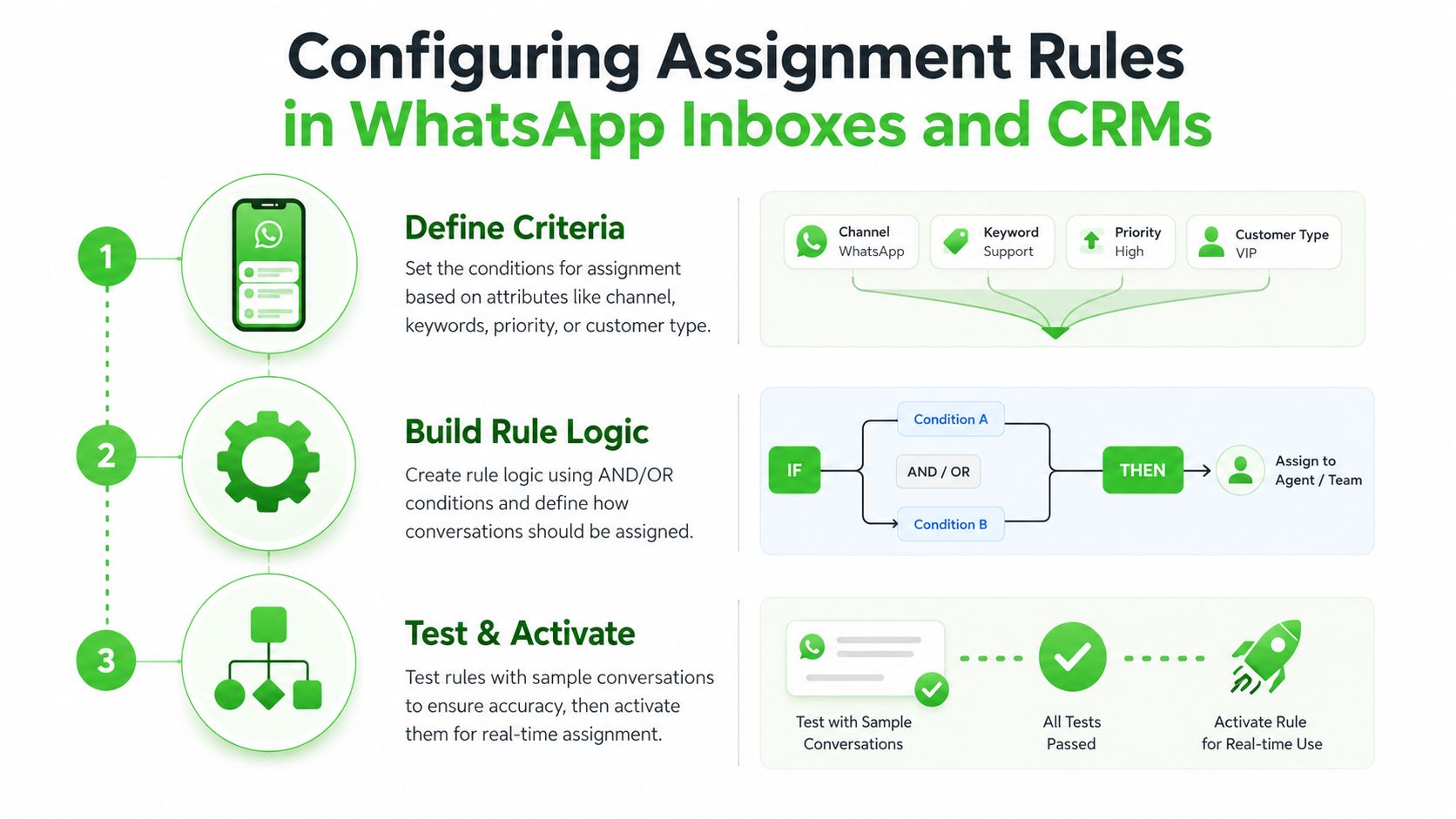
In a WhatsApp inbox, the first decision is what creates an assignable event. A message arriving through a QR-code-connected number, a new contact tagged from a campaign, or a lead entering from a smart link can all act as triggers. Once that trigger is defined, assignment becomes a direct if-this-then-that path instead of a debate about org charts.
A campaign source tag can route inbound WhatsApp messages to the rep or pod responsible for that channel. If the tag says “paid social,” the lead lands in the paid media follow-up queue. If the tag says “referral,” the lead can bypass general intake and go straight to the closer who handles warm conversations.
Mirror the same logic in the CRM
The CRM side should match the same structure. Build rule entries with filter criteria, put the most specific entries first, and keep a fallback queue at the bottom. Salesforce-style rule architecture evaluates entries in order, so the first matching condition decides assignment and the rest are ignored (Calendly's Salesforce assignment guide).
A 3-rep round robin setup often uses deterministic logic like MOD(VALUE(Lead_Number), 3) + 1 in Salesforce-oriented work. That does not mean every agency should build formulas from scratch. It does show the kind of reproducible logic that makes routing auditable when a manager asks why a lead went to one rep instead of another.
A practical WhatsApp setup pattern
A working agency setup usually has three layers.
- Source tagging: Capture campaign, client, or channel origin before the lead hits the queue.
- Primary routing: Assign to the correct rep, team, or client workspace based on the tag.
- Fallback handling: Send unrecognized or unclaimed conversations to a review queue.
Practical rule: if the inbox cannot route it cleanly, route it visibly. Hidden failures are worse than explicit queues.
For teams that want a parallel view of how assignment automation is handled in support-style workflows, Halo AI's assignment automation guide shows how the same underlying logic applies when conversations, not just leads, need ownership.
The biggest implementation mistake is treating WhatsApp as a separate universe from CRM routing. It is not. The inbox is another front door, and the same assignment discipline has to apply there if you want clean reporting and fewer manual handoffs.
Troubleshooting Rules That Work Technically but Fail Operationally
The ugliest routing failures are the ones nobody notices at first. The rule fires. The record gets assigned. The system looks healthy. Then a manager realizes one rep is drowning, another barely has anything to do, and the queue is creating churn.
What usually breaks first
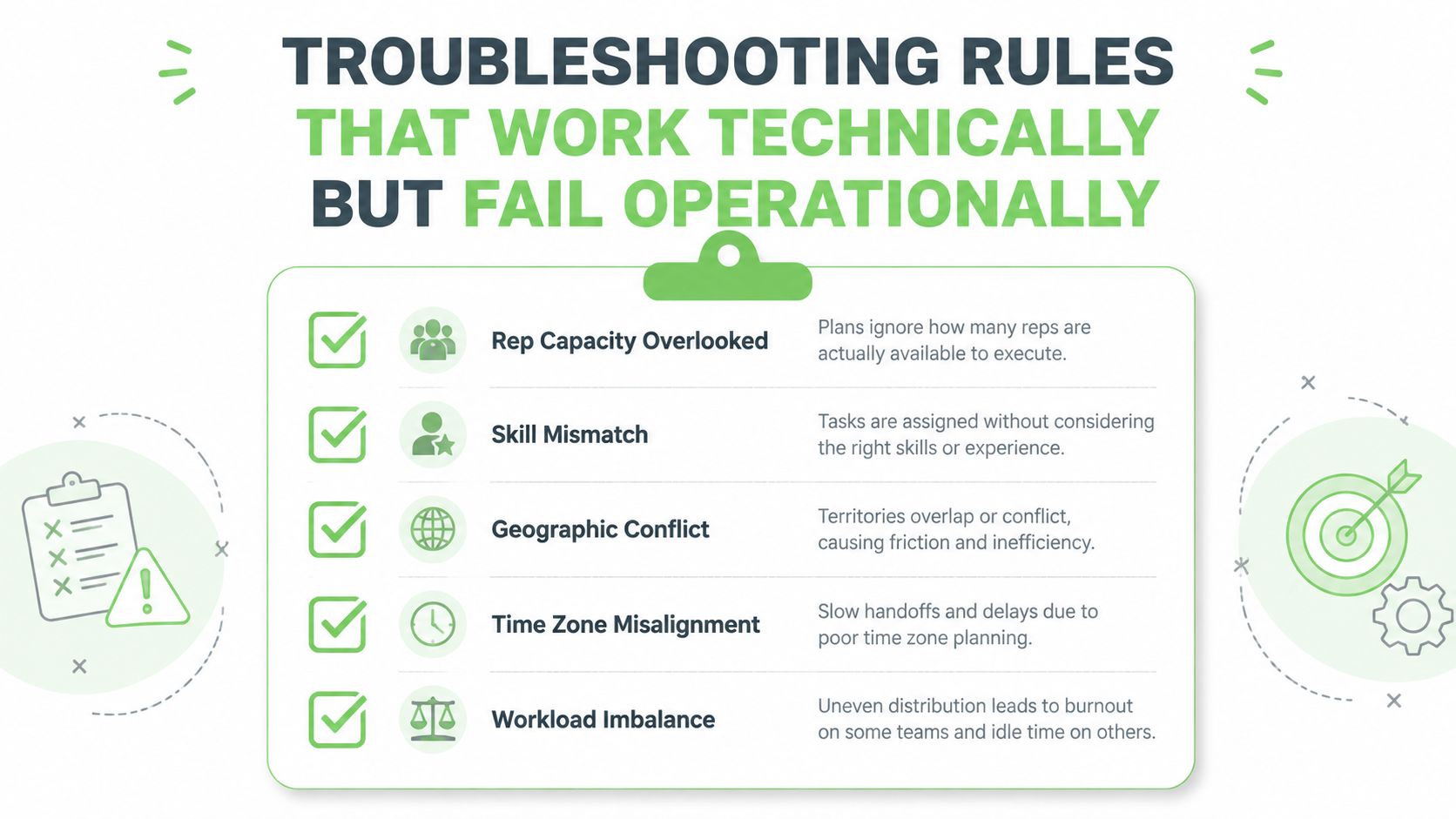
The first failure mode is rep capacity. A rule can technically assign the lead to the right person while still dumping work onto someone who's already overloaded. The second is skill mismatch, where the logic routes a lead correctly by segment but incorrectly by expertise. The lead is owned, but not well owned.
Geographic conflict and time-zone misalignment show up often in agency setups that serve multiple regions. A rep may be the correct regional owner but the wrong person to receive a lead at that hour. That's why availability-aware routing matters more than most static rule sets admit.
Audit the logs, not just the outcomes
When routing feels off, start with assignment logs. Look for orphaned leads, repeated reassignment, and any pattern that suggests leads are passing through a queue longer than expected. If the lead is assigned but not contacted, the rule may be technically correct and operationally useless.
Independent routing guidance recommends tracking assignment accuracy, response time, conversion rate by routing model, and fallback rate, and reviewing routing rules at least quarterly or whenever team structure changes (4Thought Marketing on B2B lead routing strategy). That cadence matters because routing logic drifts as soon as roles, territories, or campaign sources change.
Governance beats heroic cleanup
Rules shouldn't sit untouched after launch. A quarterly review is the minimum if your team changes often, and you should also review whenever onboarding, seasonal volume, or team structure shifts. That's the difference between a routing system and a routing habit.
Operational truth: a rule that worked last quarter can still be the reason this quarter's leads are slow.
The agencies that scale cleanly don't just install assignment logic and walk away. They keep a short feedback loop between frontline performance, rule changes, and ownership hygiene. If the inbox is noisy, the answer is rarely “add another rule.” It's usually “fix the rule you already have, and then watch it.”
KPIs to Measure Lead Assignment Success
A routing setup is only as good as the numbers it moves. If you don't measure assignment health, you end up congratulating yourself for technical correctness while the sales team absorbs the cost.
The metrics that matter most
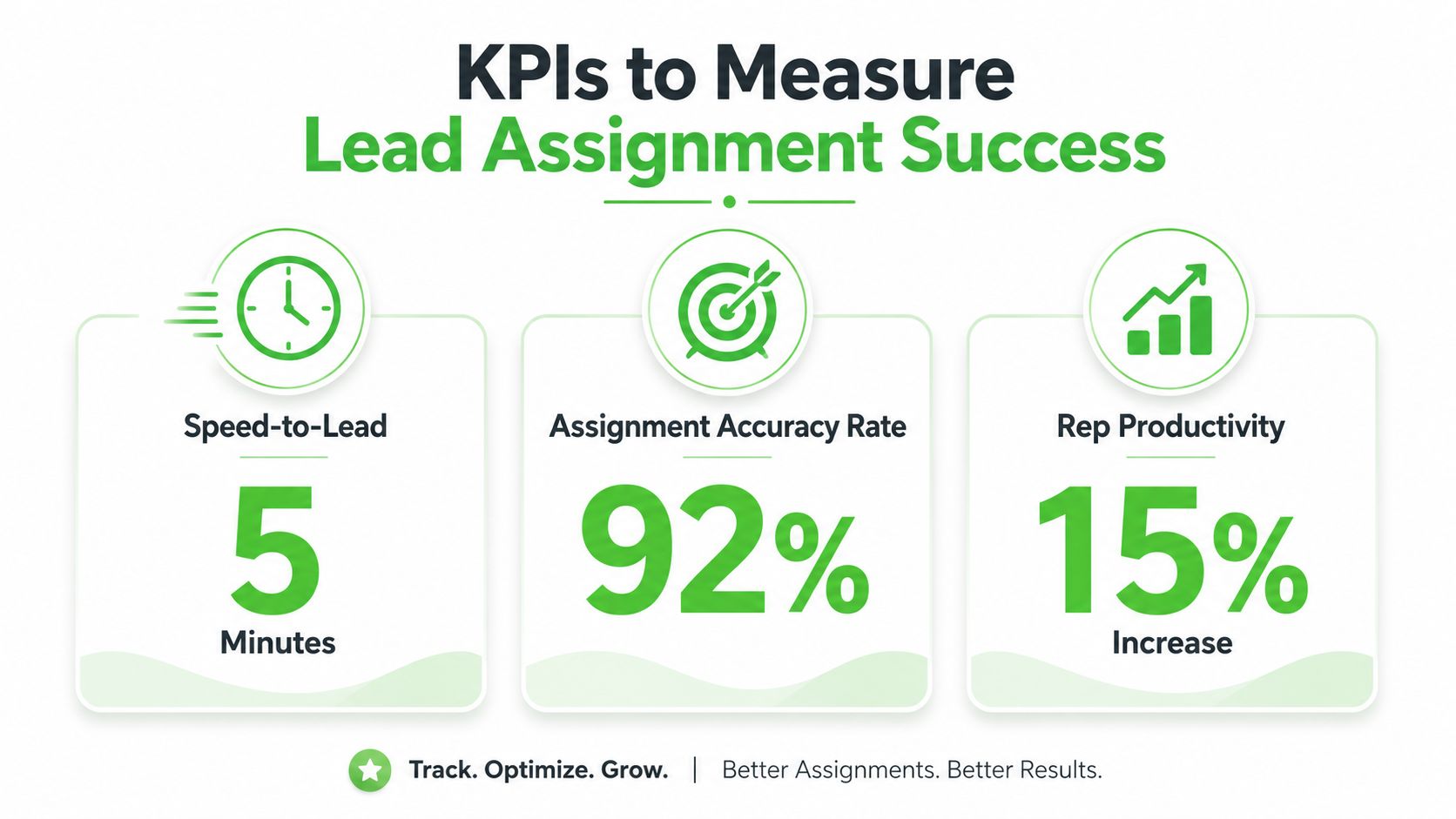
Start with speed-to-lead. This is the clearest signal that routing is helping or hurting conversion chances. You don't need a fancy model to know that a lead waiting in a queue is losing momentum.
Next, track assignment accuracy. That means the lead reached the correct rep, queue, or workspace according to your rules. If accuracy slips, the issue is usually rule order, dirty data, or a missing fallback path.
Add fairness and failure tracking
A healthy routing system also shows balanced rep workload. If one person keeps getting a disproportionate amount of active work, the assignment logic is creating morale and performance distortion even if it looks balanced in a spreadsheet.
Then watch fallback queue overflow. That tells you whether the system is relying too much on the safety net. A fallback queue is necessary, but if it becomes the default destination, the routing logic is too brittle.
If the fallback queue is busy every day, the real rule set is failing upstream.
Use review cadences, not one-time reports
A dashboard is useful only if someone is responsible for reading it. I'd treat routing KPIs as an operations check, not a quarterly vanity report. Compare response behavior by rep, look for uneven handoff patterns, and note whether one routing model consistently underperforms another.
The broader point is simple. Good routing is measured by what it prevents, not just by what it assigns. It should reduce manual reassignment, surface ownership clearly, and keep the inbox from becoming a guessing game.
Your Action Plan for Better Lead Routing
Start by auditing rule order. Make sure the most specific criteria are above the broad ones, and confirm that every path has a fallback queue or review destination. That alone fixes a surprising amount of operational friction.
Then test the live behavior, not just the setup screen. Check whether the right rep gets the right lead, whether assignments happen cleanly in WhatsApp and CRM, and whether the workload feels even across the team. After that, move to capacity-aware logic where needed, because fairness by rotation isn't enough for every agency.
Finally, set a standing review cadence. Revisit routing whenever clients are added, teams shift, or volume changes. Lead assignment rules aren't a one-time admin task, they're a living operating system for ownership.
If you want a cleaner way to launch and resell WhatsApp workspaces without building routing chaos into every client account, visit Double My Leads. It gives agencies a white-labeled WhatsApp platform with assignments, tags, and real-time inbox workflows that fit the routing discipline covered here. If you're ready to turn inbox ownership into a repeatable system, that's the place to start.


