
You're probably dealing with the same problem most plumbers hit in a busy month and a slow one. The phone rings when someone's leak turns urgent, then goes quiet when a competitor's page looks more active, more local, and more trustworthy online. Social media isn't a vanity project for that gap, it's a way to stay visible when a homeowner is comparing options fast and wants proof that you're real, responsive, and worth calling.
Table of Contents
- Understanding the Role of Social Media Marketing for Plumbers
- Choosing Platforms That Deliver Local Leads
- Building Local-Focused Content That Converts
- Creating Your Content Calendar and Templates
- Running Targeted Ads and Capturing Leads via WhatsApp
- Measuring ROI and Scaling Your Social Media Efforts
- Conclusion and Pro Tips for Plumbers
Understanding the Role of Social Media Marketing for Plumbers
A plumber usually feels the pain of slow marketing in the simplest way possible, an empty schedule. Word of mouth dries up, directory leads get inconsistent, and the jobs that do come in are often the ones you're already overextended to handle. Social media fills a different role, it keeps your business in front of homeowners before they're in crisis, so you're not starting every lead from zero trust.
That matters because buying decisions in home services are trust-heavy and often urgent. 93% of users check online reviews before choosing a service as documented in ServiceTitan's plumbing social media guide, so your posts aren't just content, they're public proof. A Facebook page that reposts reviews, an Instagram feed with real jobs, or short clips showing your crew on-site can do part of the selling before anyone calls.
Practical rule: if a post doesn't help a homeowner feel safer about contacting you, it's probably not the right post.
What social media is actually doing for a plumbing business
It's not replacing referrals or local SEO. It's giving those channels more surface area and making your brand easier to recognize when someone sees your name again in a feed, a local group, or a retargeting ad. In practice, the strongest accounts lean on proof, proximity, and responsiveness rather than polished branding fluff.
For smaller teams, that means the content strategy should be built around what a homeowner needs to see, not what looks clever. That usually means visible repairs, honest testimonials, and clear signs that you serve their area. When social media is treated this way, it becomes a conversion layer, not just a posting habit.
Choosing Platforms That Deliver Local Leads
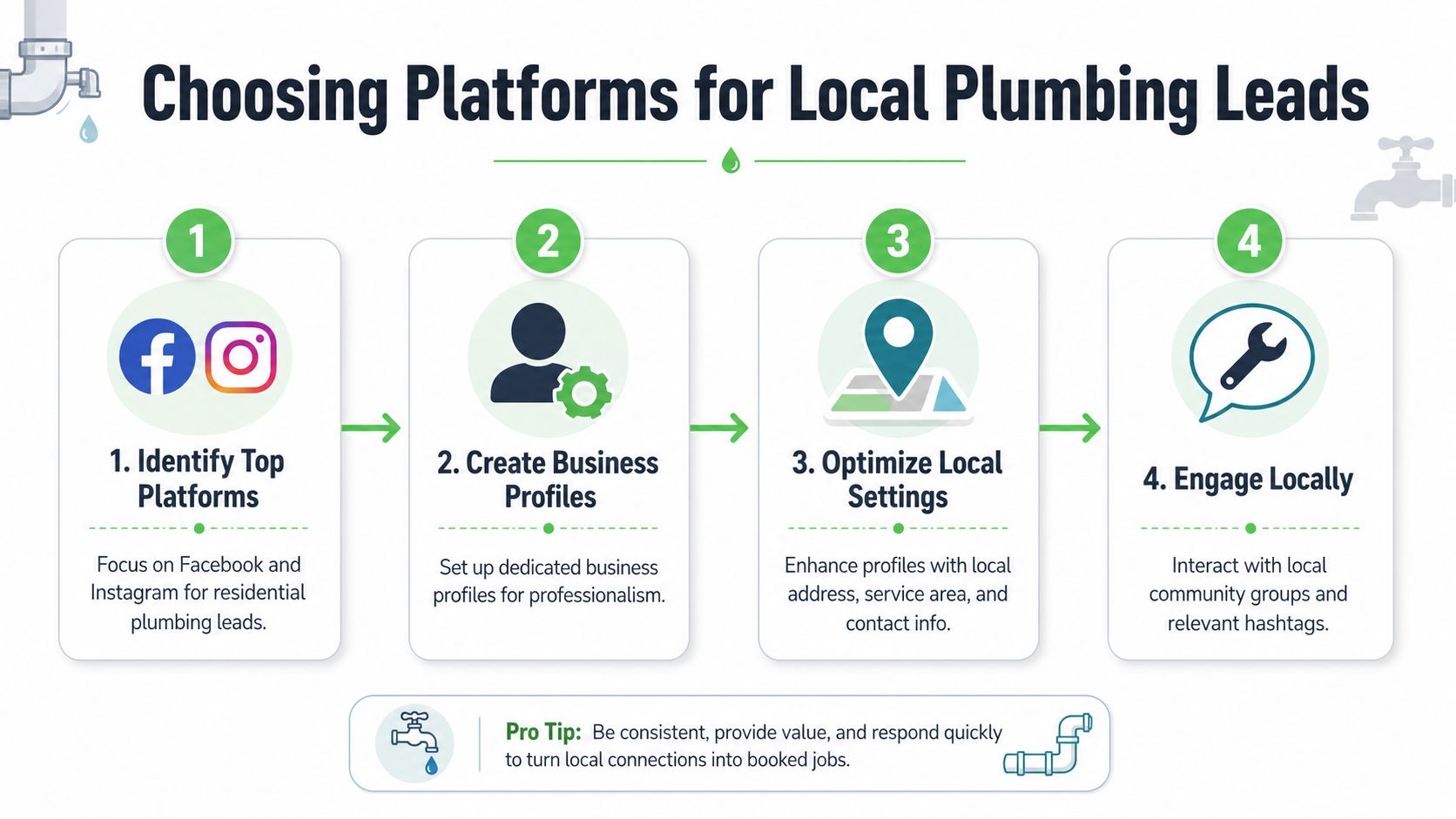
Facebook and Instagram are the safest first bets for residential plumbing work because they match how local homeowners browse, compare, and message businesses. Industry guidance also recommends a modest paid test budget of $5–$20 per day on those platforms for plumbers prioritizing local lead generation, which is a useful signal that this channel has moved beyond casual branding. You're not trying to “be everywhere,” you're trying to reach the people most likely to book in your service area.
Set up accounts like a local service business, not a hobby page
Use business profiles, not personal ones. Fill in the service area, phone number, hours, and booking path, then make sure the profile image and cover art look like a real company a homeowner could trust in an emergency. The goal is to reduce hesitation, not to win design awards.
Local settings matter more than most plumbers realize. Zip code targeting, homeowner filters, and service-radius controls keep your spend from drifting into the wrong audience. If your ads are reaching renters outside your coverage area, you're paying for attention that can't turn into booked work.
Use local targeting to make the budget behave
A small budget can still work if it's precise. Facebook and Instagram let you narrow by geography and audience signals, which is why these platforms are such a practical fit for plumbing leads. A local ad doesn't need broad reach, it needs the right reach.
Start with one service area, one offer, and one job type. Broad targeting makes it harder to see what's actually working.
For account setup, think in this order: business profile, service area, offer, then ad spend. Once that structure is in place, you can test one neighborhood or ZIP at a time instead of guessing across your whole market. That's a far cleaner way to learn which jobs and messages pull the best response.
Building Local-Focused Content That Converts
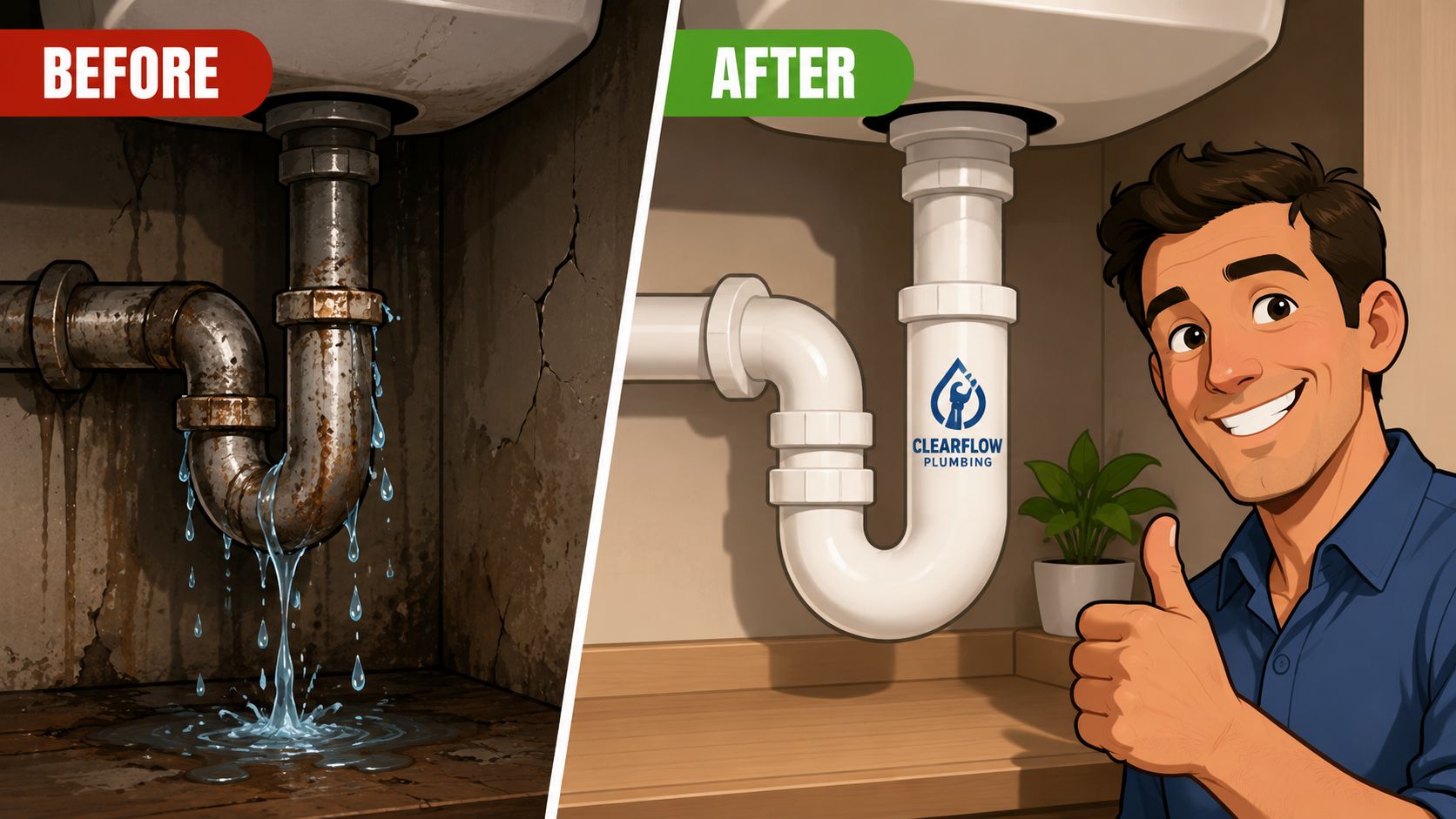
The content that works best for plumbers usually looks ordinary to a marketer and reassuring to a homeowner. A clean before-and-after shot, a short repair clip, or a review repost gives people something concrete to evaluate. That matters because 93% of users check online reviews before choosing a service according to ServiceTitan's plumbing marketing guidance, so social proof isn't decoration, it's part of the buying process.
Post proof of work, not generic promotion
Before-and-after photos work because they show the result without forcing the caption to do all the selling. A testimonial clip works because it turns a satisfied customer into a public trust signal. A quick fix video works because it shows competence before the homeowner is ready to buy.
If the job isn't visually dramatic, don't force it. A simple angle on a valve replacement, a leak detection setup, or a clean shot of a finished install can still carry weight if the caption is specific. A major bottleneck is often not the job itself, it's training techs to capture usable footage consistently, especially on routine calls as noted in this plumber-focused content guidance.
Keep captions local and immediate
Write like you're talking to someone in your service area, not to a national audience. Mention the neighborhood, the street type, the kind of home, or the common local issue if it's relevant. That makes the post feel native to the community rather than recycled from a template.
A simple structure works well:
- Headline: “Clogged kitchen drain in [Neighborhood]”
- Lead sentence: “Our crew cleared this line and checked for the buildup that kept bringing the problem back.”
- Trust cue: “The homeowner wanted a clean fix and a fast turnaround.”
- Call to action: “Message us if your sink is draining slowly.”
If you need a practical library for repeatable short-form education, generating how-to videos is a useful reference point for turning routine service knowledge into content without overproducing it. The key is keeping the tone useful, local, and unscripted enough to feel believable.
Creating Your Content Calendar and Templates
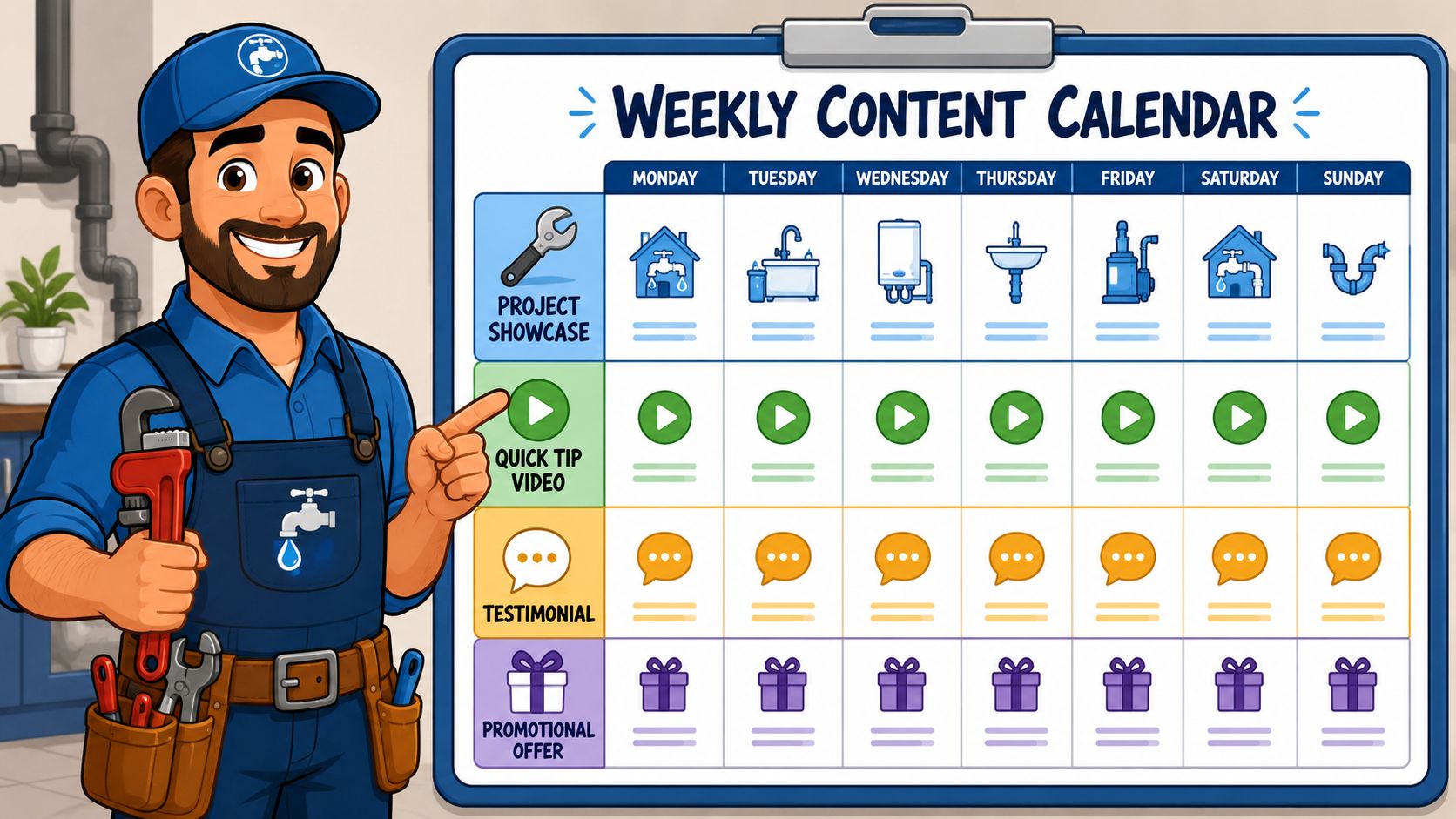
A calendar solves the problem, which is inconsistency. Most plumbing pages don't fail because the business is bad, they fail because posting happens only when someone has time and inspiration. A weekly rhythm gives you something repeatable, and a repeatable system is what keeps lead flow from stalling when the shop gets busy.
A practical benchmark is to publish 3–4 posts per week on Facebook and Instagram, then boost the strongest organic posts as local lead ads targeted to homeowners in exact service ZIP codes as recommended in this plumbing social media playbook. That schedule is enough to stay visible without turning the office into a content factory. It also gives you enough data to see which themes pull comments, messages, and quote requests.
Build the weekly mix around repeatable post types
Use a simple rotation so the feed doesn't feel repetitive:
- Project showcase: before-and-after repair or replacement
- Quick tip: one useful maintenance insight from the field
- Testimonial highlight: review screenshot or customer quote graphic
- Offer post: seasonal service reminder or limited-time checkup
The point isn't to make every post sound different. The point is to make them easy to produce and easy to recognize. When the format stays consistent, the team can focus on the details that matter, like the job photo, the caption, and the local angle.
Batch content on slow days
Slow afternoons are where the calendar gets built. Save photos into folders by job type, write captions in batches, and keep a running list of common customer questions. That keeps your feed from collapsing when the team gets pulled into emergency calls.
A lot of teams also underestimate how much easier batching gets once the office has one naming system for files and one person who approves the post. That doesn't need to be elaborate. It just needs to be consistent enough that the same work doesn't get recreated every week.
Running Targeted Ads and Capturing Leads via WhatsApp
Organic posts help, but they won't fill every opening on the board. Paid campaigns work best when the ad is narrow, local, and tied to a fast response path. For plumbers, that means a Facebook or Instagram lead ad, a service-area filter, and a direct messaging flow that moves the prospect from curiosity to contact without friction.
Build the ad around one job and one action
Use one clear offer per ad. A clogged drain promotion, a water heater checkup, or an emergency leak response message is easier to understand than a generic “we do it all” post. The creative should look like a real service call, not a stock graphic that could belong to any trade.
A high-conversion workflow also uses retargeting and lookalike audiences. Retarget people who visited the website but didn't book, and upload customer lists to build similar audiences, then link booking software directly from social profiles as described in this plumbing ad strategy. That keeps your spend focused on people who already resemble your best customers.
Use WhatsApp to capture and qualify faster
A white-label WhatsApp capture flow is useful when you want leads to answer quickly without going back and forth in a clogged inbox. After the click, the first message should acknowledge the request, ask for the ZIP code, and offer a ballpark next step. That short sequence does two things at once, it speeds up response and helps you screen for service-area fit.
The qualification step matters more than many owners expect. A fast reply isn't enough if the lead is outside your radius or needs a service you don't want to sell. Ask for the ZIP code early, then move the conversation toward booking, not open-ended chatting.
Keep the first response short. Every extra question before the ZIP code tends to slow down the handoff.
Measuring ROI and Scaling Your Social Media Efforts
What gets measured gets improved, but plumbing teams often measure the wrong thing. Likes and follower counts are fine for a vanity check, yet they don't tell you whether the work is producing booked jobs. The cleaner view is simple, track what the ad cost, what the lead did next, and how many of those conversations turned into real work.
Focus on booking outcomes, not surface engagement
The core KPIs are cost per lead, reply rate, and booking conversion. UTM tags help connect a post or ad to the website session, and a messaging dashboard helps show whether the lead responded. If you're only looking at reach, you'll miss the campaigns that create revenue.
Use a short reporting routine each week:
- Check lead source: which post, ad, or message thread produced the inquiry
- Check response speed: did the office reply quickly enough to keep the lead warm
- Check booking status: did the lead become an estimate, a call, or a scheduled job
- Check creative performance: which photo, caption, or offer produced the best response
Scale only what you can repeat
If a post or ad is working, don't rush to reinvent it. Duplicate the message for a new ZIP code, then test a different image or hook before increasing spend again. That's safer than throwing more money at a campaign you can't explain.
A frequently missed issue is content capture. Routine jobs often get ignored because they don't feel “post-worthy,” but if the crew doesn't collect consistent footage, the pipeline of content dries up when you're trying to scale as highlighted in the plumber content workflow guidance. The scaling problem isn't always ad performance, it's often the lack of usable raw material.
Don't let the data get noisy
Mixing too many offers, too many audiences, and too many platforms makes the numbers hard to trust. Keep the reporting structure simple enough that one person can explain why a lead came in and whether it was worth the spend. That clarity is what lets you raise budgets without guessing.
Conclusion and Pro Tips for Plumbers
Social media works best for plumbers when it behaves like local sales support, not broadcasting. Start with Facebook and Instagram, keep the profiles professional, post proof of work, and use geo-targeted ads to reach the right homeowners. The strongest accounts stay simple enough to run every week, which matters more than chasing trends.
A practical first 30, 60, and 90-day path looks like this. In the first 30 days, clean up the profiles, collect photos from recent jobs, and set up the first calendar. In the next 60 days, post consistently, boost the strongest content, and tighten the local targeting. By 90 days, you should know which job types, captions, and service areas deserve more spend.
The biggest mistakes are easy to spot. Inconsistent posting weakens trust. Slow replies lose leads. Generic content makes the page forgettable. A crew that learns to capture routine jobs, a marketer who keeps the calendar moving, and an owner who watches the booked-job data will usually outrun competitors who only post when they remember.
A CTA for Double My Leads.


