
You're probably dealing with the same problem most agencies and SaaS resellers hit once WhatsApp starts working. Leads come in, broadcasts go out, replies pile up, and then performance flattens because everyone gets the same message. Your trial users get reseller offers. Your power users get beginner education. Your high-intent accounts sit in the same pipeline as people who only scanned a QR code once.
That's expensive. On a personal channel like WhatsApp, generic messaging doesn't just underperform. It trains people to ignore you.
The fix is straightforward. Start dividing your customer base into groups based on how they behave, what they need, what they're worth, and where they are in the customer journey. Then match tags, automations, broadcasts, and support workflows to each segment. This is the part most teams skip. They talk about segmentation in strategy decks, then run one-size-fits-all campaigns inside the CRM.
Don't do that. Build customer segmentation strategies that your operators can use inside live WhatsApp campaigns. If you're running a platform like Double My Leads, that means clear tags, simple routing rules, segment-specific templates, and KPIs tied to revenue, activation, and retention.
Modern segmentation guidance also treats this as an ongoing process, not a one-time workshop. Teams are advised to use collected data, define segment boundaries clearly, target each segment differently, and revisit segments on a regular cadence using inputs like transaction history, web analytics, surveys, social interactions, and email performance, as outlined in Amplitude's guidance on customer segmentation strategy.
Table of Contents
- 1. Behavioral Segmentation
- 2. Firmographic Segmentation
- 3. Psychographic Segmentation
- 4. Geographic Segmentation
- 5. Demographic Segmentation
- 6. Value-Based Segmentation
- 7. Needs-Based / Use Case Segmentation
- 8. Technographic Segmentation
- 9. Purchase Behavior Segmentation
- 10. Customer Journey Stage Segmentation
- 10-Point Customer Segmentation Comparison
- From Segments to Scale Your Action Plan
1. Behavioral Segmentation
Behavioral segmentation is where most WhatsApp businesses should start. It uses what people do, not what they said on a form months ago. For agencies and SaaS resellers, that means segmenting by message volume, broadcast usage, automation activity, API adoption, team logins, and feature depth.
Put your event tracking in place on day one. If a user connected a number via QR code but never sent a broadcast, that account needs activation help. If an agency set up automations, synced CRM records, and started assigning inbox conversations, that account is already signaling expansion potential.
Right near the top of your dashboard, make the user types visible:
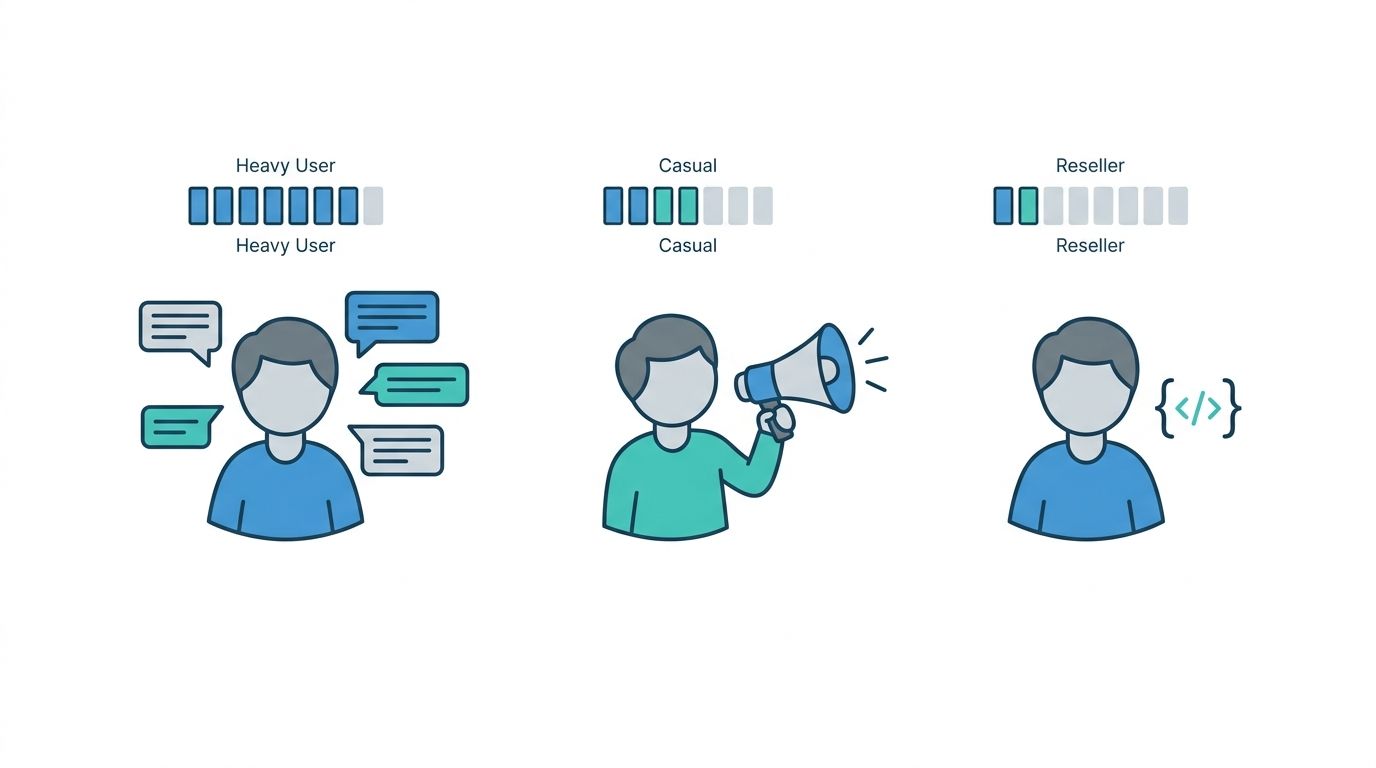
Track Actions Before You Write Campaigns
Use tags that reflect milestones and product habits. Good examples include connected-number, first-broadcast, scheduled-campaign-user, api-enabled, community-broadcaster, inactive-7-days, and reseller-workspace-owner.
A data-driven stack usually starts with CRM data, web analytics, and transaction history, then adds machine learning methods like K-means clustering, random forests, and decision trees to identify behavioral groups and predict next-best action, according to Rightpoint's overview of customer segmentation models. You don't need to start with advanced modeling, but you do need clean behavior events.
Practical rule: If a segment can't trigger a different WhatsApp message, route, or offer, it's not useful yet.
WhatsApp Plays That Actually Fit Behavior
A heavy sender should never receive the same campaign as a hesitant new user. Send your advanced segment a WhatsApp message about white-label workspaces, custom branding, Cloud API, or REST API workflows. Send your low-usage segment a simple sequence: connect number, import contacts, send first campaign, review replies.
For example:
- Heavy broadcaster: Invite them to a reseller upgrade webinar and offer a template pack for Community Announcement Groups.
- API adopter: Send implementation docs, webhook examples, and a direct line to technical support.
- No-schedule user: Trigger a WhatsApp walkthrough showing how to schedule broadcasts for launches and follow-ups.
If you want a quick visual refresher on how customer groups are usually structured, this short video is useful:
2. Firmographic Segmentation
Firmographic segmentation matters because agencies, SaaS platforms, creators, and consultants buy the same WhatsApp tool for different reasons. Company structure changes onboarding, sales cycle, support expectations, and expansion path.
Start with business model, team size, client delivery model, and whether they're buying for internal use or resale. That alone will clean up a lot of bad messaging. A solo creator doesn't want a pitch about multi-client workspace management. A GHL-focused agency does.
Segment by Business Model First
Use signup questions that are impossible to misread:
- Primary business type: Agency, SaaS, creator, coach, publisher, internal team
- Main goal: Client delivery, lead gen, support, community, transactional messaging
- Deployment model: Internal brand, white-label resale, embedded product feature
Then enrich that with what sales and support learn in calls and chat. If an account asks about custom domains, branded billing, and client workspaces, treat them like a reseller even if the original form said “marketing business.”
WhatsApp Messaging by Company Type
A marketing agency should get WhatsApp content built around margin, fulfillment, and client retention. A SaaS company should get product-led messaging focused on embedded notifications, onboarding flows, and integration support. A publisher should get examples for announcement groups, link tracking, and subscriber engagement.
Keep the copy tight and practical:
- For agencies: “Launch your own branded WhatsApp offer. Add client workspaces, route replies, and bill under your brand.”
- For SaaS teams: “Connect messaging to product events. Trigger onboarding, reminders, and support updates from one inbox.”
- For creators: “Use smart links, QR codes, and welcome flows to turn followers into WhatsApp subscribers.”
Most teams over-segment by slicing too early. Start with business model, then split again only if the segment leads to a different campaign or sales motion.
3. Psychographic Segmentation
Psychographic segmentation gets ignored because it feels softer than behavior or revenue. That's a mistake. In B2B, buying decisions often hinge on worldview. Some buyers want speed. Some want control. Some want simplicity. Some want status through offering a white-labeled service under their own brand.
You'll see this fast in WhatsApp sales conversations. Two agencies can have the same headcount and similar use cases, but one is automation-first and wants APIs on day one, while the other wants a no-code setup their ops manager can run without technical help.
Motivation Changes the Offer
Collect this data from onboarding calls, support chats, surveys, and message replies. Don't ask abstract questions. Ask direct ones like “What mattered most when you chose a WhatsApp platform?” and “What would make this rollout fail inside your business?”
That's how you identify segments like:
- Automation-first operators
- Privacy-conscious founders
- Ease-of-use buyers
- Community-led creators
- Relationship-driven coaches
WhatsApp Angles That Match Mindset
Your WhatsApp campaigns should mirror that motivation. An automation-first agency responds to demos of routing rules, CRM sync, API access, and AI agents. A community-led creator responds to campaigns about engagement, announcement group structure, and onboarding flow templates.
Write segment-specific openers:
- “You don't need another channel. You need a repeatable system your team can automate.”
- “If you're protecting brand trust, keep your WhatsApp experience under your own domain and branding.”
- “If you want more replies, don't broadcast harder. Send the right message to the right member group.”
This type of segmentation also keeps positioning clean. You stop selling one generic WhatsApp platform and start selling the exact operating model each segment wants.
4. Geographic Segmentation
Location changes response windows, compliance requirements, language choices, and channel expectations. That matters even more on WhatsApp because users treat it like a personal inbox, not a promotional feed.
Don't run one global broadcast schedule. If you do, half your list gets messages at the wrong time and the other half gets copy that sounds imported.
Location Affects Timing Language and Compliance
Segment first by country and timezone. Then layer language, regional sales context, and local compliance needs. If you serve Europe, your messaging should reflect data handling discipline. If you serve Latin America, speed and conversational flow may matter more than formal structure. If you serve agencies across multiple continents, schedule onboarding and campaign sends by local business hours.
Use tags like region-latam, region-eu, region-us, timezone-gmt-3, timezone-ist, and language-en. These aren't cosmetic. They determine send windows, template style, support handoff timing, and even the examples you show in demos.
WhatsApp Execution by Region
A Latin American agency segment may respond well to WhatsApp campaigns about lead capture, broadcast scale, and sales follow-up. A European agency may need campaigns that emphasize permission, process, and customer data control. A U.S. GHL agency may care more about replacing patchwork workflows with a simpler native setup.
Build region-specific assets:
- Localized onboarding messages: Use local phrasing, not just translated text.
- Time-sensitive campaigns: Schedule demos and follow-ups during local work hours.
- Compliance notes: Send region-specific setup guidance to reduce hesitation during rollout.
If you don't have enough data to localize thoroughly, at least localize timing and examples. That alone improves relevance.
5. Demographic Segmentation
Demographic segmentation is basic, but it still works when you use it properly. In B2B WhatsApp sales, job title, seniority, technical comfort, and business stage matter more than broad consumer-style demographic assumptions.
A founder buying speed needs different messaging than an operations manager buying reliability. A technical implementer wants docs and endpoints. A non-technical coach wants a setup flow they can run in one sitting.
Role and Experience Matter More Than Broad Labels
Collect role, experience level, and functional responsibility during onboarding. Optional fields are fine if your product behavior fills the gaps later. If someone visits API docs, that's a signal. If someone only uses QR code onboarding and quick replies, that's another.
This is also where supporting data sources can help. If your workflow includes audience enrichment for creators or influencer-led funnels, tools that understand age and gender via API can add directional context for campaign planning, though your primary segmentation should still rely on first-party data and actual behavior.
WhatsApp Content by Demographic Signal
Map role to message. Marketing managers should get deployment and adoption content. Founders should get growth, margin, and speed-to-launch messaging. Technical staff should get implementation resources and integration examples.
Try simple role-based tracks:
- Founder track: “Launch a white-labeled WhatsApp offer without dragging your dev team into setup.”
- Ops track: “Assign conversations, add notes, tag leads, and keep handoffs clean.”
- Technical track: “Connect workflows through REST API, Cloud API, or MCP Server.”
This is one of the easiest customer segmentation strategies to operationalize because most CRMs already store role and title.
6. Value-Based Segmentation
An agency signs five new WhatsApp clients in a month. Two will expand into multi-client rollouts, higher message volume, and white-label resale. Three will stay small, ask for basic support, and churn if setup feels slow. If your team gives all five the same onboarding, same support queue, and same campaign plan, margin drops fast.
Value-based segmentation fixes that. It tells you which accounts deserve hands-on attention, which ones should get structured automation, and which ones need proof of traction before your team spends more time.
Put Revenue Potential at the Center
Do not define value only by current spend. For agencies and SaaS resellers, the key signal is future account potential inside a WhatsApp program. A reseller with one active workspace today can still be more valuable than a direct account on a larger starter plan if the reseller is positioned to roll out WhatsApp campaigns across multiple clients.
Use a practical tier model:
- Top tier: Resellers, multi-brand agencies, SaaS accounts embedding WhatsApp into their offer
- Expansion tier: Accounts adding users, launching new workflows, or increasing campaign complexity
- Core tier: Stable users with predictable activity and limited expansion signals
- Low-priority tier: Low usage accounts, weak adoption, or poor fit for your service model
This needs clear rules. Tag accounts by revenue, workspace count, message volume, feature adoption, support load, and resale potential. In Double My Leads or a connected CRM, that gives your team an immediate answer to a simple question: who gets human attention first?
Match WhatsApp Campaigns to Account Value
Your top tier should not receive generic nurture. They should get outcome-focused WhatsApp outreach that helps them expand faster.
Send messages like:
- For agencies: “You've launched WhatsApp for one client. Ready to clone the setup for the next three accounts this week?”
- For resellers: “Your white-label portal is live. We can help you package onboarding, broadcasts, and automation into a client retainer.”
- For embedded SaaS accounts: “You're already using WhatsApp for notifications. Next step is adding lead routing and follow-up automation inside the same flow.”
Your expansion tier needs guided campaigns that push adoption across revenue-driving features:
- White-label activation prompts
- Broadcast templates tied to promotions or reactivation
- QR code and smart link deployment ideas for lead capture
- Automation sequences for missed call text-back, follow-up, and support routing
Lower-value tiers should get automated education with clear upgrade triggers. Keep the support model efficient. If an account starts sending campaigns, adds workspaces, or requests white-label setup, move it up.
High-value segments should get the fastest support, the strongest expansion path, and WhatsApp messaging tied to business outcomes.
Score Value by Expansion Potential, Not Just Activity
High activity can fool you. Some accounts send a lot of messages and still have low strategic value because they stay on a narrow use case, consume support time, and show no path to resale or account growth.
Score for expansion instead:
- Number of client accounts or workspaces
- Use of advanced features such as automation, broadcasts, APIs, or white-label settings
- Signs of operational dependence on WhatsApp
- Sales motion that points to resale or multi-location rollout
That gives agencies and SaaS resellers a smarter way to allocate onboarding time, customer success effort, and campaign support. The goal is simple. Put your best people on the accounts that can produce more revenue, better retention, and broader WhatsApp adoption.
7. Needs-Based / Use Case Segmentation
This is the most practical segmentation model for agencies and SaaS resellers because buyers usually don't purchase “WhatsApp software.” They purchase a solution to a specific bottleneck. They want unlimited messaging, white-label resale, lead capture, client communication, broadcast campaigns, onboarding automation, or product notifications.
If your sales and marketing copy isn't organized around those needs, you force prospects to translate your feature list into value themselves. Most won't.
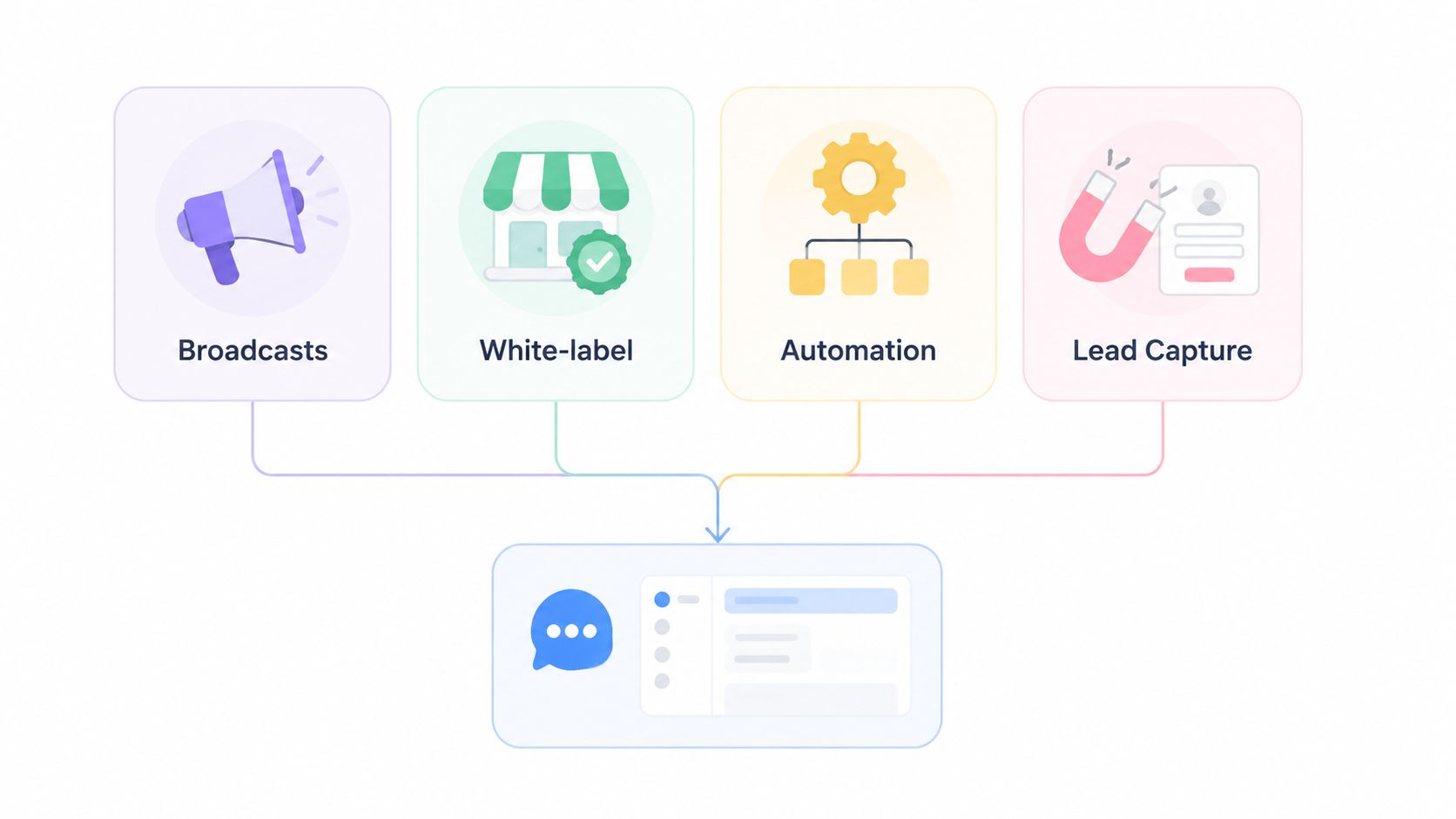
Lead With the Problem They Need Solved
Group accounts by the job they hired your platform to do:
- Lead generation
- Broadcast marketing
- Support and service
- Community growth
- White-label resale
- API-driven transactional messaging
Many public guides on this topic stay too generic. One underexplained issue is how to avoid segments that are too small to matter or too similar to justify separate treatment. Strong guidance stresses that segments should be meaningfully different, actionable, and judged by whether they change decisions and outcomes, as discussed in Comarch's customer segmentation guide.
WhatsApp Campaigns by Use Case
Build separate WhatsApp journeys for each need. A lead-gen agency should get smart link and QR code campaigns that capture contact details before the chat begins. A reseller should get onboarding on custom branding, workspace structure, and client billing. A support team should get inbox assignment, notes, and quick replies. A creator should get announcement group and welcome flow templates.
Use message copy that names the use case directly:
- “Running lead gen? Send prospects to a tracked smart link, capture source, then auto-route replies.”
- “Reselling WhatsApp? Set up client workspaces under your own brand and keep margins predictable.”
- “Launching a community? Use Announcement Groups for broadcasts, then move replies into direct conversations.”
This segmentation model usually produces the fastest lift because it aligns product, sales, onboarding, and lifecycle messaging in one move.
8. Technographic Segmentation
Technographic segmentation separates people by the stack they use and the level of technical complexity they can handle. That's critical in WhatsApp because implementation paths vary wildly. Some buyers want QR-code onboarding and a live inbox in minutes. Others want API control, custom workflows, and integration into an existing product.
Treat those paths as separate customer experiences from the start.
Match the Product Path to the Tech Stack
Tag accounts by tools and implementation style. Useful tags include ghl-user, zapier-user, make-user, wordpress-user, cloud-api-interest, rest-api-interest, and no-code-only.
Then route education accordingly. Your no-code segment should never get a first-touch message about endpoints and payloads. Your developer segment should never get stuck in beginner onboarding built around simple broadcasts and templates.
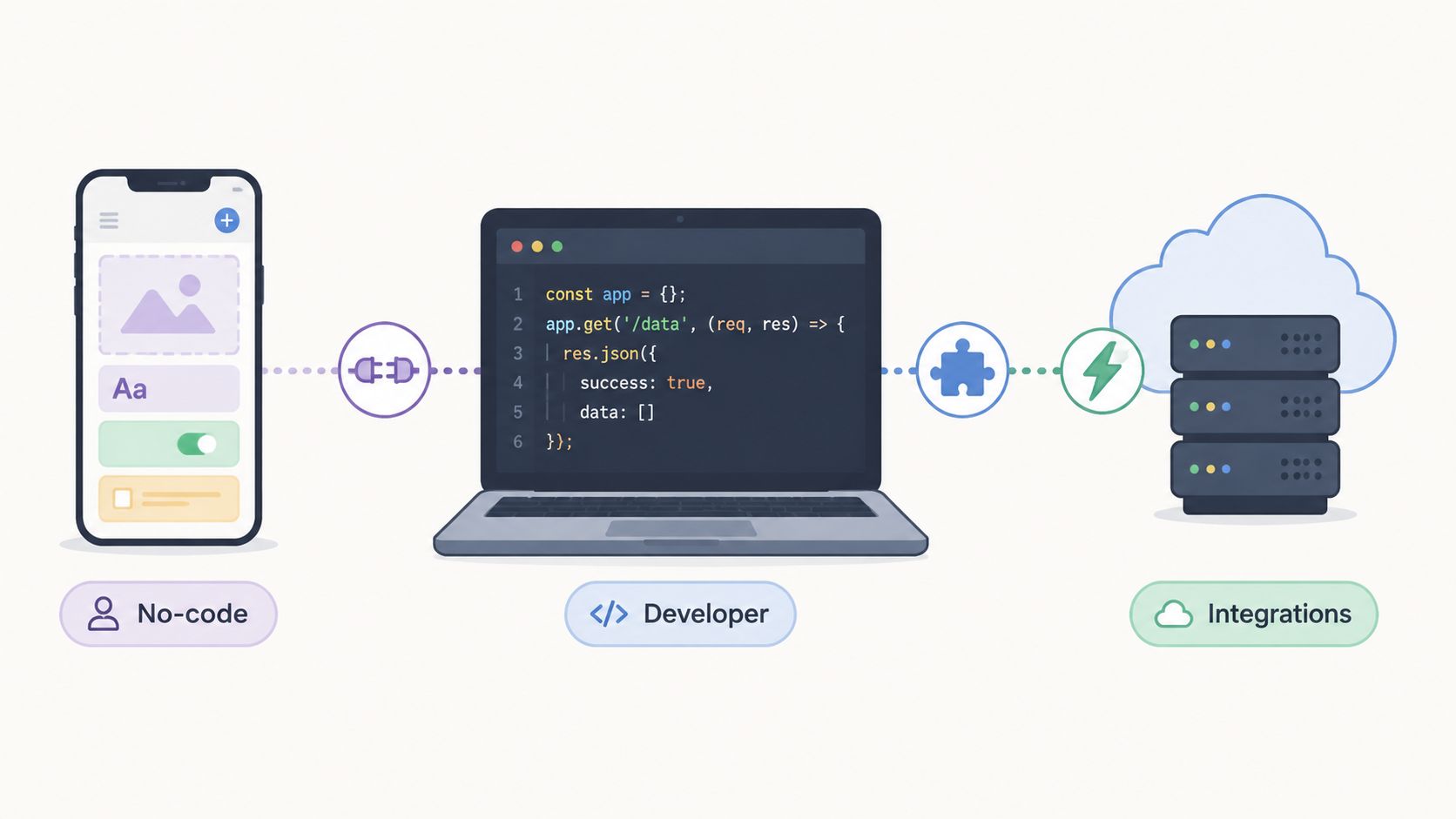
WhatsApp Flows for Technical and Non-Technical Buyers
For technical buyers, use WhatsApp to accelerate implementation. Send:
- API docs
- integration examples
- webhook tutorials
- support booking links for technical review
For non-technical users, keep the path short:
- Connect number by QR code
- Create smart link
- Send welcome message
- Launch first broadcast
- Review replies in shared inbox
A good product makes both paths possible. A good segmentation strategy makes sure each buyer only sees the path that fits them.
9. Purchase Behavior Segmentation
Purchase behavior tells you how someone buys, how fast they decide, how often they upgrade, and how likely they are to churn after the first payment. That makes it useful for both sales forecasting and retention.
Some buyers commit quickly on a monthly plan and expand later. Some only buy when pushed by a launch or client need. Some start free, explore slowly, then convert once they understand the operational value. Those are different segments and should be treated that way.
Buyers Tell You a Lot Before They Churn
Track source, first touch, time to purchase, billing cadence, add-on adoption, and upgrade pattern. Then use that to identify segments such as:
- Fast-moving self-serve buyers
- Trial users who need proof before conversion
- Annual buyers who want stability
- Expansion-led accounts that grow after activation
- Discount-sensitive buyers with weak retention signals
Don't stop at purchase date. Watch what happens after the sale. An account that bought quickly but never activated key features is fragile. An account that took longer to buy but adopted multiple workflows is often stronger.
WhatsApp Offers by Buying Pattern
Tailor your WhatsApp messaging to the buying pattern:
- Self-serve buyers: Send short activation prompts and fast-win tutorials.
- Annual or commitment-minded buyers: Send implementation plans and success milestones.
- Trial-to-paid prospects: Send proof-oriented messages focused on first outcomes.
- Expansion buyers: Send feature cross-sell campaigns once core usage is stable.
Keep your offers tied to the way they already buy. If someone needs certainty, don't hit them with urgency-only messaging. If someone buys fast, don't bury them in a long nurture track.
10. Customer Journey Stage Segmentation
Customer journey stage segmentation is the operating system that ties the others together. It decides what someone should hear right now based on where they are in the relationship with your business.
Segmentation isn't static anymore. Current guidance points toward adaptive, behavior-led, and predictive models built on first-party and experience data, while also raising practical questions about refresh timing, re-segmentation triggers, and privacy-safe execution in a reduced third-party data environment, as outlined in Humblytics' review of customer segmentation strategies for 2025. For WhatsApp operators, that means lifecycle segmentation should update as behavior changes.
Treat Lifecycle as a Messaging System
At minimum, define these stages:
- Trial
- Activated
- Growing
- Mature
- At risk
- Churned
Then attach rules to each one. Trial users need quick wins. Activated users need repeatable usage habits. Growing accounts need expansion paths. Mature accounts need retention and account management. At-risk users need intervention before they disappear.
Dynamic segmentation is associated with a 15% increase in conversion rates because teams keep audience definitions current as behavior changes instead of relying on static personas. That same guidance recommends keeping segments large enough to be profitable and specific enough to be actionable.
WhatsApp Sequences by Stage
A solid lifecycle WhatsApp setup looks like this in practice:
- Trial: Welcome message, connect number prompt, first broadcast tutorial, smart link setup
- Activated: Tips on scheduling, quick replies, tags, and source tracking
- Growing: White-label, automation, reseller workflow, API or team collaboration prompts
- Mature: Business reviews, advanced feature adoption, retention check-ins
- At risk: Usage drop alert, personalized reactivation message, direct help offer
- Churned: Re-entry campaign tied to a clear use case or feature they missed
Refresh lifecycle segments regularly. Segment boundaries should change when message volume drops, feature usage stalls, or a new buying signal appears. Static lists drift. Your WhatsApp strategy shouldn't.
10-Point Customer Segmentation Comparison
If your agency is running WhatsApp campaigns for every lead the same way, segmentation is not a strategy yet. It is a contact list with extra labels. Use the comparison below to choose the models that drive faster replies, better conversion paths, and higher account value inside platforms like Double My Leads.
| Segmentation Method | 🔄 Implementation Complexity | ⚡ Resource Requirements | 📊 Expected Outcomes | 💡 Ideal Use Cases | ⭐ Key Advantages |
|---|---|---|---|---|---|
| Behavioral Segmentation | High, requires event tracking, analytics pipelines, and ongoing updates | Medium to High, analytics tools, event mapping, privacy controls | High, strong for retention, upsells, and LTV improvement | WhatsApp nudges based on clicks, replies, feature usage, and inactivity | Best predictor of action because it reflects what users actually do |
| Firmographic Segmentation | Medium, needs data enrichment and account verification workflows | Medium, CRM, enrichment tools, occasional manual cleanup | Medium, improves targeting, pricing fit, and sales efficiency | Agency outreach by client size, reseller offers by vertical, enterprise WhatsApp onboarding | Helps sales and success teams match offer complexity to account type |
| Psychographic Segmentation | High, requires interviews, surveys, and message testing | Medium to High, research time, messaging development, creative work | High, improves loyalty, brand fit, and response quality | WhatsApp campaigns built around growth goals, risk tolerance, or buyer motivation | Produces stronger message-market fit than role or company data alone |
| Geographic Segmentation | Low to Medium, location capture is simple but localization and compliance take work | Medium, local language support, regional operations, compliance review | Medium, improves engagement by market and reduces regional friction | Send-time optimization, country-specific offers, local compliance messaging on WhatsApp | Useful for timing, language, regulation, and regional offer positioning |
| Demographic Segmentation | Low, easy to collect during signup or onboarding | Low, form fields, CRM tags, basic reporting | Low to Medium, useful for broad targeting and role-based paths | WhatsApp onboarding by job role, seniority, or business maturity | Fast to implement and helpful for first-pass campaign structure |
| Value-Based Segmentation | Medium to High, requires LTV tracking and margin visibility | Medium, billing data, finance reporting, account monitoring | High, improves ROI decisions and resource allocation | Priority support, high-value account sequences, retention plays for top tiers | Connects segmentation directly to revenue and profitability |
| Needs-Based / Use Case Segmentation | High, needs customer interviews and outcome mapping | High, specific product flows, content, and sales enablement | High, improves conversion and offer clarity | WhatsApp flows by use case such as missed-call follow-up, lead reactivation, or appointment booking | Matches the message to the problem buyers want solved right now |
| Technographic Segmentation | Medium, requires stack detection and integration profiling | Medium, integration support, docs, onboarding assets, monitoring | Medium to High, reduces setup friction and improves adoption | WhatsApp setup by CRM, API readiness, no-code preference, or existing tool stack | Helps agencies and resellers sell the right implementation path faster |
| Purchase Behavior Segmentation | Medium, needs billing history and buying pattern analysis | Medium, payment data, CRM history, reporting | High, improves upsell timing, renewal strategy, and churn prevention | Refill reminders, upgrade prompts, annual plan conversion, renewal rescue on WhatsApp | Strong revenue signal because it reflects buying habits, not stated intent |
| Customer Journey Stage Segmentation | Medium to High, requires lifecycle tracking and stage rules | Medium to High, automation tools, success workflows, monitoring | High, improves onboarding completion and reduces churn risk | WhatsApp messaging by lead, trial, active, expansion, risk, or win-back stage | Keeps timing accurate so teams send the right message at the right moment |
Use this table to prioritize action, not to admire theory.
For agencies and SaaS resellers using Double My Leads, three models usually produce the fastest return on WhatsApp. Start with behavior to trigger campaigns from real activity. Add use case segmentation to sharpen the offer. Layer in value-based segmentation so your team spends time where margin is highest. That combination is easier to operationalize than trying to build all ten at once, and it maps cleanly to tags, automations, and account playbooks.
From Segments to Scale Your Action Plan
Effective customer segmentation strategies turn WhatsApp from a broadcast channel into a revenue system. That's the shift. You stop asking, “What should we send this week?” and start asking, “Which segment needs which message, offer, or intervention right now?” That's how agencies scale client delivery without turning operations into chaos. That's also how SaaS resellers protect margins while increasing account value.
Start small. Pick one or two segmentation models that line up with the problem you need to fix first. If your trial-to-paid conversion is weak, start with behavioral and customer journey stage segmentation. If your close rate is decent but expansion is poor, start with value-based and needs-based segmentation. If your demos are strong but onboarding stalls, technographic and demographic segmentation will usually clean that up fast.
Keep your setup operational, not academic. Define the segment. Name the trigger. Apply the tag. Build the WhatsApp sequence. Assign the owner. Decide the KPI. If your team can't execute the segment inside the CRM or inbox, simplify it until they can. The best segmentation model isn't the most complex one. It's the one your sales, success, and campaign teams use every day.
For agencies and resellers, the fastest win usually comes from a combined model:
- segment by use case to sharpen the offer
- segment by behavior to trigger actions
- segment by lifecycle stage to time the message
- segment by value to prioritize support and upsell effort
That combination gives you practical control over both acquisition and retention. A lead-gen agency gets a different onboarding path than a community builder. A reseller who launched multiple workspaces gets hands-on expansion support. A trial user who connected a number but didn't send a first message gets a nudge built for activation, not a generic product update.
Keep your segments current. Contemporary guidance on segmentation stresses ongoing review using collected data and regular re-analysis rather than a one-and-done exercise, and it also points teams toward using signals like transaction history, analytics, feedback, and engagement metrics to refine segment logic over time. That matters because customer behavior shifts quickly in messaging channels. A good segment in one quarter can turn stale if adoption patterns change, new features launch, or your product mix expands.
Also, don't over-segment. More clusters don't automatically mean better targeting. If two groups get the same message, offer, and support path, they don't need to be separate. Keep segments broad enough to act on and distinct enough to matter. Your operators will thank you, and your reporting will stay clean.
Platforms like Double My Leads make this practical because the core mechanics already map to segmentation execution. You have tags, assignments, notes, broadcast groups, QR-code onboarding, smart links, automation flows, and API options in one environment. That means you can segment by role, intent, behavior, use case, or lifecycle stage without stitching together a bloated tool stack just to send the right WhatsApp message.
The move now is simple. Choose your first segment model. Build one live campaign around it. Measure activation, reply quality, expansion movement, or retention improvement. Then layer the next segment once the first one is running cleanly. That's how you build a segmentation engine that scales.
If you want to turn these customer segmentation strategies into live WhatsApp campaigns fast, Double My Leads gives you the pieces to do it without a heavy setup. You can tag contacts, launch segment-specific broadcasts, create white-labeled client workspaces, route replies in a shared inbox, capture leads through smart links and QR codes, and build onboarding or follow-up automations around real customer behavior. If you're an agency, GHL operator, creator, or SaaS reseller, it's a practical way to launch and scale a WhatsApp offer that feels personalized from day one.


