
A lead clicks your ad at 9:17 PM, opens WhatsApp, asks a buying question, and waits. By morning, the prospect has gone cold or booked with someone faster. Meanwhile, your team starts the same routine again: reply, qualify, assign, remind, follow up, update the CRM, and hand the conversation to sales. More activity fills the pipeline, but margins stay tight because every new client adds service labor behind the scenes.
Process automation fixes that bottleneck. For agencies and SaaS resellers, it also creates a product you can sell. Once you build a working system for lead capture, chat flows, routing rules, onboarding, and follow-up, you can package it under your own brand and resell the outcome across multiple clients. A white-labeled WhatsApp platform is one of the cleanest ways to do it because the buyer sees faster responses and better conversion flow, while you keep the delivery model standardized.
That shift is timely because buyers already expect quick replies, clean handoffs, and less friction across the customer journey. The bigger opportunity is not just using automation inside your agency. It is turning automation into a recurring offer with setup fees, monthly retainers, usage-based add-ons, and far less custom work than a traditional service package.
If you want a plain-English breakdown of what automation covers before you package it for clients, Refgrow's automation guide is a useful reference.
Table of Contents
- 1. Increased Operational Efficiency and Reduced Manual Work
- 2. Predictable Revenue Model and Improved Profit Margins
- 3. 24/7 Customer Availability and Instant Response Times
- 4. Enhanced Lead Quality and Intelligent Lead Routing
- 5. Scalability Without Proportional Cost Increases
- 6. Improved Data Quality and Real-Time Insights
- 7. Enhanced Customer Experience and Personalization at Scale
- 8. Reduced Errors and Improved Compliance and Quality Control
- Process Automation: 8 Key Benefits Comparison
- Your Next Step From Automation User to Automation Reseller
1. Increased Operational Efficiency and Reduced Manual Work
A lead clicks a WhatsApp ad at 9:12 PM. The first message comes in. If nobody replies until the next morning, you already paid for attention you did not organize well.
That is why operational efficiency matters so much for agencies and SaaS resellers selling automation as a service. The primary advantage is not just saving your team time. It is turning messy, human-dependent delivery into a repeatable product you can sell across multiple clients without adding headcount at the same pace.
For agencies reselling a WhatsApp platform like Double My Leads, that usually starts with the first few steps in the conversation. Auto-welcome flows, chat assignments, smart links, and tracked QR codes handle intake before an account manager, setter, or support rep gets involved. The inbox stays cleaner. Response ownership gets clearer. Fewer leads sit in limbo because someone forgot to tag, assign, or follow up.
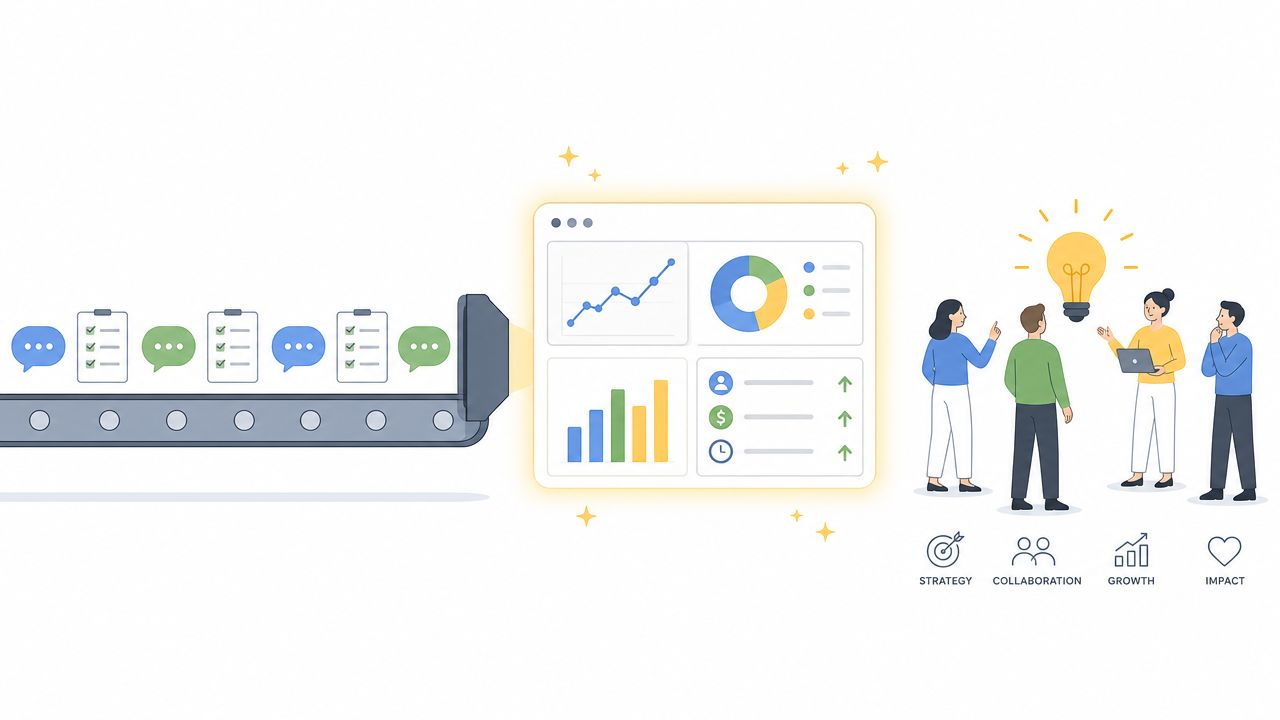
A practical example helps. An agency runs paid traffic to a tracked WhatsApp link, sends an instant welcome message, asks two or three qualification questions, and routes the chat based on the answers. A SaaS reseller can use the same system for onboarding check-ins, support triage, and upgrade prompts inside WhatsApp Communities. Different offers, same delivery logic.
The margin benefit shows up fast.
Teams usually do not lose capacity on big strategic projects. They lose it on small repeated actions that happen hundreds of times a week. Copying lead details into a CRM. Assigning the same chat types by hand. Sending the same opening reply. Checking where a conversation came from. None of this is difficult work, but it is expensive work when skilled staff keep doing it manually.
Start with the work your team repeats every day
The best reseller implementations start with boring tasks, not flashy ones. Welcome flows, qualification prompts, routing rules, and canned replies reduce delivery load quickly because they remove work your team already knows is repetitive. Advanced logic can come later, once the base workflow is producing clean handoffs.
Use this order when you build your first reseller-ready workflow:
- Map the entry points: List every place a lead can start a conversation, including ads, site widgets, QR codes, and outbound campaigns.
- Automate the first touch: Set a welcome flow that acknowledges the lead immediately and collects useful context.
- Route with rules: Send sales questions, support requests, and onboarding chats to different owners based on intent.
- Track the source from the start: Smart links and QR codes work best when attribution enters the conversation record automatically.
Practical rule: If a team member performs the same inbox action several times a day, automate it before hiring for it.
There is a trade-off. Poorly planned automation can create rigid flows, bad handoffs, or robotic replies that frustrate users. Good resellers avoid that by automating the first 60 to 80 percent of the process, then handing clean context to a human at the point where judgment matters. That balance is what makes the offer scalable and still valuable to clients.
If you want a broader marketing view of how these systems fit into a larger growth stack, Refgrow's automation guide is a solid companion read.
2. Predictable Revenue Model and Improved Profit Margins
A client asks for faster lead response, better follow-up, and cleaner reporting. If you solve that with more account-manager hours, margin stays thin. If you solve it with a white-labeled WhatsApp automation offer, the same client need becomes monthly recurring revenue.
That is the commercial shift agencies care about.
When you resell a platform like Double My Leads on a flat monthly fee, revenue is tied to the system you manage, not to time your team can bill. Clients understand the offer faster because they are buying an outcome with a clear operating model: inbox, automations, routing, campaigns, and reporting in one retained service.
Double My Leads is built for that setup. You can provide branded workspaces, client-facing inboxes, broadcast workflows, smart links, and automation sequences without building messaging infrastructure from scratch. The margin advantage comes from standardization. One delivery method can support many accounts.
Why flat-fee automation offers protect margin
Per-message and per-seat pricing can create a ceiling on your profit. As client usage rises, your software cost often rises with it, and your gross margin gets squeezed unless you keep repricing the account. That turns growth into a pricing conversation.
A flat-fee reseller structure gives you cleaner unit economics. You know what the platform costs. You know what onboarding takes. You know what ongoing support usually involves. That makes it easier to package, forecast, and sell.
It also gives you a stronger client conversation. Instead of defending hours, you can show how the workflow keeps running after setup and how the retainer covers oversight, optimization, and reporting.
A simple three-tier offer usually holds up well:
- Basic plan: Shared inbox, welcome automation, smart links, and simple routing.
- Growth plan: Broadcast campaigns, CRM sync, notes, tags, and reporting.
- Premium plan: White-label domain, branded billing, advanced workflows, and API-based automation.
The mistake is selling the platform like custom development every time. Custom logic feels high value in the sales call, but it often turns into low-margin maintenance later. Profitable resellers keep 80 percent of the offer standardized, then charge clearly for anything outside the template.
We have seen the same pattern across agency models. Margin usually improves when setup fees cover implementation, monthly retainers cover monitoring and iteration, and add-ons cover exceptions such as CRM mapping, custom triggers, or multi-brand reporting. That structure keeps the base offer simple while giving you room to increase account value without rebuilding delivery from scratch.
Agencies lose margin in one-off workflow requests. They keep margin in repeatable packages with clear boundaries.
The practical trade-off is that recurring revenue still needs operational discipline. Flows break, client teams change, campaigns need updates, and someone has to review performance. Predictable revenue is real, but only when your service scope, pricing, and support limits are defined before the client says yes.
3. 24/7 Customer Availability and Instant Response Times
A prospect clicks your ad at 9:40 p.m., opens WhatsApp, asks a buying question, and gets silence until the next morning. In agency terms, that gap is expensive. The lead often messages a competitor, loses intent, or forgets why they reached out in the first place.
Process automation closes that gap with a practical promise you can resell. Your client does not need a live rep online every hour. They need a system that replies at once, captures context, answers the common question, and hands the conversation to the right person when a human should step in.
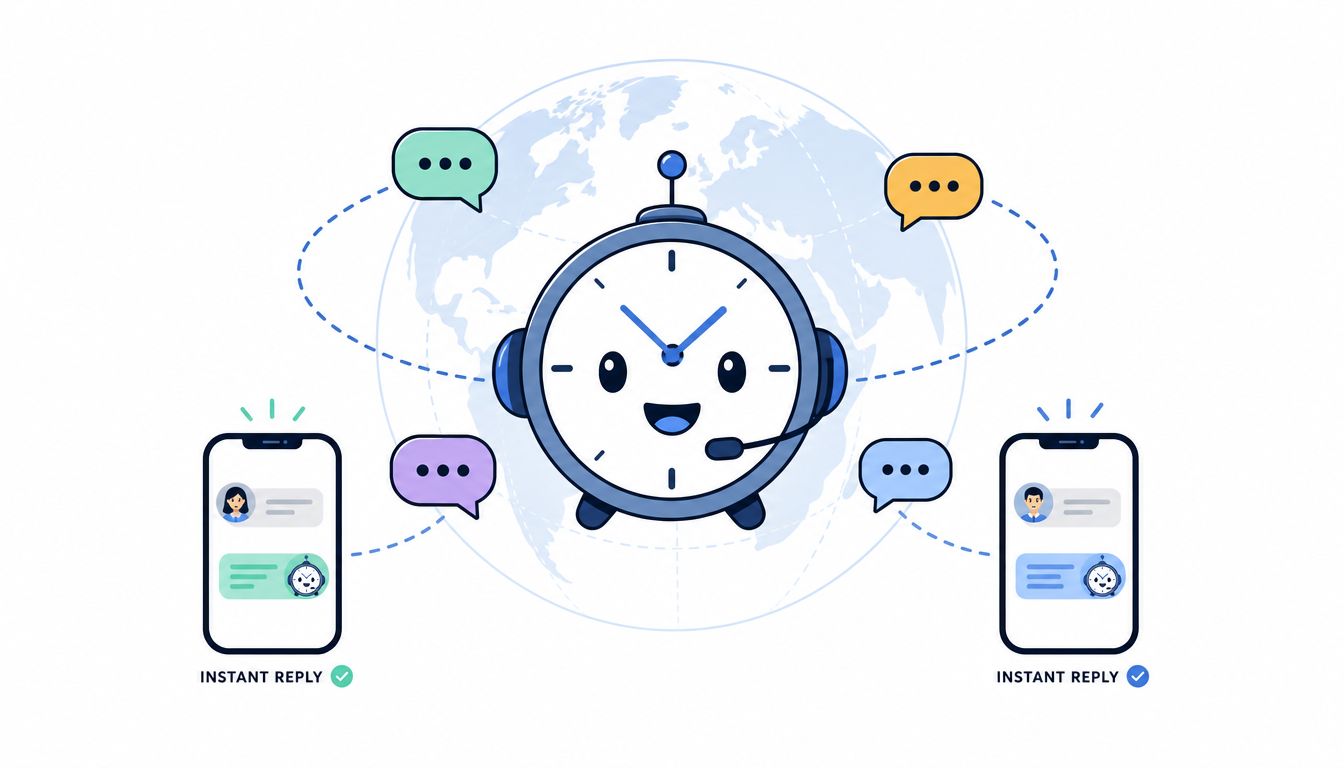
That distinction matters if you sell a white-labeled WhatsApp platform. You are not selling "24/7 support" as a vague service promise. You are selling response infrastructure. The product is the workflow: first reply, triage, FAQ handling, booking prompt, escalation rule, and follow-up sequence.
Slow first response usually costs more than agencies expect
The first message sets the tone for the whole conversation. If it arrives fast and asks the right next question, the lead keeps moving. If it is delayed, generic, or confusing, ad spend keeps running while conversion quality drops.
We have seen this work well across several reseller use cases. A lead-gen agency can send paid traffic into a WhatsApp smart link that fires an instant greeting, confirms the inquiry, and asks one qualification question before routing. A SaaS reseller can use the same flow to welcome trial users, send setup instructions, and separate onboarding questions from sales questions. A local service business can answer after-hours inquiries, collect booking intent, and queue urgent requests for the morning team.
The operational win is simple. Automation handles the repetitive first-touch work in seconds, while your client's staff focuses on exceptions, closing, and account-specific conversations.
A few setup rules make the offer stronger:
- Write first replies like a real operator would: Confirm the request, set a clear expectation, and ask for one next input.
- Use AI for narrow tasks: FAQs, basic triage, and simple booking prompts are usually safe. Pricing exceptions, complaints, and unusual requests should move to a human.
- Build escalation rules before launch: Define who gets notified, during which hours, and for what type of message.
- Schedule by local time: Follow-ups perform better when they arrive during business hours for the contact, not for your delivery team.
- Review chat transcripts every week: Fast replies help only if they are accurate, clear, and aligned with how the client sells.
There is a trade-off here. Instant response improves speed, but speed alone does not improve revenue. Bad automation can reply quickly and still frustrate buyers. Strong resellers keep the opening flow short, limit automation to repeatable tasks, and make the handoff to a human obvious.
That is what clients keep paying for. Not the bot by itself. The revenue protection that comes from never letting qualified demand sit unanswered.
4. Enhanced Lead Quality and Intelligent Lead Routing
A paid campaign goes live on Friday afternoon. By Friday night, your client has 47 WhatsApp conversations in the inbox. Without routing, the sales team spends Monday sorting who asked about pricing, who wants support, who came from which campaign, and who is ready to buy. With the right automation, that sorting happened before anyone logged in.
For agencies and SaaS resellers, this is not just an internal efficiency feature. It is a product you can package, price, and deploy by vertical.
Automation can capture source, intent, and qualification data at the point of entry through smart links, QR codes, welcome flows, and CRM fields. Your client's team opens a conversation with context already attached. That changes the sales motion. Reps spend less time diagnosing and more time closing.
A visual model helps here:
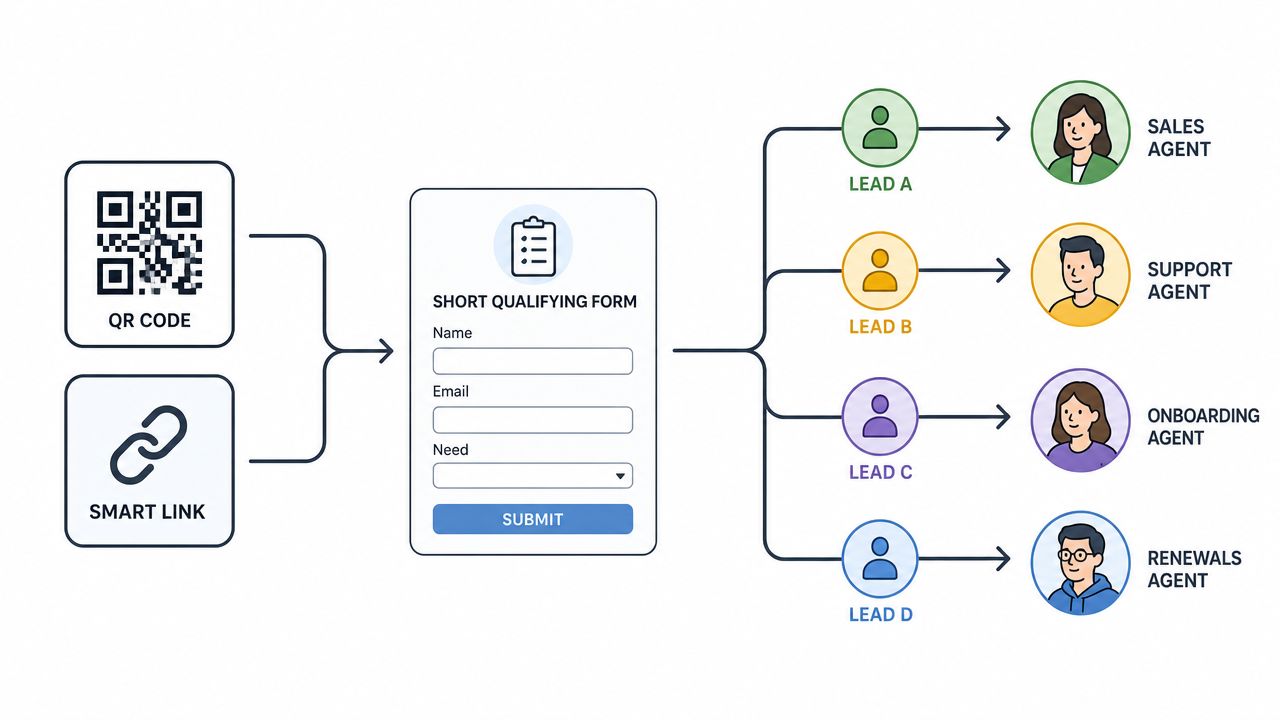
This becomes more valuable when you sell it as a repeatable offer instead of a custom one-off setup.
A real estate agency can sell a "Real Estate Lead Routing Package" built around listing-specific QR codes, property tags, budget range questions, and automatic assignment by area or listing type. A B2B SaaS reseller can offer a qualification flow that tags leads by demo request, webinar source, team size, and product interest, then routes sales-ready prospects to account executives while lower-intent conversations enter nurture sequences. A coaching or education client can sort by goal, program interest, and preferred start date before assigning each lead to the right advisor.
Qualification before a human ever opens the chat
Strong qualification flows stay short. Three to five questions is usually enough to identify fit, urgency, and buying intent without creating drop-off.
The trade-off is simple. Every extra question gives you better data, but it also lowers completion rates. Good resellers choose the minimum data needed to make a better assignment decision. In practice, that often means one source tag, one intent signal, one urgency signal, and one routing field.
This YouTube walkthrough on WhatsApp lead routing gives a useful visual reference for how these flows can look inside a live setup.
Routing rules make the service more valuable
Routing rules are where margin starts to improve. Once lead data is captured, the system can assign based on geography, service line, language, campaign source, customer status, or lead score. High-intent leads can go straight to senior closers. Existing customers can bypass sales and land with support. Multi-location businesses can send each inquiry to the right branch automatically.
That logic is resellable.
We often see agencies underprice this work because they describe it as setup. Clients keep paying when you position it correctly. You are not selling a few automations. You are selling faster qualification, cleaner handoffs, better rep utilization, and less revenue lost to slow or incorrect assignment.
The best version of this offer is usually templated by niche. Build the routing rules once for real estate, once for clinics, once for home services, then adapt the fields and queues per client. That shortens delivery time, keeps your margins healthier, and gives clients a clearer reason to stay on a monthly retainer.
Better routing means each new lead enters the right conversation path with the right context and the right owner already assigned.
5. Scalability Without Proportional Cost Increases
A lot of agencies sell automation like a project, then deliver it like custom labor. That model breaks as soon as client volume rises. More accounts create more inboxes to manage, more exceptions, more support requests, and more staff cost. If you want automation to become a real revenue line, the delivery model has to scale before the sales team does.
That is the commercial advantage of a white-labeled WhatsApp platform. The product is not each individual flow. The product is the repeatable system behind it.
A reseller who builds once and deploys many times can support more clients without adding headcount at the same rate. The margin difference is significant. One team can manage onboarding flows, broadcast logic, smart links, inbox permissions, and basic follow-up sequences across many accounts if those pieces are standardized from the start.
Standardization protects margin
We see the same pattern in agency operations all the time. The first three client builds are usually over-customized because the team is trying to prove value. By client ten, that same approach becomes expensive to maintain. Every special case increases QA time, support load, and training requirements.
A better model is to productize the core offer by niche. Home services may need quote request flows, missed-call follow-up, and technician dispatch notifications. Clinics may need appointment intake, reminder sequences, and after-hours triage. Real estate teams may need lead capture, listing inquiry routing, and open-house follow-up. The logic changes by vertical, but the delivery method stays consistent.
That is what makes the service resellable instead of merely billable.
Here's what usually holds up as volume grows:
- Template the common flows: Build standard onboarding, qualification, follow-up, and admin permission sets once, then adapt fields and copy per client.
- Reserve custom work for high-value cases: Use the API or MCP Server when a client has a real operational requirement, not just a preference.
- Set operational guardrails: Define naming conventions, tagging rules, testing checklists, and escalation paths before you add more accounts.
- Manage from one control layer: Shared oversight across multiple client workspaces makes renewals, support, and staff handoffs easier to handle.
The trade-off is straightforward. Standardization improves profit and speed, but it limits how much one-off customization you can promise in the base package. Strong agencies make that boundary clear early. They sell a proven system, then charge separately for exceptions.
That approach also improves valuation logic. Buyers and operators put a higher multiple on revenue that depends on reusable systems than on revenue tied to founder knowledge or delivery hours. If your WhatsApp automation offer can be cloned, monitored, and supported by a trained team, you have something closer to a productized service line than a stack of custom retainers.
6. Improved Data Quality and Real-Time Insights
A reseller offer gets harder to manage the moment reporting stops being trustworthy. If you cannot show which campaigns create qualified WhatsApp conversations, which automations push leads toward booked calls, or where handoffs break, you are left defending retainers with partial data.
A white-labeled WhatsApp platform helps because it captures interaction data in a consistent structure. Source tags, conversation history, owner assignment, response status, and CRM updates all happen inside the same system. That turns chat activity into data you can price, optimize, and report across multiple client accounts.
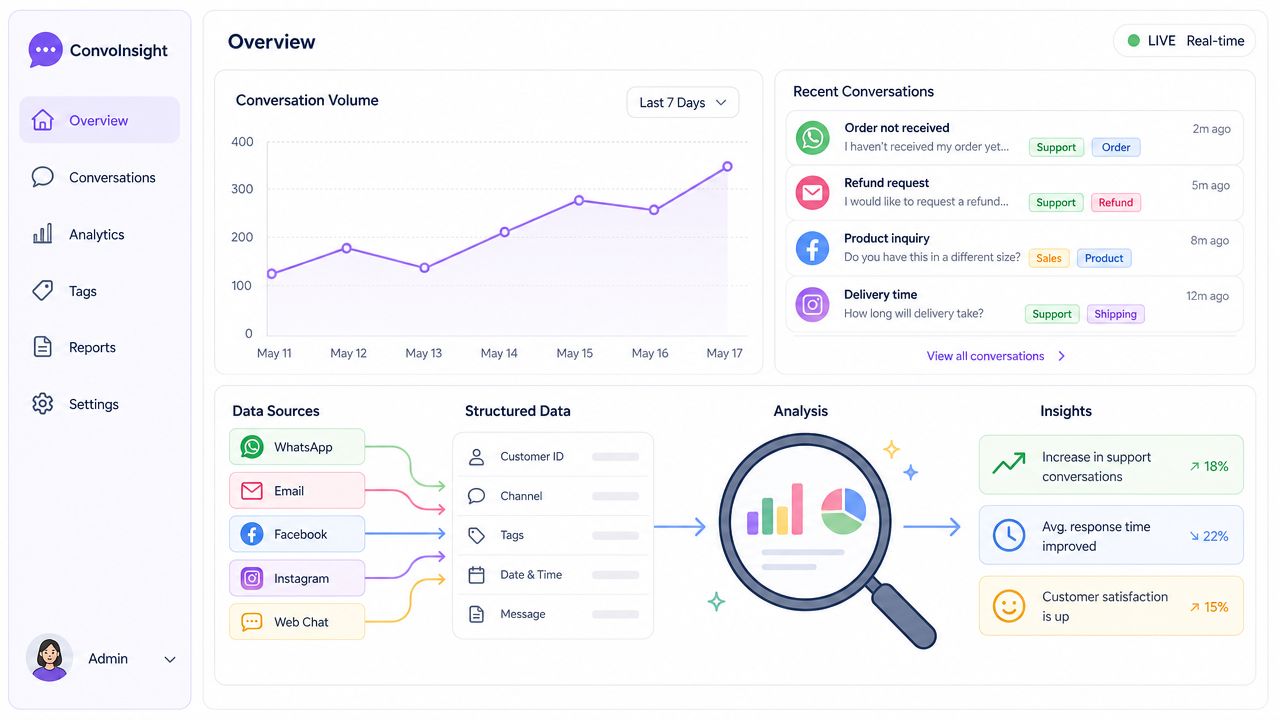
That matters more in a reseller model than it does for a single in-house team.
An agency managing WhatsApp campaigns for several clients can compare which smart links bring in serious inquiries, which welcome questions cause drop-off, and which rep handoff patterns lead to closed deals. Those are the inputs that improve margin. They also make client reviews easier because you are showing operational cause and effect, not chat volume screenshots.
Clean data is what makes the service scalable
Consistent data capture reduces the mess that shows up once multiple team members touch sales, support, onboarding, and campaign management. If one client uses "new lead," another uses "fresh inquiry," and a third uses no status rules at all, your dashboards stop being useful. The team spends more time fixing reports than improving results.
We usually solve that before adding more accounts. Set the data model early, then enforce it through the workflow itself.
A simple standard works well:
- Define tag rules up front: Keep naming consistent for source, funnel stage, owner, product line, and lead intent.
- Capture context automatically: Save notes, message history, and qualification answers so handoffs do not depend on memory.
- Track the full conversion path: Measure the journey from campaign source to chat to booked call or sale.
- Review live dashboards weekly: Faster review cycles help you spot broken routing, weak scripts, and low-quality traffic before the client sees a monthly report.
As noted earlier, automated workflows reduce data-entry mistakes because the system follows rules every time. The trade-off is that strict structure can feel limiting to account managers who want custom labels for every client request. In practice, standardization wins. You can always create premium reporting exceptions later, but the base offer needs clean fields and repeatable logic if you want a service line that scales profitably.
For agencies and SaaS resellers, that is the benefit. Better data does not just improve decisions. It gives you a productized reporting layer you can attach to every WhatsApp automation account, which makes the service easier to sell, retain, and expand.
7. Enhanced Customer Experience and Personalization at Scale
A lead clicks a paid ad at 9:40 p.m., opens WhatsApp, asks about pricing, and expects the business to remember why they showed up. If the reply ignores the ad they came from, asks questions they already answered, or sends the same script every other lead gets, the conversation feels cheap. That is the gap agencies can close with automation that uses context correctly.
For a reseller, this matters because personalization is not just a service feature. It is part of the offer you can package, price, and roll out across accounts without adding headcount every time a client wants better conversion rates.
A white-labeled WhatsApp platform gives you the raw material to do that well. You already have campaign source, message history, owner assignment, funnel stage, product interest, and reply behavior inside the workflow. Used properly, that context makes automated messages feel timely and relevant. Used poorly, it turns into awkward over-personalization and brittle logic that breaks the moment a client changes a campaign.
Personal enough to convert, repeatable enough to sell
The best setups use a narrow set of signals and apply them consistently.
An ecommerce client can send different follow-ups based on product category, cart status, or prior replies. A SaaS client can adjust onboarding prompts by use case, plan type, or demo status. A publisher can sort subscribers into topic-based WhatsApp Community Announcement Groups so broadcasts match what people asked for.
That improves the customer experience, but it also improves your margins. Once the personalization rules are built into the template, your team stops rewriting the same journeys account by account. You sell one proven framework, customize the inputs, and keep delivery efficient.
There is a trade-off. More personalization usually means more branches, more testing, and more ways for a workflow to drift out of date. We usually set a limit early. Personalize the parts that change response rates or booked calls, then standardize the rest. Clients rarely need fifty message variations. They need the right five.
A few rules keep this useful:
- Use expected context: Reference source, prior questions, product interest, lifecycle stage, or known account status.
- Keep the message honest: If a step is automated, write it clearly instead of pretending a human typed it live.
- Route edge cases fast: Billing issues, complaints, and unusual pre-sales questions should move to a person quickly.
- Build segments before campaigns: Interest groups, customer type, and funnel stage produce better results than broad blasts.
- Review personalization logic monthly: Offers change, onboarding changes, and old branches gradually weaken performance.
Personalization at scale works when the workflow remembers the few details that matter, then uses them the same way every time.
For agencies and SaaS resellers, that is the commercial angle. You are not only helping clients send better messages. You are building a higher-value WhatsApp automation product that is easier to retain, easier to expand, and harder for cheaper competitors to copy.
8. Reduced Errors and Improved Compliance and Quality Control
A client usually notices automation quality after something goes wrong. A lead gets two replies. An opt-in record is missing. A follow-up promised for 10 minutes later shows up the next day. In a resold WhatsApp service, those mistakes do more than create extra work. They weaken trust in your delivery model.
That is why consistency sells.
For agencies and SaaS resellers, process automation is not only a time saver. It is a way to productize reliability. The workflow applies the same assignment rules, message timing, consent steps, tags, and escalation logic every time. That makes delivery easier to defend, easier to audit, and easier to repeat across accounts without quality dropping as volume grows.
The margin impact is practical. Fewer manual mistakes means less cleanup, fewer client complaints, fewer missed handoffs, and less account-manager time spent explaining what happened. Standardized templates keep brand voice under control. CRM sync reduces copy-paste errors. Logged actions give your team a record of who received what, when, and why.
Compliance matters here too, especially on WhatsApp where message approvals, opt-ins, template usage, and customer data handling need clear process discipline. Manual teams tend to rely on memory. Good automation relies on rules. That difference matters when a client asks for proof of consent, a send history, or an explanation for why a contact entered a sequence.
A clear trade-off exists. The more logic you add, the more carefully you need to maintain it. A simple qualification flow is easy to test. A sprawling workflow with dozens of branches, exceptions, and AI-generated decisions can fail unnoticed for days if nobody is reviewing logs or spot-checking outputs. I have seen agencies blame the platform when the actual problem was poor version control and no owner for QA.
A better operating standard looks like this:
- Define the process before automating it: If the team cannot explain the rule clearly, the system will not apply it clearly.
- Test with edge cases, not only happy paths: Check duplicates, missing fields, invalid numbers, late replies, opt-out requests, and handoff triggers.
- Log every key action: Message sends, status changes, assignments, consent capture, and escalations should all leave a trace.
- Set review intervals: Active workflows need scheduled audits so old branches, broken tags, and outdated templates do not stay live.
- Keep human override available: Billing disputes, complaints, compliance questions, and unusual sales scenarios should move to a person fast.
The agencies that resell automation well do not pitch software and hope for the best. They sell controlled execution. That is what turns a white-labeled WhatsApp platform from a useful tool into a dependable revenue stream clients keep paying for.
Process Automation: 8 Key Benefits Comparison
| Item | 🔄 Implementation Complexity | Resource Requirements | ⚡ Speed / Efficiency Impact | 📊 Expected Outcomes | 💡 Use Cases / ⭐ Key Advantages |
|---|---|---|---|---|---|
| Increased Operational Efficiency and Reduced Manual Work | Moderate, initial setup, workflow mapping and testing | Automation platform, templates, staff training | High, large reduction in repetitive tasks and faster responses | Scale conversations without proportional headcount; improved margins | Agencies automating welcome/qualification flows, frees teams for strategic work |
| Predictable Revenue Model and Improved Profit Margins | Low–Moderate, pricing strategy and billing integration needed | Billing (Stripe), white‑labeling, sales/marketing investment | Moderate, predictable billing cadence improves financial efficiency | Stable MRR, higher margins, easier forecasting and valuation | Resellers and SaaS bundling, predictable revenue and simpler forecasting |
| 24/7 Customer Availability and Instant Response Times | Low–Moderate, set up auto‑flows and AI agents; tuning required | AI/auto‑reply tools, smart replies, monitoring | Very high, instant acknowledgements and qualification any time | Higher lead capture and conversion; improved customer satisfaction | E‑commerce and multi‑timezone agencies, capture leads outside business hours |
| Enhanced Lead Quality and Intelligent Lead Routing | Moderate, design qualifying questions and routing rules | Smart links/QR, CRM integration, tagging and score rules | High, faster matching of qualified leads to agents | Pre‑qualified leads, better conversion rates, clear attribution | B2B, real estate, agencies, route high‑value leads to best closers |
| Scalability Without Proportional Cost Increases | Moderate–High, API/infrastructure planning and testing | REST/Cloud APIs, MCP server, monitoring, upfront infra | High, supports high throughput without linear cost rises | Revenue grows faster than costs; resilient to volume spikes | Rapidly growing agencies and SaaS, add customers without doubling costs |
| Improved Data Quality and Real-Time Insights | Moderate, taxonomy, tagging and dashboard creation | Analytics tools, CRM sync, dashboards, analyst time | High, real‑time visibility speeds decision‑making | Accurate, actionable metrics; better ROI tracking and ops optimization | Performance teams and campaign managers, optimize in near real time |
| Enhanced Customer Experience and Personalization at Scale | Moderate, dynamic content and segmentation setup | Customer data, templates, segmentation and personalization tools | High, personalized messages delivered instantly at scale | Increased engagement, loyalty and one‑to‑many personalization | E‑commerce, SaaS onboarding, coaches, personalized outreach at volume |
| Reduced Errors and Improved Compliance and Quality Control | Moderate, document rules, test thoroughly, add fallbacks | Workflow rules, audit logs, monitoring, escalation processes | Moderate, enforces consistency and reduces correction time | Fewer mistakes, stronger compliance, consistent brand and processes | Regulated industries and large teams, enforce rules and retain audit trails |
Your Next Step From Automation User to Automation Reseller
A client asks for faster lead response, cleaner follow-up, and better visibility into WhatsApp conversations. If you already run those workflows inside your own agency, you are closer to a sellable offer than you think.
The jump from automation user to automation reseller happens when you stop treating your system as an internal convenience and start packaging it as a client service. A white-labeled WhatsApp platform gives you the base layer without forcing you to build software, maintain your own messaging infrastructure, or support a custom stack for every account. You sell the outcome under your brand, then add setup, logic design, reporting, optimization, and ongoing management as recurring services.
That model works because clients usually understand the value fast. They can see missed chats, slow first replies, weak handoffs between marketing and sales, and inconsistent follow-up. If your offer fixes those points, the sale is easier than a broad pitch about digital transformation.
There is also a timing advantage, as automation has shifted from a nice-to-have operational improvement to a standard expectation in many businesses. Buyers are already looking for ways to respond faster, route inquiries better, and reduce manual admin work. Agencies and SaaS resellers that package those outcomes well can enter the conversation earlier and hold margin better than firms still selling one-off service hours.
Start smaller than your ambition.
Use one internal workflow first. Lead capture is usually the cleanest option. First-response sequences and onboarding handoffs also work well because the inputs are clear, the business value is visible, and the failure points show up quickly. Once the process is stable, copy that framework for one client with a similar sales cycle, then standardize the deliverables, onboarding steps, reporting cadence, and revision limits.
Many resellers either build a strong recurring offer or create a support headache. Selling software access alone turns you into a low-margin middleman. Selling managed automation gives you room to price for strategy and maintenance. In practice, clients need routing logic, fallback rules, CRM mapping, inbox ownership, template approvals, exception handling, and periodic tuning. This is the actual service.
The trade-off is responsibility. Recurring revenue improves, but so do client expectations. If a workflow breaks, lead speed drops. If routing is wrong, the sales team blames the system. If message logic is sloppy, the client loses trust fast. Good resellers plan for that upfront with testing, monitoring, clear scope, and named owners on both sides.
That is how agencies stop capping revenue at available labor. You use automation to tighten your own operations first, then turn the same capability into a repeatable offer with setup fees, monthly retainers, and expansion revenue across multiple client accounts.
If you want to turn WhatsApp automation into a reseller offer fast, Double My Leads gives agencies and SaaS resellers a practical starting point. You can launch a white-labeled WhatsApp product under your own branding, connect numbers by QR code, manage unlimited real-time inbox activity, build auto-welcome flows, broadcast through Community Announcement Groups, track leads with smart links and QR codes, sync CRM participant data, and add deeper workflows through the REST API and MCP Server. It's built for teams that want predictable recurring revenue from a productized automation service instead of more custom manual work.


