10 WhatsApp Marketing Tools Agencies Can Resell in 2026
Compare 10 WhatsApp marketing tools for agencies and SaaS resellers: white-label, broadcast, API vs QR, pricing, CRM sync, and stack-fit picks for 2026.
WhatsApp campaigns get opened. A 2026 benchmark report put average WhatsApp broadcast open rate at 98.2%, with 78.4% of messages read within 60 minutes and a 34.1% average click rate on broadcast messages, which is why clients keep asking for it and why agencies keep looking for a margin-safe way to sell it according to this WhatsApp commerce benchmark report.
That demand creates a real fork in the road. You can sell a QR-session style platform that gets clients live fast and keeps billing flat, or you can sell a Cloud API stack that gives you official infrastructure but pushes you into template rules, Meta setup, and variable message economics. For agencies, that choice changes onboarding speed, support load, and whether each new client improves margin or eats it.
The tools below are judged the way operators judge them. White-label depth matters. Broadcast scale matters. Onboarding speed matters. CRM sync matters. Total cost of ownership matters most. If the tool looks great in a demo but turns every campaign into pricing math and exception handling, it doesn't belong near a reseller offer.
If you're managing multiple brands already, the workflow mindset is similar to AdCrunch automation for multi-brand teams. Standardize the stack, reduce setup friction, and protect delivery economics.
Double My Leads is the anchor pick here because it starts from the agency model first, not from the BSP model first.
Table of Contents
- 1. Double My Leads
- 2. WATI
- 3. Interakt
- 4. Zoko
- 5. respond.io
- 6. SleekFlow
- 7. Rasayel
- 8. ManyChat
- 9. Bird formerly MessageBird
- 10. Twilio WhatsApp
- Top 10 WhatsApp Marketing Tools, Quick Comparison
- Your 2026 Stack-Fit Map and Migration Playbook
1. Double My Leads
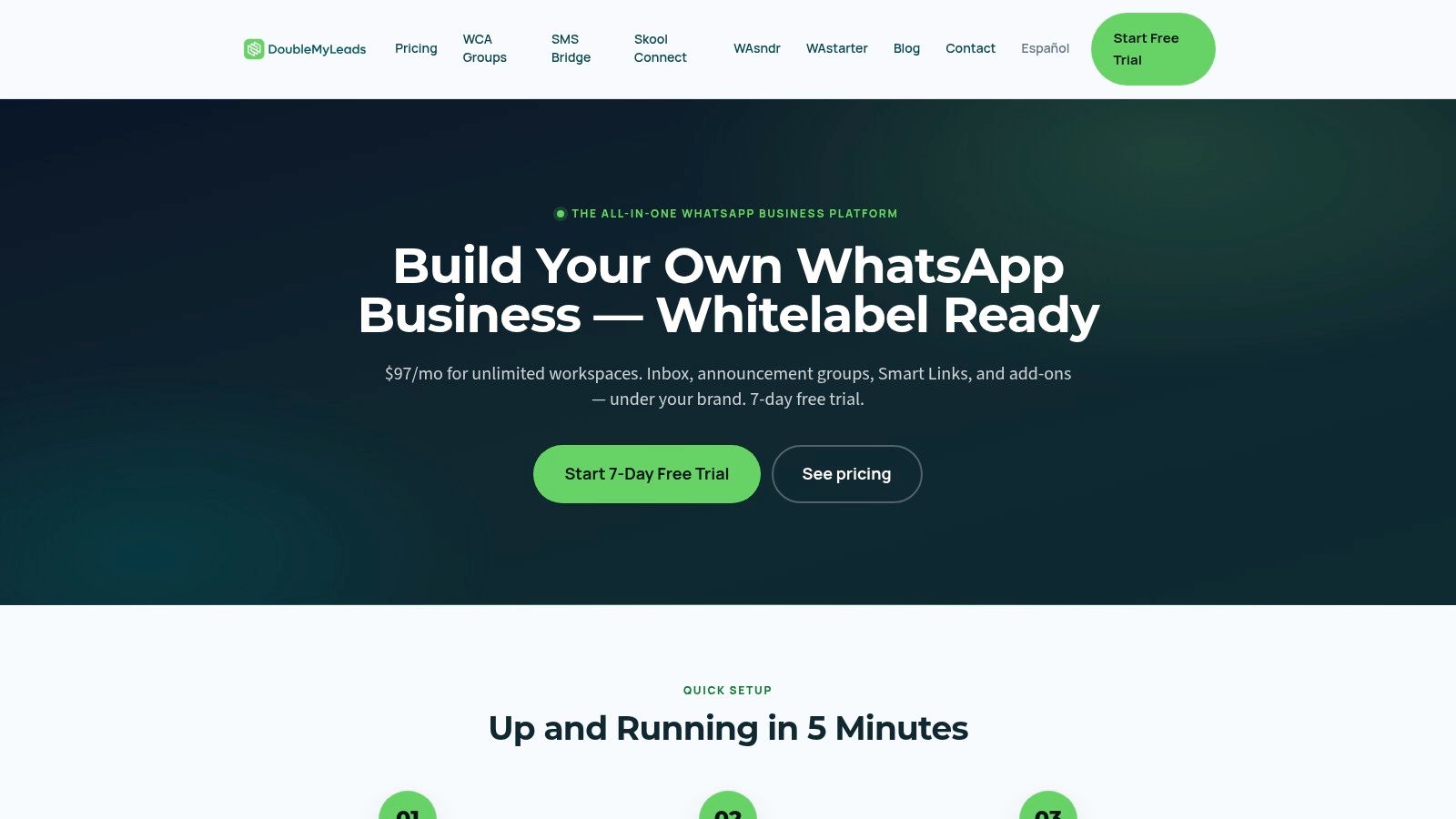
Most WhatsApp tools were built to help one business run WhatsApp. Double My Leads was built so an agency can package WhatsApp as a service, put its own brand on top, and start collecting revenue without turning every deal into a technical project.
That distinction matters more than feature lists. When a client says, "Can we start this week?", you don't want to answer with Meta Business verification steps, API provisioning, template queues, and a pricing spreadsheet. Double My Leads gets numbers connected by QR code, so the launch motion feels a lot closer to onboarding a shared inbox than standing up telecom infrastructure.
Why agencies like the billing model
The strongest part of Double My Leads isn't the inbox. It's the way the economics stay readable. The platform lists a flat $97 per month for one white-label brand and unlimited workspaces, then $19 per client number. That makes it easier to resell with predictable margin instead of guessing what template volume will do to your costs next month.
For small and midsize agencies, predictable billing usually beats theoretical infrastructure purity. A flat platform fee means you can quote retainers faster, bundle support more cleanly, and avoid awkward client calls when send volume jumps.
Practical rule: If your account managers can't explain the invoice in one minute, your reseller model will drag.
Double My Leads also includes free forever lead capture tools, tracked smart links, chat widgets, scheduling, auto-welcome flows, CRM sync, and API options for deeper automation. That's enough for many agencies to package lead capture, follow-up, and reactivation without buying three extra tools.
Where it works and where it breaks
The operational upside is speed. Create the account, scan the QR code, connect the number, and you're live fast. The shared inbox supports text, images, video, documents, and voice notes, plus assignments, tags, notes, and quick replies. If you run service fulfillment across multiple client workspaces, that's a much better setup than handing one client phone to one staff member.
There are also scale-oriented reseller extras. WCA Groups give agencies a way to sell broadcast-style distribution through WhatsApp Community Announcement Groups, and the company also offers WAstarter for teams that need an official Cloud API route.
A few trade-offs are real:
- Extra capabilities add up: Additional client numbers, WCA Groups, SMS Bridge, and other extensions raise total account cost.
- QR-session fit isn't universal: Some enterprise clients will still want Cloud API reliability, stricter governance, or infrastructure aligned with Meta-first policies.
- Ops discipline still matters: Unlimited sending doesn't rescue weak segmentation or sloppy consent practices.
The platform also cites more than 6M messages sent and a reported 96% open rate on its own site. I wouldn't treat that as a universal benchmark, but it does tell you the product is being used in real outbound volume, not just as a lightweight inbox layer. For agencies that need a resellable front-end fast, Double My Leads is the cleanest fit on this list.
2. WATI
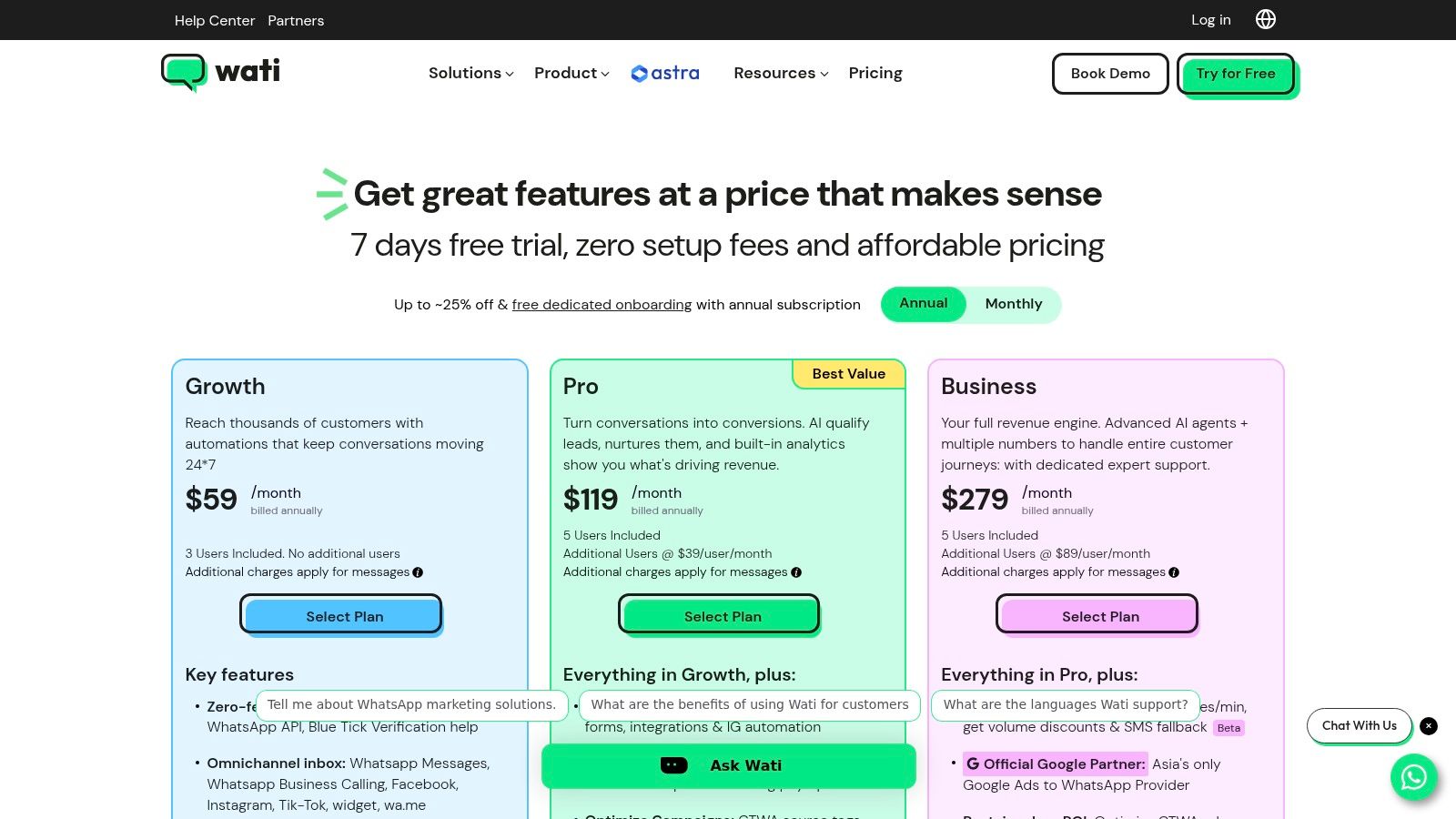
WATI is what many agencies buy when they want an official WhatsApp-first platform and don't need a full omnichannel suite. It sits in the middle of the market well. More polished than bare infrastructure, more focused than broad customer messaging hubs.
Its strengths are the standard pieces agencies use. Broadcasts, shared inboxes, automation flows, chatbot tooling, and Click-to-WhatsApp ad workflows are all there. If your acquisition engine starts in Meta ads and ends in WhatsApp handoff, WATI fits that motion better than tools built around support or developer APIs.
Best fit for ad-driven agencies
WATI makes the most sense when your clients already buy traffic and want tighter ad-to-chat follow-up. Teams can manage templates, route conversations, and give sales or support staff a structured inbox instead of a jumble of phones.
The catch is the pricing layer. WATI subscription cost is only part of the picture. WhatsApp fees sit underneath it, and that means campaign success can increase your fulfillment cost instead of just increasing client ROI. Agencies exploring official vendors should also understand the difference between platform markup and direct infra models before reselling. This breakdown of WhatsApp vendors for reselling is useful before you lock in.
WATI is easier to sell than raw API access. It's harder to protect margin on than flat-fee models.
WATI is a good operator tool. It isn't my first pick for agencies that want simple resale packaging, because variable messaging economics can get messy once multiple clients start sending heavily.
3. Interakt
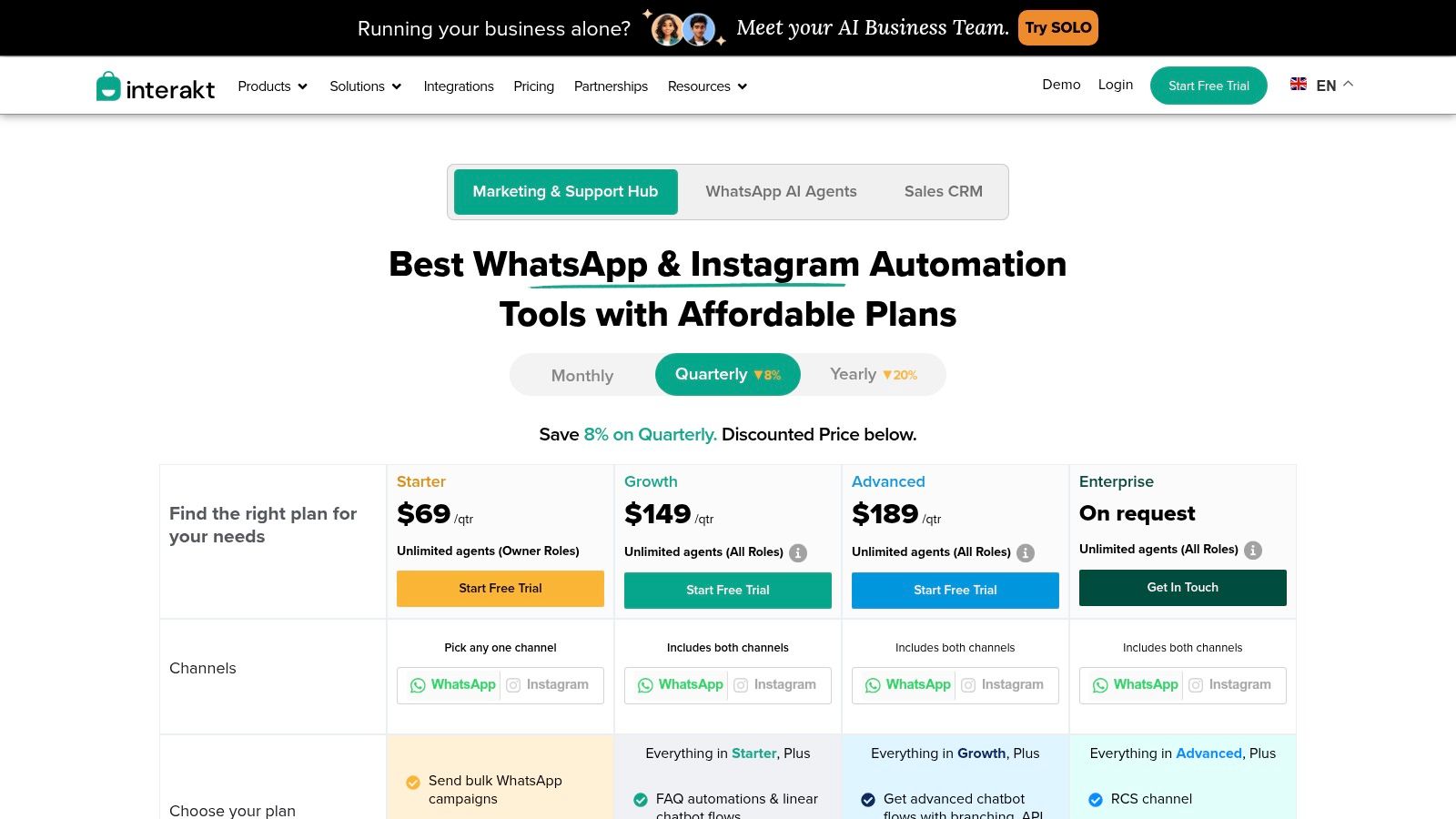
Interakt feels like it was designed by people who expect small commerce teams to move fast and not overcomplicate setup. That gives it an advantage with agencies serving lean ecommerce brands, especially if those brands want WhatsApp and Instagram in one operating layer.
The product combines broadcasts, a shared inbox, simple automations, commerce connectors, and payments support. It isn't trying to be the most expansive enterprise tool in the market, which is part of why it's attractive for smaller accounts.
Where Interakt wins
Interakt is easy to package for clients that need "enough automation" rather than a full systems architecture project. Shopify-oriented brands, founder-led stores, and smaller retention programs can usually understand its value quickly. The combined WhatsApp and Instagram motion also matches how many direct-to-consumer brands sell.
A few practical points matter:
- Tier clarity helps sales: The plans are easier to explain than some vendor pricing pages that hide useful features behind demos.
- Unlimited-agent positioning on higher tiers reduces friction: Agencies don't have to renegotiate every time a client wants one more support rep in the inbox.
- Lower-tier limits matter: Once a client wants deeper automation or more aggressive campaign usage, you'll start feeling those plan boundaries.
Interakt is not the tool I'd pick for complex multi-client orchestration or for agencies that need deep white-label control. But if your book of business is heavy on smaller online stores and quick deployment matters more than custom infrastructure, it's a solid option.
4. Zoko
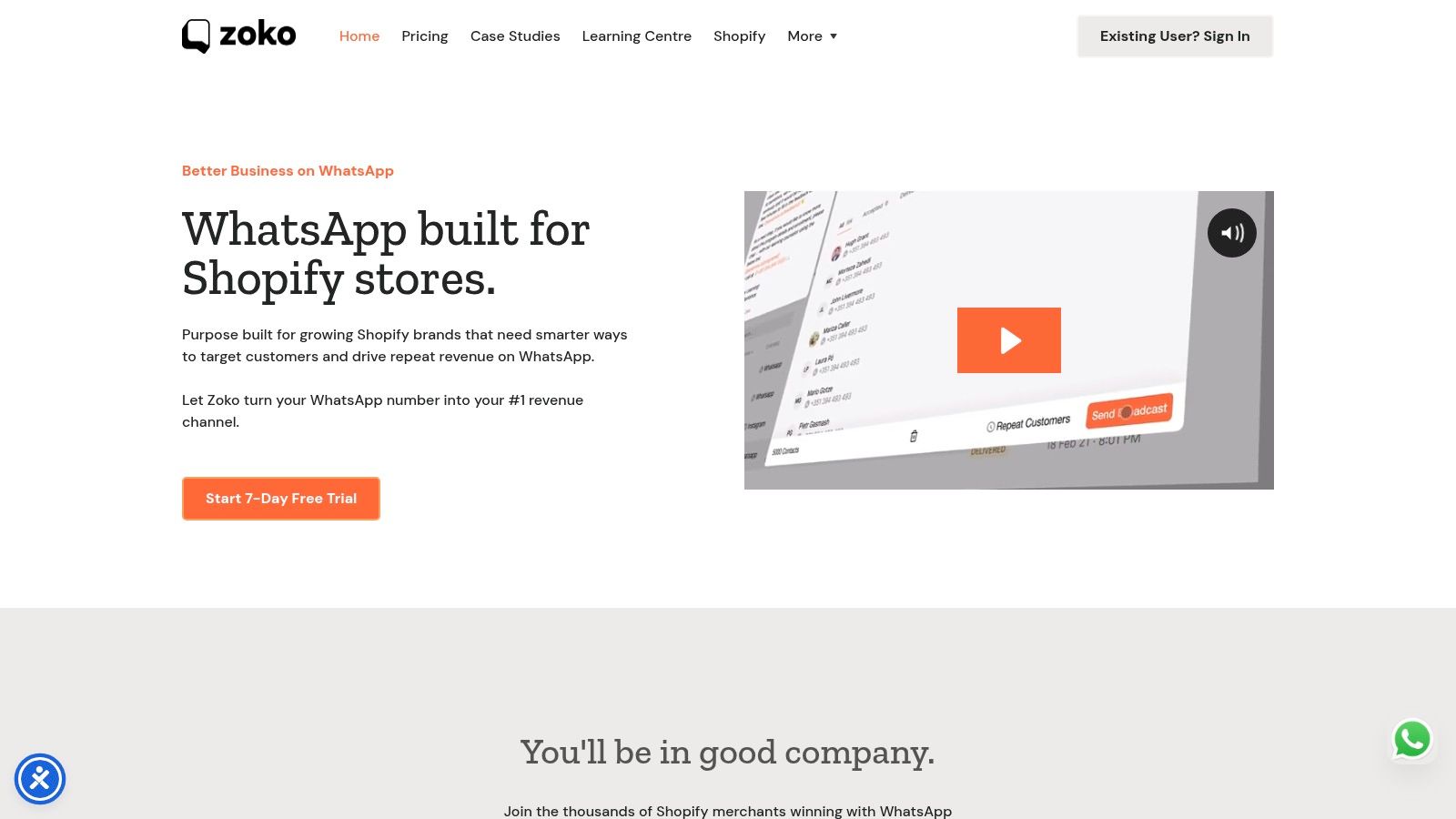
Zoko is a commerce tool first and a general WhatsApp platform second. That's why some agencies love it and others bounce off it quickly.
If most of your clients run Shopify and want revenue plays like abandoned cart recovery, COD workflows, upsells, catalog messaging, and review collection inside WhatsApp, Zoko is very usable. If your clients aren't commerce-heavy, it starts to feel narrow.
Strong when the store is the center of the stack
Zoko's best feature isn't any one widget. It's the way the product lines up with ecommerce operations. Product catalogs, notifications, segmentation, chat entry points, and prebuilt automations all point toward actual store outcomes rather than generic "engagement."
For agencies, that means less custom design work for common lifecycle campaigns. You can launch proven store workflows quickly and spend more time on offer logic, timing, and segmentation.
That said, there are real limits:
- Shopify dependence is a strength and a weakness: Great if that's your niche. Less attractive if you support mixed stacks.
- Fair-use and add-on logic needs scrutiny: Commerce tools often look affordable until active send volume grows.
- Not ideal for broad reseller packaging: It's easier to sell as an ecommerce retention service than as a generic WhatsApp offer.
If your agency's identity is "we grow Shopify brands," Zoko deserves a short list spot. If not, you'll probably want something with wider stack tolerance.
5. respond.io
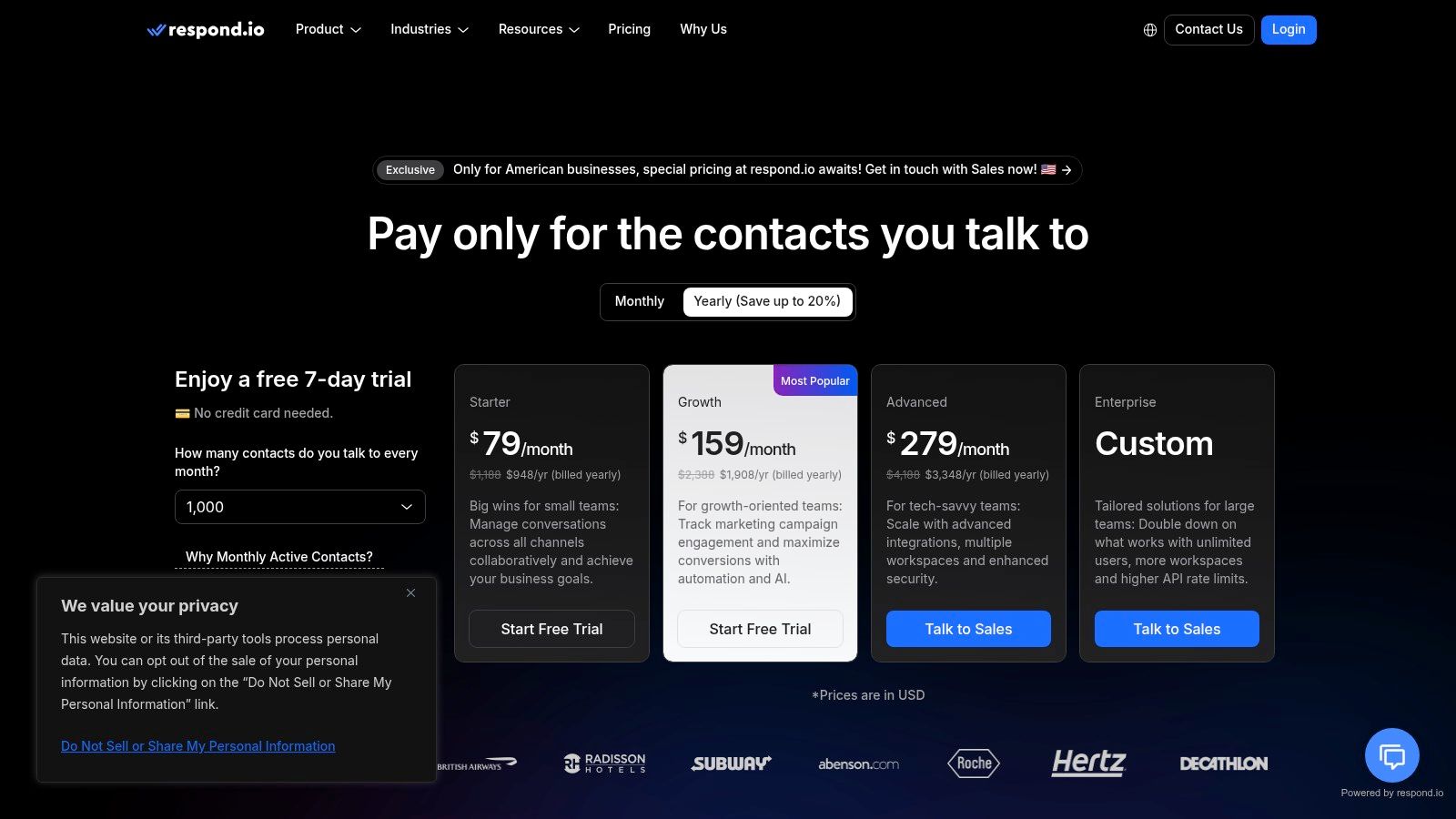
respond.io is one of the better answers when a client says, "We don't just need WhatsApp. We need all inbound conversations under one roof." It's an operations platform for teams that care about routing, automation, contact identity, and cross-channel coordination.
For agencies, that can be either a selling point or a problem. More capability helps larger accounts. More capability also means more implementation work, more training, and more ways a simple campaign request turns into a systems project.
Good economics for the right account
The attractive part of respond.io is its pricing posture around WhatsApp. The company leans on a no-markup approach to WhatsApp fees, while charging for the platform around active contacts and feature access. That's cleaner than some vendor models where costs are hidden inside markups or layered packages.
This broader industry shift matters. Recent coverage has pointed out that Meta pricing has moved toward destination-based, per-message template pricing, which forces high-volume senders to care more about unit economics than feature checklists as discussed in this WhatsApp business conversational marketing playbook. respond.io fits teams that want clearer cost modeling and are willing to manage a more operationally serious platform.
- Best for multi-channel teams: Sales, support, and lifecycle messaging in one place.
- Less ideal for lightweight resale: Smaller agencies can end up paying for sophistication they won't use.
- Requires a process-minded client: If the client barely manages one inbox today, don't hand them an orchestration platform tomorrow.
respond.io is strong. It just isn't the easiest tool to turn into a simple, repeatable agency product.
6. SleekFlow
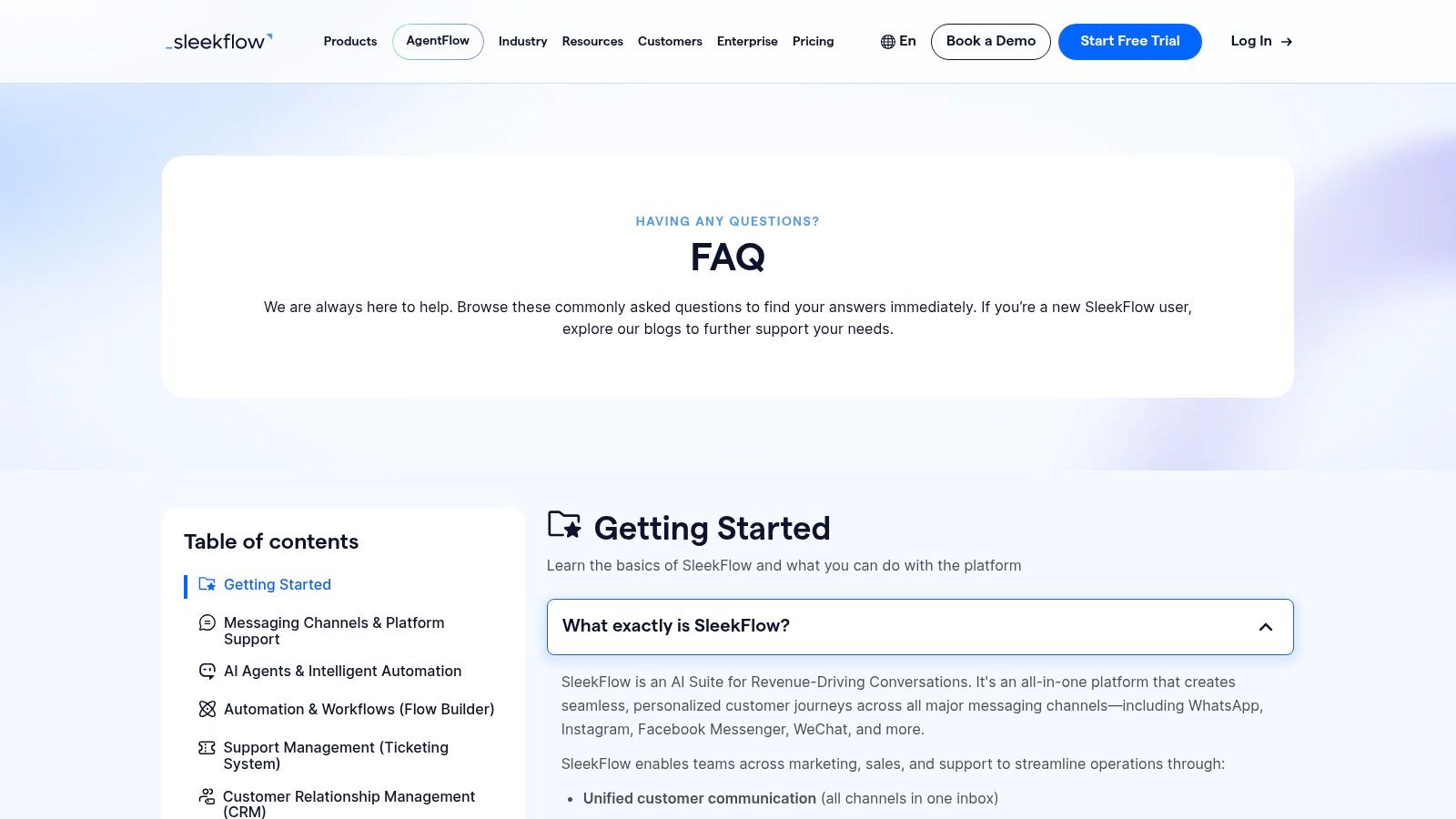
SleekFlow is for agencies that get pulled into enterprise onboarding conversations and don't want to improvise their answers. It does a better job than most at explaining billing logic, onboarding structure, migration paths, and WhatsApp operational details.
That sounds boring until you're in a sales call with a larger brand and the client asks how coexistence, onboarding, or active contact billing will work. Suddenly boring becomes useful.
Where SleekFlow earns its place
SleekFlow's enterprise value is less about shiny automation and more about operational clarity. It supports campaigns, flows, AI agents, and inbox workflows, but the part I respect is the documentation posture around official BSP onboarding and migration.
That's timely because the platform environment is changing. Recent industry coverage has noted that businesses can now run the WhatsApp Business App and Cloud API on the same number, while the platform is also moving toward username-based identity and AI-assisted conversations in this overview of WhatsApp Business Platform capabilities and constraints. Agencies handling larger migrations need vendors that understand that coexistence reality.
The bigger the client, the more "who owns the number and workflow" matters.
SleekFlow isn't the cheapest route. But for accounts that need official onboarding, documentation, migration guidance, and less guesswork around WhatsApp operations, it's a serious option.
7. Rasayel
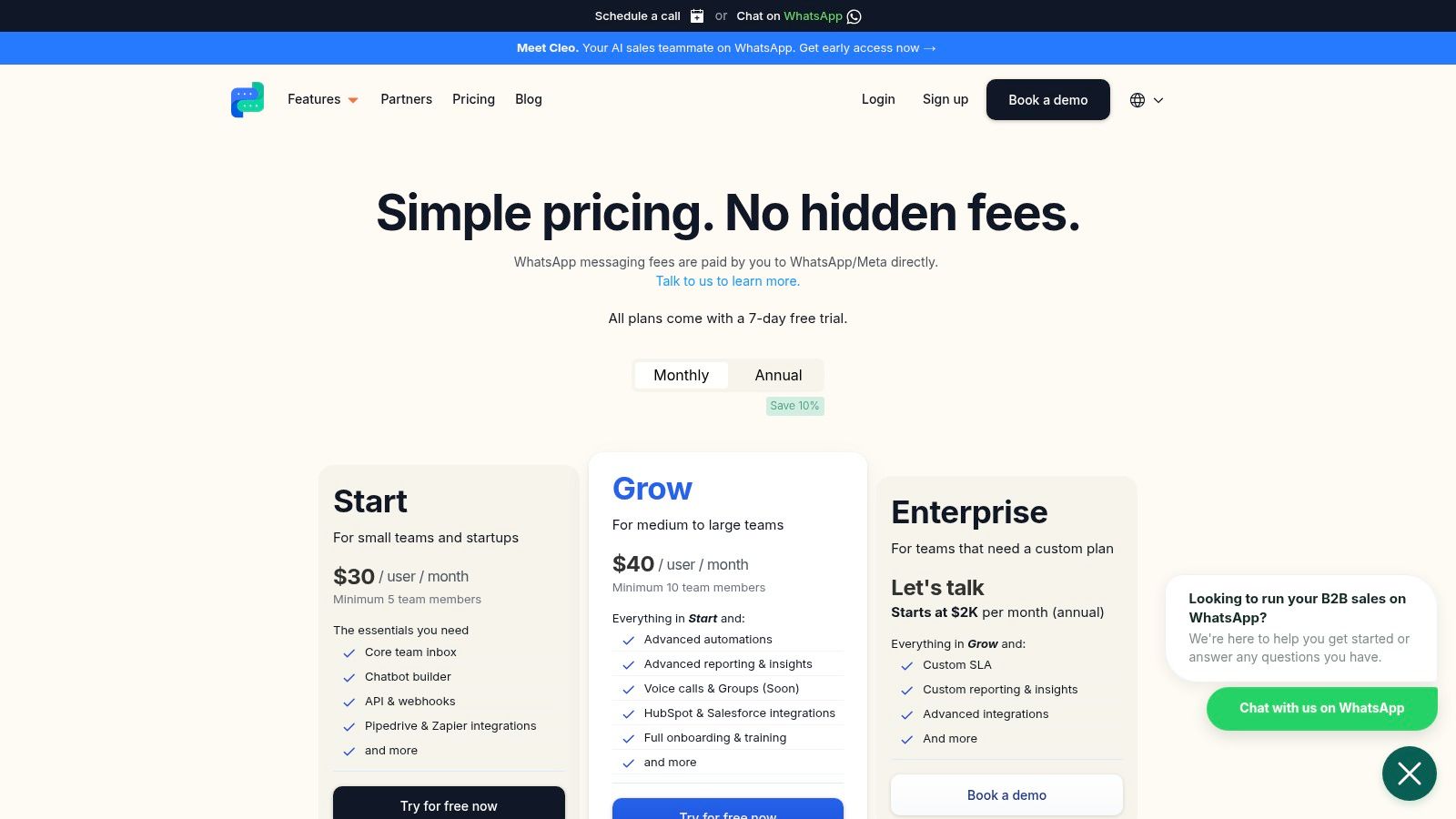
Rasayel is one of the clearest B2B sales-oriented WhatsApp tools in this category. It isn't trying to dominate commerce, creator funnels, or broad omnichannel support. It leans into team selling, CRM sync, and structured inbox use.
That focus is useful for agencies serving outbound-heavy or pipeline-driven clients. When the job is routing leads, logging context, syncing to HubSpot or Salesforce, and helping reps respond faster, simplicity matters more than having every marketing toy in one dashboard.
Better for pipeline teams than broadcast-heavy shops
Rasayel's per-user style pricing is easier to reason about than many campaign-oriented tools. For agencies, that makes quoting internal sales team use cases more straightforward. A client can understand seats, inbox access, and CRM value faster than they can understand variable marketing ops across countries and template classes.
Its trade-offs are also obvious:
- Strong CRM posture: Good fit for HubSpot, Salesforce, and Pipedrive environments.
- Less built for mass outbound: Lower-tier broadcast limits will matter for aggressive campaign teams.
- Minimum seat expectations can narrow SMB fit: Tiny clients may feel overserved.
If your clients sell through reps instead of catalogs, Rasayel is more practical than a commerce-first platform. If they care mostly about promotional reach, look elsewhere.
8. ManyChat
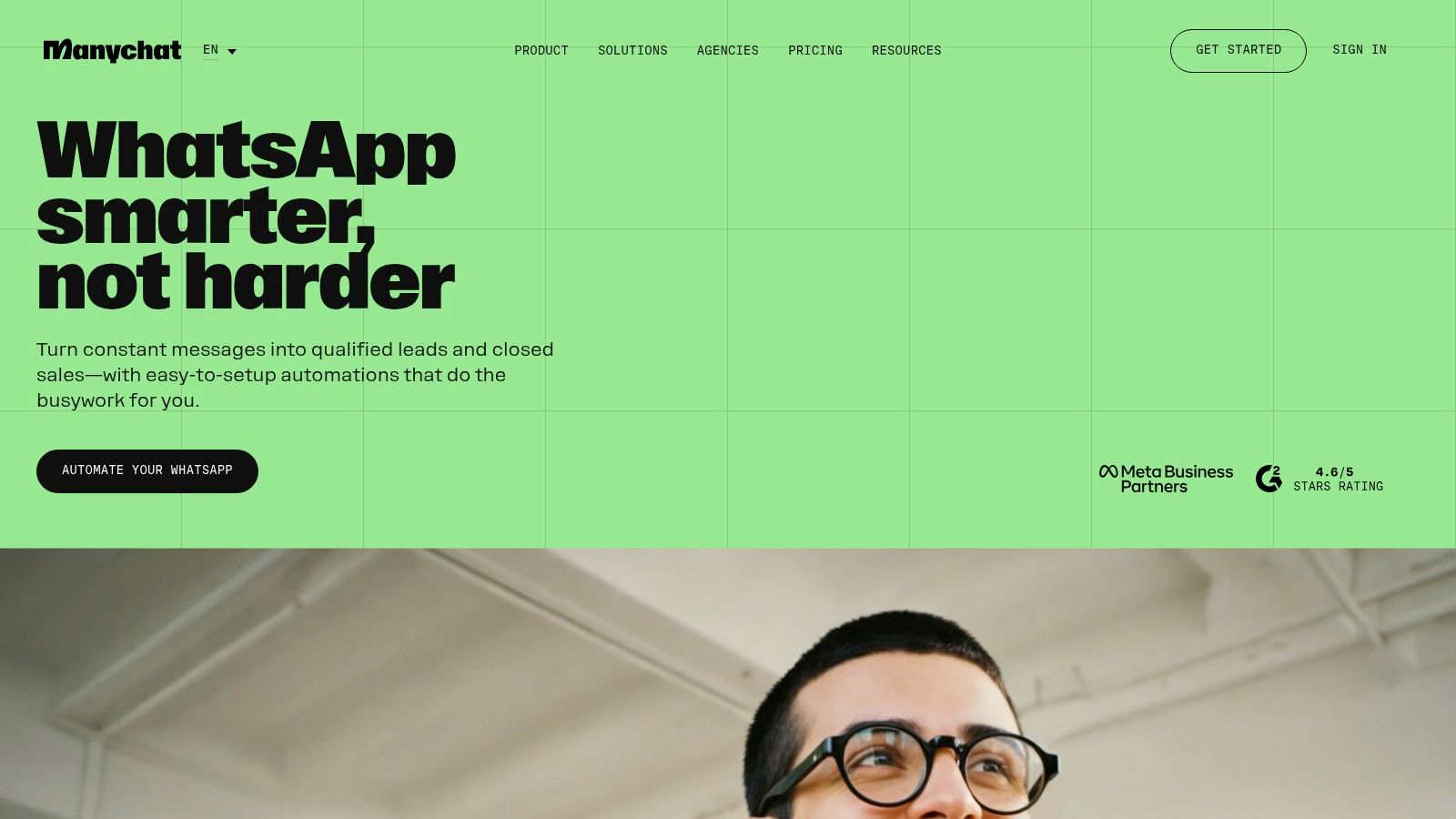
ManyChat is the easiest tool on this list to hand to a non-technical marketer who wants to build automations visually. That's its edge. Agencies with creator clients, info products, lead magnets, or social-first funnels already know the appeal.
The benefit is speed of building. The drawback is stack control. ManyChat makes WhatsApp feel approachable, but it also moves conversations into its own operating environment rather than preserving the familiar WhatsApp Business app workflow.
Best when your agency sells funnel logic
ManyChat works well when the offer is built around flow design, nurture logic, and multichannel follow-up. If your team already uses it for Instagram or Messenger, adding WhatsApp can feel like a natural extension rather than a fresh operational system.
That said, agencies should be honest about what they're selling. You're not just selling WhatsApp presence. You're selling a managed automation layer. If you want a wider view of how that positioning differs from a dedicated conversational marketing platform, that's the comparison worth making before you standardize.
- Excellent for visual builders: Fast to prototype and easier for junior operators to maintain.
- Weaker for native app continuity: Some clients will miss staying inside the WhatsApp Business app.
- Template charge handling still matters: The wallet model doesn't remove messaging economics. It just packages them differently.
ManyChat is good at making automation accessible. It isn't the strongest choice for agencies whose value comes from white-label infrastructure resale.
9. Bird formerly MessageBird
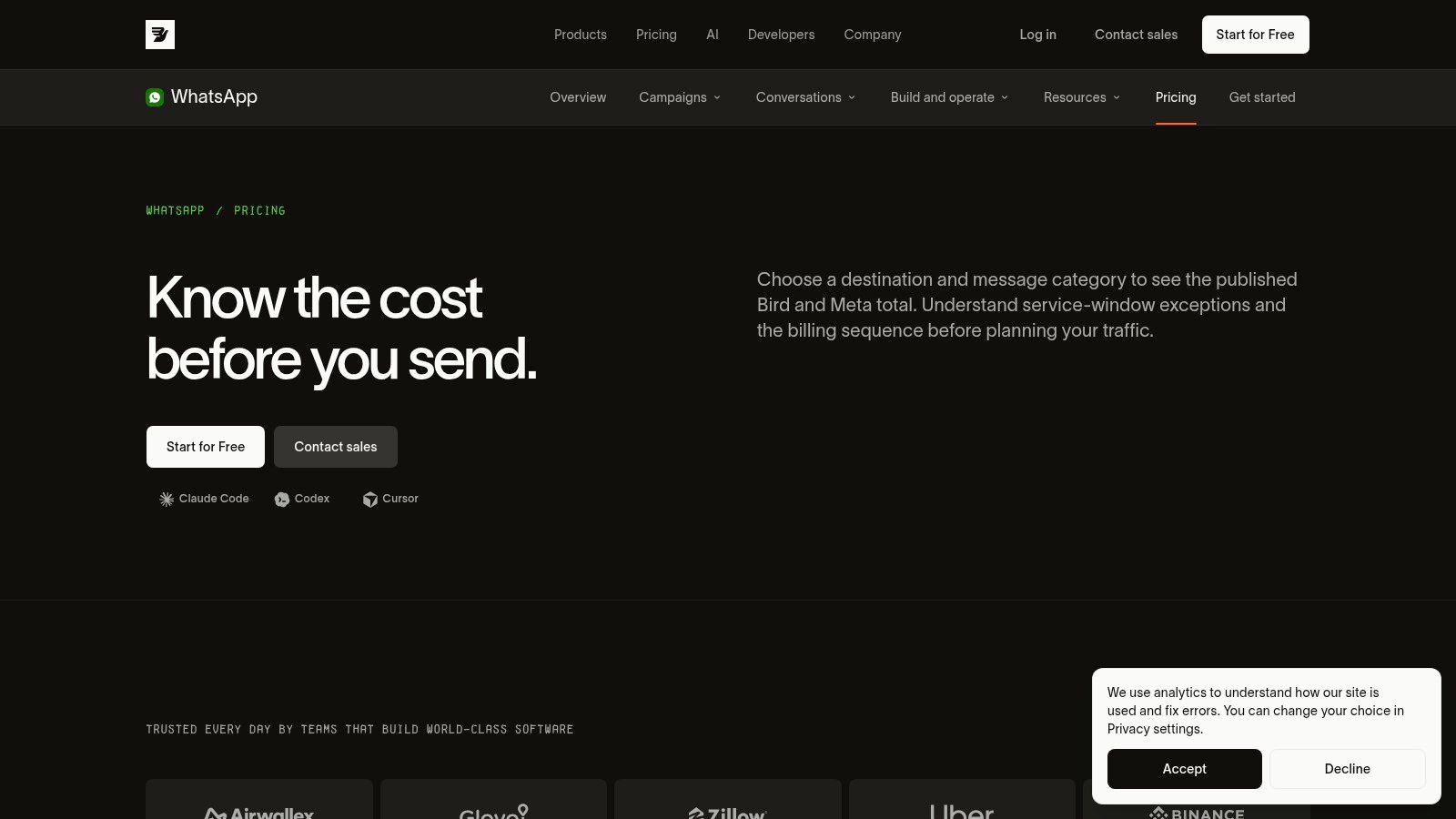
Bird is for teams that care about connectivity, pricing transparency, and infrastructure detail more than polished campaign playbooks. Some agencies won't want that. Others, especially technical operators, will prefer it.
Its appeal is straightforward. Bird publishes granular country and category pricing references, adds documented message processing logic, and supports the kind of API and CRM workflows that make sense when you already have systems in place.
Useful when finance asks hard questions
Bird becomes attractive the moment your finance lead or operations team wants to understand exact cost composition. Not "about how much will this campaign cost?" but "what exactly gets billed, in what order, and by whom?"
That matters because WhatsApp is no longer a channel you can price casually. One commercial research summary from 2026 reported €1.02 revenue per message overall, while automated flows produced €2.48 revenue per contact and accounted for 47% of WhatsApp revenue, or €45.4M, across the dataset according to this WhatsApp revenue benchmark summary. When revenue attribution gets that serious, tooling decisions move closer to finance decisions.
If you can't attribute revenue cleanly, granular pricing transparency won't save you. But once you can attribute it, transparency matters a lot.
Bird is a fit for infra-minded agencies and technical teams. It's not the fastest tool to wrap in a clean reseller story for average SMB clients.
10. Twilio WhatsApp
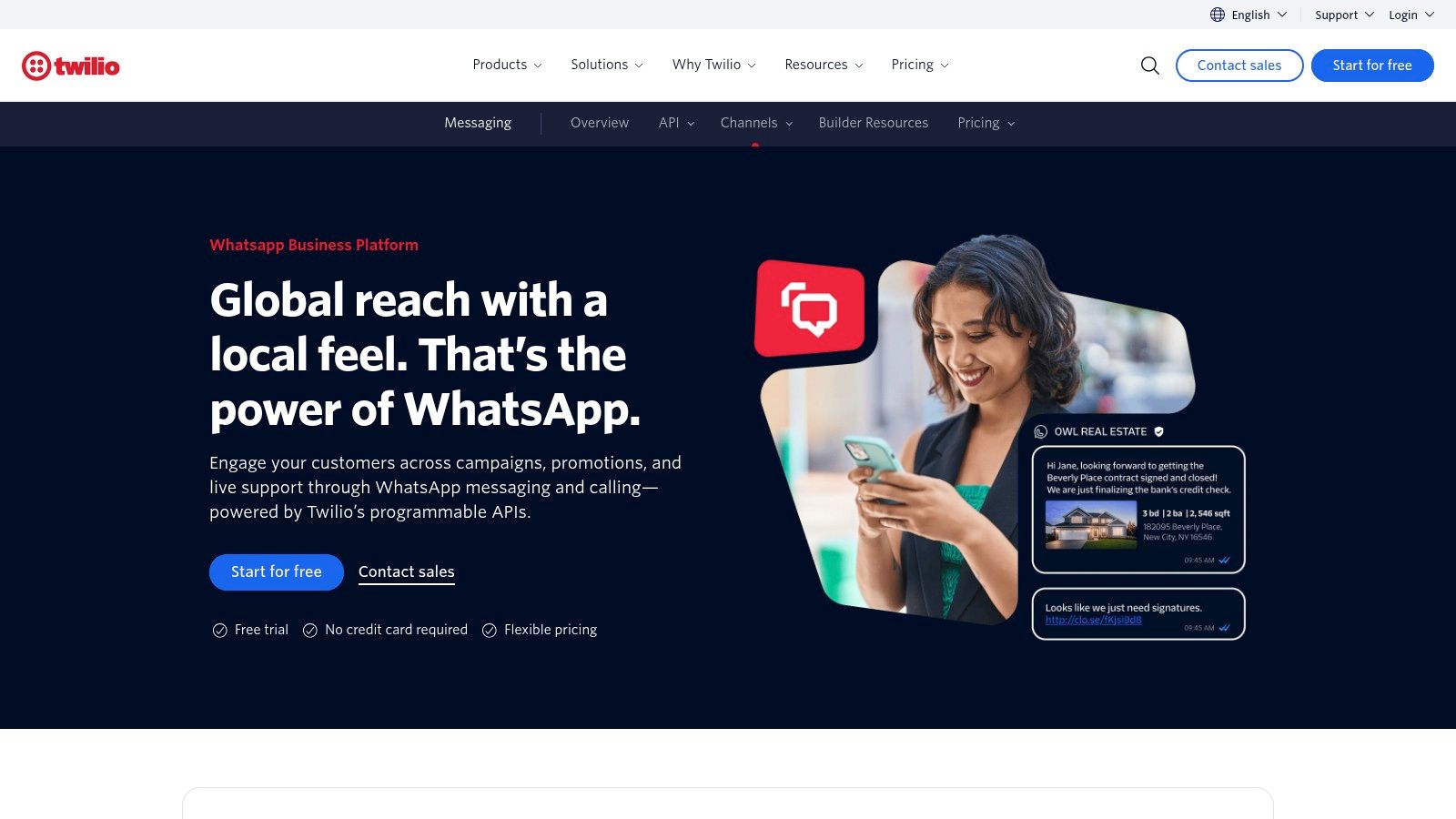
Twilio isn't really a marketing tool in the same sense as the others. It's the foundation you use when you want to build your own thing, embed WhatsApp into an existing system, or combine it tightly with SMS, voice, and custom logic.
That's why agencies either love Twilio or avoid it. If you have developers, it's flexible. If you don't, it turns a messaging project into a product build.
Choose Twilio when custom control matters more than launch speed
Twilio gives you APIs, SDKs, webhooks, routing options, and enterprise-grade infrastructure. If the client has unusual workflows, needs WhatsApp integrated into a proprietary app, or wants strict ownership over business logic, Twilio is a rational choice.
But agencies should go in clear-eyed. Twilio doesn't magically create a polished campaign manager. You either build the layer you need or connect Twilio to tools that provide it. For teams comparing official API approaches, this overview of what Cloud API means in practice is a good grounding before you commit to a developer-first stack.
The broader scale case for official infrastructure is strong. Meta reported more than 200 million monthly active users for the standalone WhatsApp Business app in 2023, up from 50 million in 2020, which shows how quickly business usage moved into the mainstream as summarized here on WhatsApp Business statistics.
Twilio is the right tool when the agency is really acting like a product builder or systems integrator. It isn't the right tool when the agency wants to resell a repeatable service next week.
Top 10 WhatsApp Marketing Tools, Quick Comparison
| Product | Core features | UX & quality ★ | Pricing & value 💰 | Target audience & USP 👥 ✨ |
|---|---|---|---|---|
| 🏆 Double My Leads | White‑label workspaces, QR connect (no Meta verification), unlimited real‑time inbox, broadcasts, CRM sync, REST API | ★★★★★, <5min onboarding; reported 96% open rate | 💰 $97/mo platform + $19/number; flat messaging (predictable margins); 7‑day trial & free lead tools | 👥 Agencies & SaaS resellers; ✨ white‑label resale, WCA Groups, QR smart links & unlimited messaging |
| WATI | Cloud API broadcasts, shared inbox, chatbots, CTWA ad tracking, webhooks | ★★★★, high throughput (up to 4K msgs/min) | 💰 Subscription + Meta conversation fees (may add markups) | 👥 Agencies/SaaS focused on ad‑to‑WhatsApp; ✨ Cloud API scale & ad optimization |
| Interakt | Bulk campaigns, shared WhatsApp/IG inbox, basic chatbots, Shopify & payments | ★★★, SMB‑friendly UX in India markets | 💰 Tiered USD plans; Growth+ has unlimited agents on higher tiers | 👥 SMB ecommerce teams; ✨ WhatsApp+Instagram flows & payments |
| Zoko | Catalog sync, in‑WhatsApp checkout, broadcasts, ecommerce flows, CTWA | ★★★★, commerce‑first for Shopify | 💰 Plan limits + fair‑use/add‑ons for high volume | 👥 Shopify DTC brands; ✨ native catalog + checkout inside WhatsApp |
| respond.io | Omnichannel inbox, automation builder, AI agents, MAU pricing | ★★★★, enterprise multichannel, scalable | 💰 MAU pricing; Meta fees passed through (no markup) | 👥 B2C support & sales teams; ✨ no‑markup Meta pass‑through & broad integrations |
| SleekFlow | Campaigns, flows, AI agents, official BSP onboarding & migration docs | ★★★★, strong enterprise onboarding | 💰 Active‑contact billing; higher start price for enterprise features | 👥 Enterprises needing migration help; ✨ BSP status & co‑existence guidance |
| Rasayel | Shared inbox, automations, HubSpot/SF/Pipedrive integrations, voice transcription | ★★★, simple, CRM‑centric UX | 💰 Per‑user pricing; Meta fees separate; 7‑day trial | 👥 B2B sales teams; ✨ deep CRM integrations & straightforward per‑seat pricing |
| ManyChat | Visual flow builder, broadcasts, live inbox, ManyChat Wallet for templates | ★★★, visual UX for non‑tech users | 💰 Platform fees + template charges via Wallet | 👥 Creators, ecommerce, lead‑gen; ✨ intuitive visual flow builder |
| Bird (MessageBird) | API & CRM workflows, country/category pricing tables, VMN/WABA guidance | ★★★, infra‑oriented, granular controls | 💰 Pay‑as‑you‑go with transparent per‑country rates | 👥 Infra/enterprise teams; ✨ granular pricing & VMN procurement support |
| Twilio WhatsApp | Messaging API, SDKs, webhooks, cross‑channel orchestration | ★★★★★, developer‑grade reliability & docs | 💰 Pay‑as‑you‑go + Meta pass‑through + Twilio per‑message fees | 👥 Developers & enterprises; ✨ deep dev tooling and multichannel orchestration |
Your 2026 Stack-Fit Map and Migration Playbook
The mistake agencies make with WhatsApp marketing tools is choosing by feature density instead of business model fit. The best tool for a developer-heavy systems integrator isn't the best tool for a lead-gen agency selling fixed monthly packages. The stack has to match how you sell, onboard, and support clients.
Here's the blunt stack-fit map.
- Double My Leads: Best for agencies that want fast white-label resale, predictable margin, and low-friction onboarding.
- WATI: Best for ad-driven teams pushing Click-to-WhatsApp and structured WhatsApp operations.
- Interakt: Best for SMB ecommerce agencies that need a simpler sales motion and don't want enterprise overhead.
- Zoko: Best for Shopify-focused retention agencies selling store-specific WhatsApp automations.
- respond.io: Best for agencies managing multi-channel conversation operations with MAU-style commercial logic.
- SleekFlow: Best for enterprise onboarding, migration-heavy deals, and official BSP conversations.
- Rasayel: Best for B2B pipeline agencies that care about CRM sync more than mass promotion.
- ManyChat: Best for creator, funnel, and visual automation teams already living in social DM workflows.
- Bird: Best for infra-minded agencies that want granular pricing visibility and custom workflow control.
- Twilio: Best for custom builds, bespoke integrations, and agencies with developers on staff.
The market is large enough now that specialization makes sense. By late 2024, Statista estimated WhatsApp Business at 764.38 million monthly active users worldwide, and one summary noted that was more than a 6% increase compared with the start of 2024. Meta has also said around 175 million people message a business account every day in this Statista coverage of WhatsApp Business MAU worldwide. The demand is here. The margin question is still what separates good agency offers from messy ones.
Five-step migration playbook
If you're moving from a per-message vendor to a flatter reseller model, the migration usually goes wrong in operations, not in software.
Step one: audit the client mix. Separate clients into broadcast-heavy, inbox-heavy, and automation-heavy buckets. Don't migrate everyone the same way. A support-led account and a promo-led account won't stress the stack the same way.
Step two: model gross margin before you move. Pull three months of billing and compare what you charged clients against what the vendor charged you. If you don't know which clients created the most message cost, fix attribution before changing platforms.
Step three: migrate the easiest accounts first. Start with clients who need fast setup, shared inboxes, lead capture, and simple follow-up. Leave unusual routing, custom APIs, or compliance-heavy enterprise accounts for later.
Step four: standardize your packaged offer. Sell one core plan, one add-on plan, and one enterprise exception path. Agencies lose money when every WhatsApp deal becomes custom scoping.
Step five: retrain the service team on consent, segmentation, and escalation. New pricing won't fix weak campaign discipline. Teams still need rules for who sends what, when, and from which workflow.
Migrations work when agencies reduce exceptions. They fail when old custom habits follow the new stack.
One-week action checklist
This week, pick five current or prospective clients and classify them by stack fit. Then compare your current vendor invoices against your client retainers and identify which accounts have unstable margins.
Next, trial one flat-fee reseller-friendly platform and one official API-oriented platform side by side. Connect a test number, run a simple inbox workflow, build one broadcast, and have an account manager explain the billing model back to you. If they can't explain it clearly, your clients won't understand it either.
Finally, decide what business you're in. If you're reselling a repeatable WhatsApp service, optimize for onboarding speed and predictable margin. If you're building custom communications infrastructure, choose the vendor that supports engineering control and accept the longer ramp.
If you want a WhatsApp offer you can resell without turning every client into a billing puzzle, Double My Leads is built for that job. It gives agencies a white-label platform, fast QR-code onboarding, shared inboxes, broadcast tools, and flat-fee economics that are easier to package and defend. See how it fits your agency model at Double My Leads.