
Your funnel builder probably shouldn't be chosen by template count alone. The category has matured far beyond simple page editors, with recent comparisons evaluating 17 tools in one roundup, which tells you something important: the best sales funnel builders now sit in different categories entirely. Some are funnel-first launch tools. Some are agency operating systems. Some are really CRM platforms with funnel capability layered in.
That shift matters because a funnel isn't just a sequence of pages anymore. It's the system that captures demand, routes leads, triggers follow-up, manages checkout, and gives you enough visibility to fix leaks before you waste more budget. If your business runs on paid traffic, outbound, email nurture, or sales calls, your funnel software affects speed, handoff quality, and reporting just as much as page design.
This guide focuses on fit, not hype. If you run an agency, your shortlist should look different from a SaaS team or an e-commerce brand. And if you sell through messaging, not just forms, you also need to think beyond classic landing pages and understand how e-commerce funnels work.
Table of Contents
- 1. ClickFunnels 2.0
- 2. HighLevel GoHighLevel
- 3. Leadpages
- 4. Unbounce
- 5. Instapage
- 6. Kartra
- 7. Systeme.io
- 8. GetResponse
- 9. HubSpot Marketing Hub part of HubSpot Customer Platform
- 10. Landingi
- Top 10 Sales Funnel Builders, Feature & Pricing Comparison
- How to Choose Your Winner & Final Thoughts
1. ClickFunnels 2.0
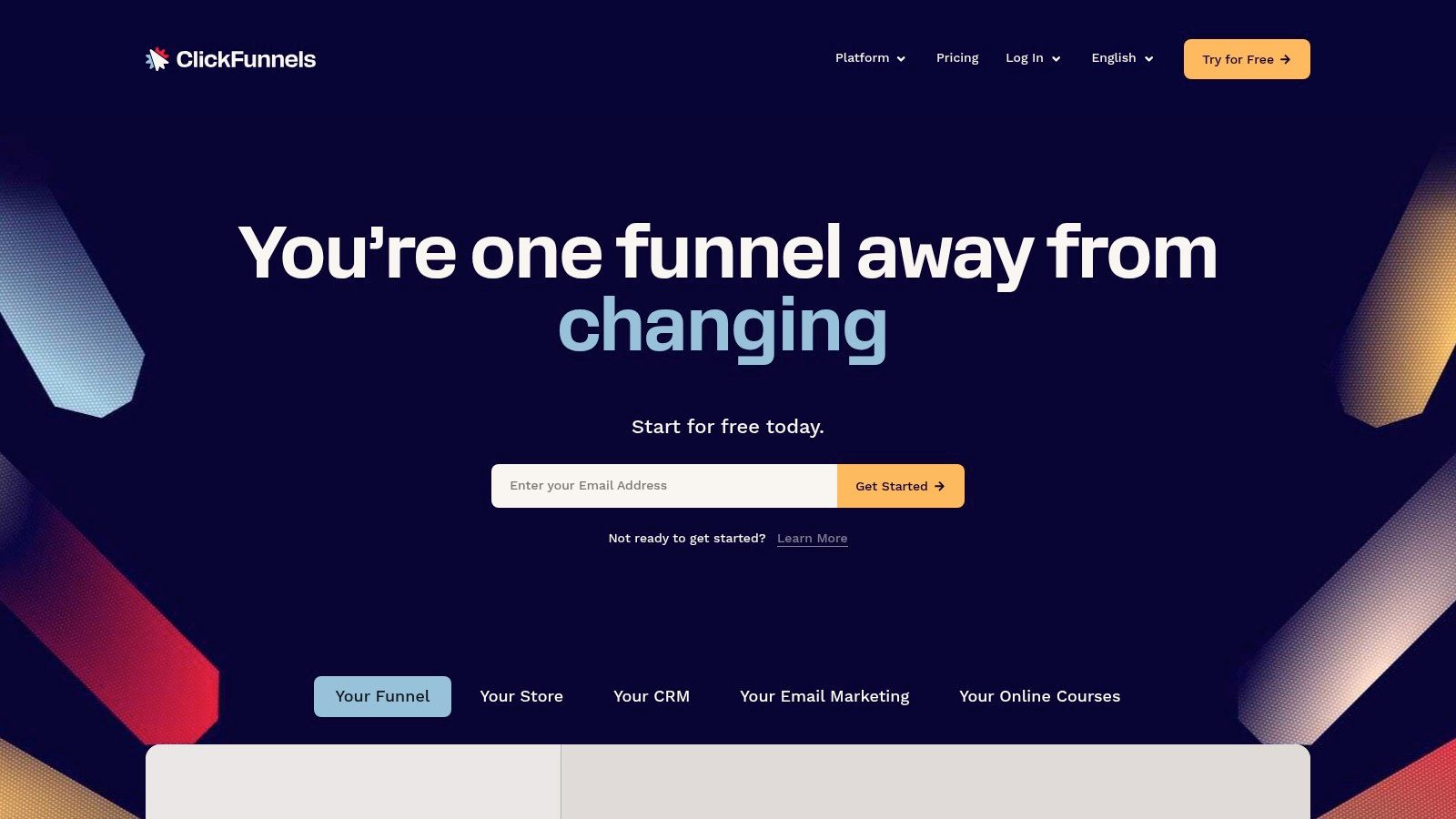
ClickFunnels still makes the most sense when you want to launch a classic direct response funnel fast. Opt-in page, sales page, order form, upsell, downsell, webinar registration. That structure is where it feels natural.
It's also one of the few tools that still thinks in funnels first, not pages first. If you sell information products, coaching, workshops, or straightforward offers with a defined buyer path, that matters. You spend less time stitching together separate tools and more time shipping.
Best for direct response funnels
The strengths are practical. The visual builder is easy to grasp, the template ecosystem is large, and the training around funnel strategy is better than what most competitors provide. For teams that don't have a designer or conversion specialist in-house, that support shortens the path from idea to live campaign.
The trade-off is rigidity. ClickFunnels is opinionated. That helps beginners, but it can frustrate teams that want complete layout freedom or deeper CRM control.
- Use it when: you want a prescriptive funnel framework with built-in checkout, upsells, and simple automation.
- Skip it when: your business needs deep pipeline management, multi-client workspaces, or advanced white-label control.
- Expect extra setup: if WhatsApp, custom reporting, or external CRM workflows matter, you'll likely connect them through integrations like Zapier or webhooks.
ClickFunnels works best when the sales path is linear. It works worse when your funnel depends on heavy sales-team collaboration after the lead comes in.
Website: ClickFunnels
2. HighLevel GoHighLevel
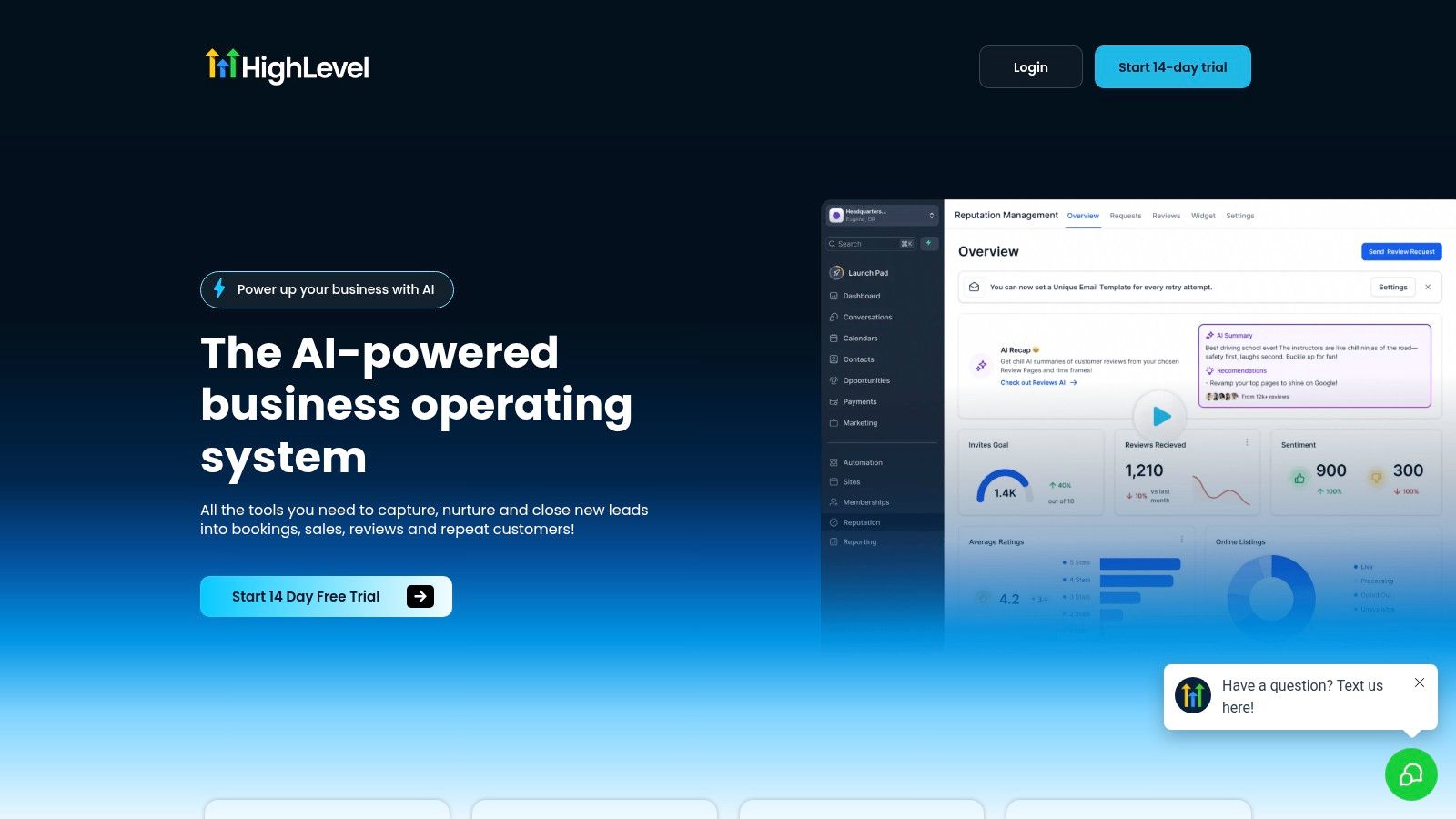
If you run an agency, HighLevel belongs near the top of the list. It isn't just a funnel builder. It's a client operations layer with funnels, CRM, calendars, workflows, conversations, and sub-accounts bundled together.
That matters because agencies rarely fail on page design alone. They fail on fulfillment complexity, fragmented tools, and weak margins. HighLevel addresses all three better than most alternatives.
Best for agencies and white-label resale
The biggest advantage is structure. You can create separate client environments, manage pipelines, automate follow-up, and package the whole thing as your own service. That's why so many lead-gen agencies use it as the core stack, especially when they want recurring revenue from software plus services.
Its weakness is complexity. HighLevel can become messy if you don't standardize snapshots, naming, permissions, and workflow governance. Teams that skip that discipline usually blame the tool when the actual problem is operational sprawl.
A practical point often missed in reviews is conversational selling. A lot of modern comparisons still focus on pages, A/B testing, and templates, but don't evaluate whether the funnel supports messaging-first conversion. That gap matters because WhatsApp has over 2 billion users globally, and many agencies now close leads inside chat, not on a form.
Operational rule: If you resell marketing systems, don't just ask whether a platform can build pages. Ask whether it can support white-label delivery, inbox ownership, lead assignment, and messaging workflows without duct tape.
Website: HighLevel
3. Leadpages
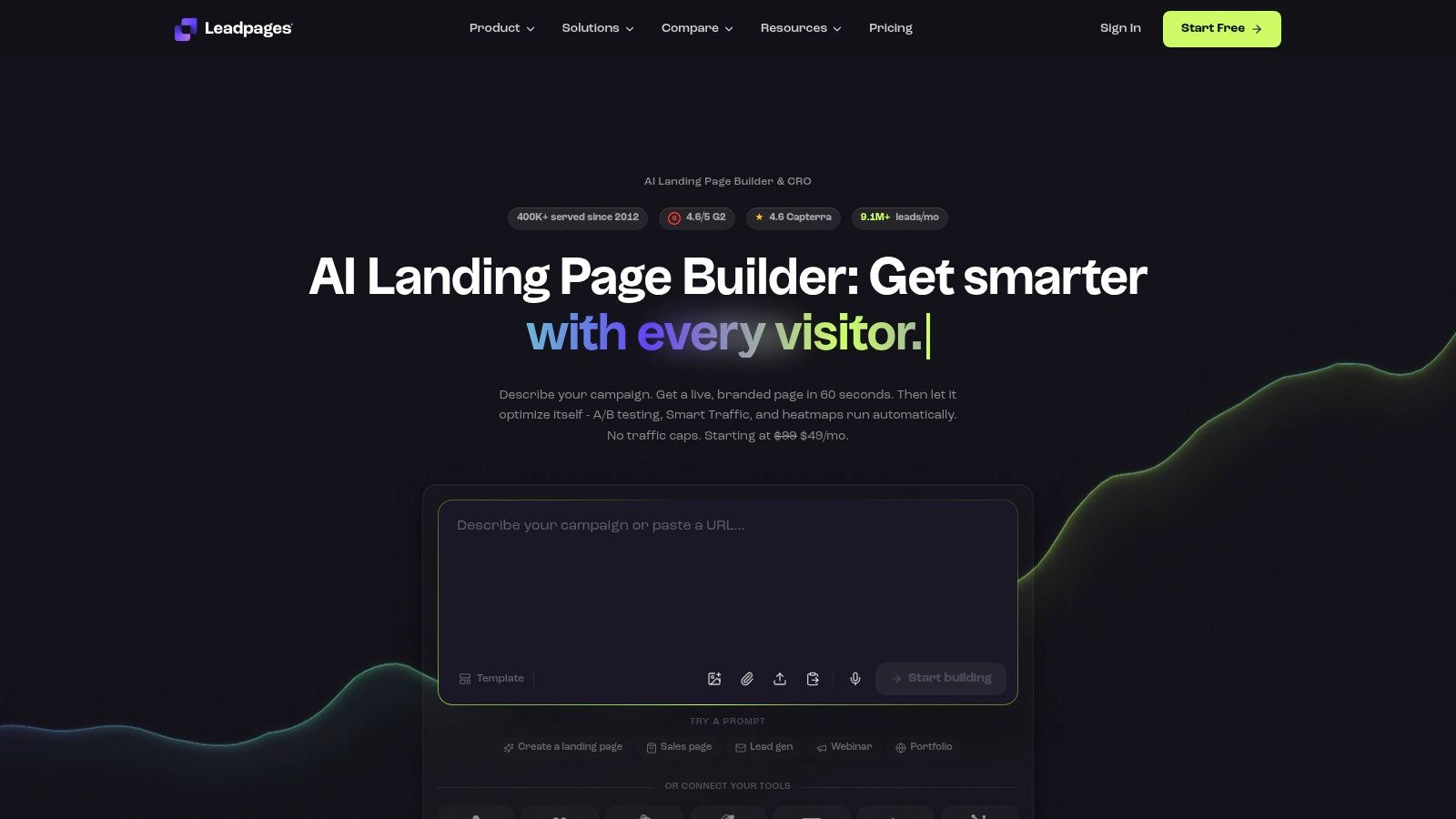
Leadpages is a good reminder that not every business needs a full funnel operating system. Sometimes you just need pages that go live quickly, collect leads reliably, and don't create technical debt.
That's where Leadpages earns its place. It's lighter than the all-in-one platforms and easier to hand off to a small marketing team that wants speed over complexity.
Best for lean lead generation teams
For consultants, local service businesses, in-house marketers, and small SaaS teams, Leadpages can cover the top and middle of the funnel without overwhelming the team. You get page building, pop-ups, forms, simple checkout options, and testing features in a setup that's easier to maintain than a full CRM suite.
What you don't get is deep funnel orchestration. Once the lead enters a longer nurture sequence, a sales pipeline, or a more advanced attribution setup, Leadpages usually needs help from your email platform and CRM.
That's not a flaw. It's just scope. If your bottleneck is page production, not lifecycle automation, a simpler tool often performs better because the team uses it.
- Strong fit: lead magnets, webinar registrations, consultation bookings, simple paid traffic pages.
- Weak fit: multi-stage sales processes, multi-touch attribution, complex account-based workflows.
- Best buyer: teams that want one marketer to launch pages without waiting on design or development.
Website: Leadpages
4. Unbounce
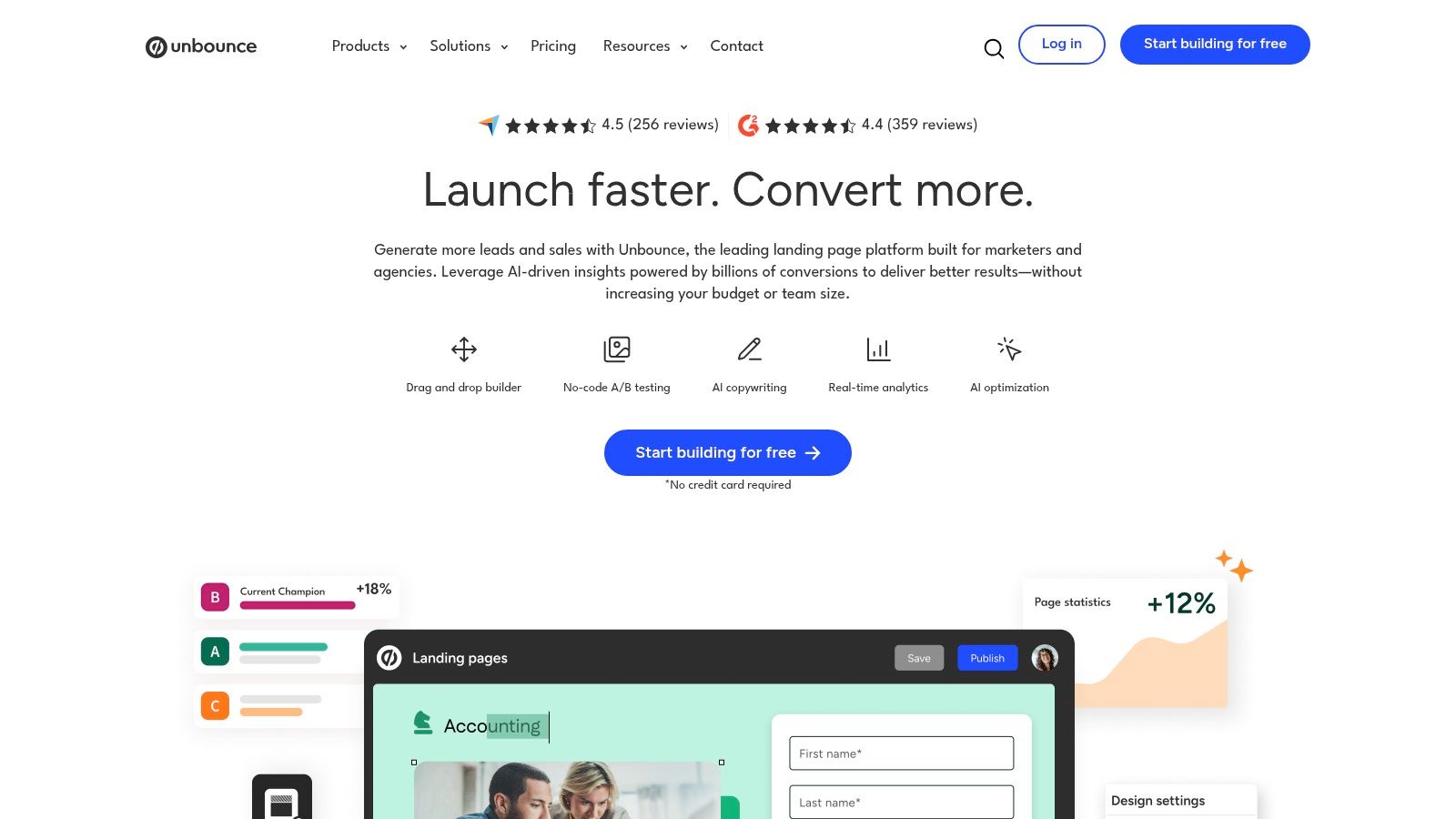
Unbounce is the specialist pick for teams that live inside paid acquisition. If most of your growth comes from search, paid social, or campaign-specific landing pages, Unbounce usually feels sharper than a general-purpose funnel platform.
Its core value is experimentation. Not broad business management. Not CRM depth. Better control over post-click conversion.
Best for paid traffic teams
I'd choose Unbounce when message match and test velocity matter more than all-in-one convenience. Dynamic text replacement, landing page variants, and flexible publishing make it well suited to agencies running multiple ad angles or in-house teams refining campaigns every week.
The downside is obvious. It doesn't try to be your CRM, email suite, or customer database. You'll still need another system for lead nurture and sales follow-up.
That separation is often a benefit for mature teams. Specialists usually outperform bundled tools when each part of the stack already has an owner.
If your media buyer is strong but your post-click experience is weak, Unbounce is often a better investment than a broader funnel platform with weaker testing controls.
Website: Unbounce
5. Instapage
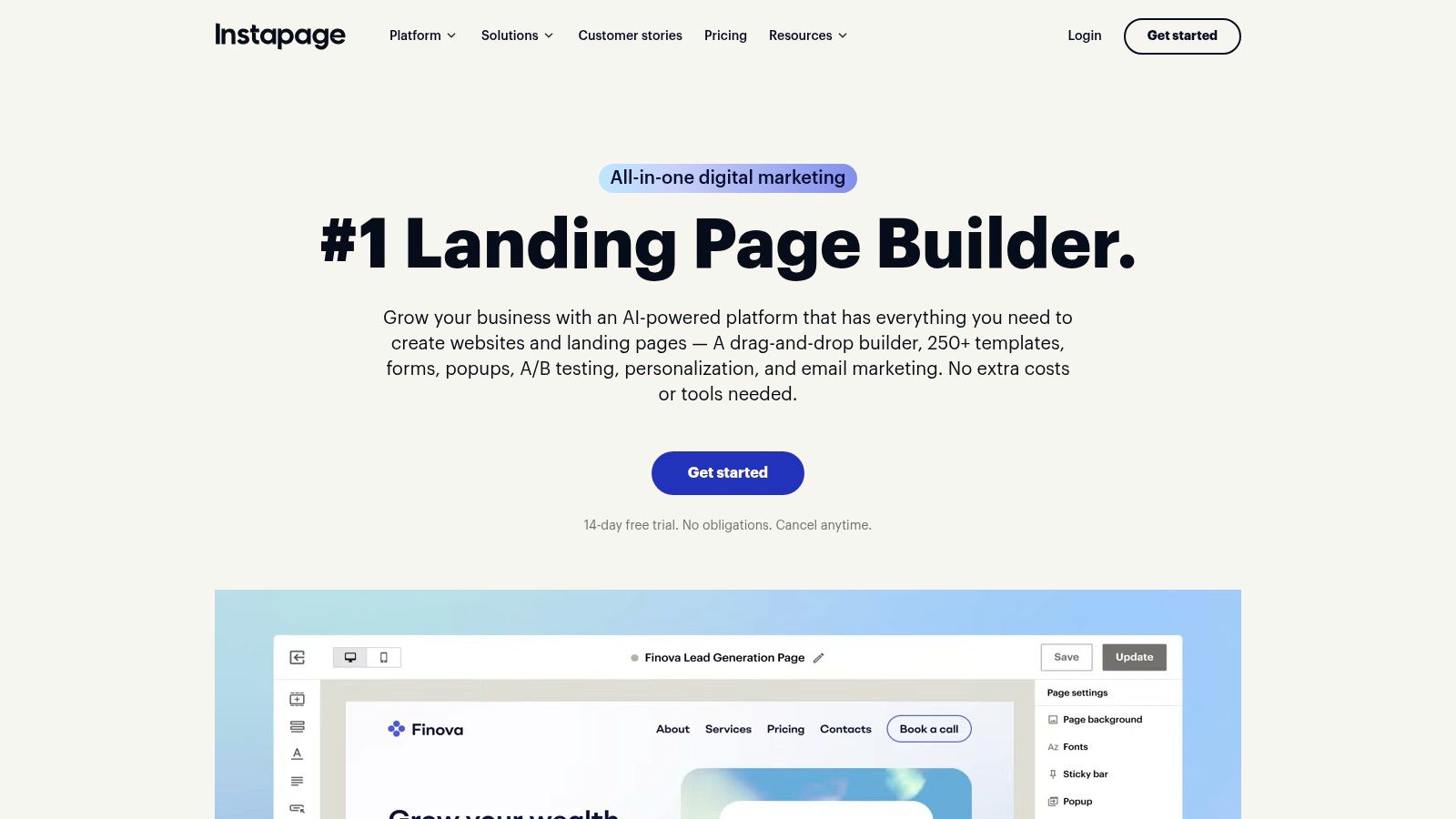
Instapage sits further upmarket than most tools on this list. It's built for teams that already spend heavily on paid traffic and need tighter control over ad-to-page alignment, team collaboration, and experimentation discipline.
That positioning makes it excellent for some buyers and excessive for others.
Best for enterprise post-click optimization
The feature set is aimed at performance operations. AdMap, personalization, heatmaps, and workflow collaboration make sense when multiple stakeholders touch the funnel. Media buyers, designers, CRO specialists, and clients can all work from the same environment without turning every page revision into a project management problem.
The trade-off is that Instapage expects maturity. If the team doesn't have a real testing process, clear traffic segmentation, and someone accountable for conversion improvement, a premium post-click platform gets underused fast.
You also need to be honest about business model fit. Instapage is strongest for brands and agencies that care a great deal about paid landing page performance. It's less compelling for creators who need checkout, membership, and automation all in one place.
- Best fit: large paid media programs, enterprise teams, agency-client review flows.
- Less ideal: creators, early-stage startups, and businesses that need native commerce flows.
- Real strength: better operational control over post-click work than most all-in-one funnel tools.
Website: Instapage
6. Kartra
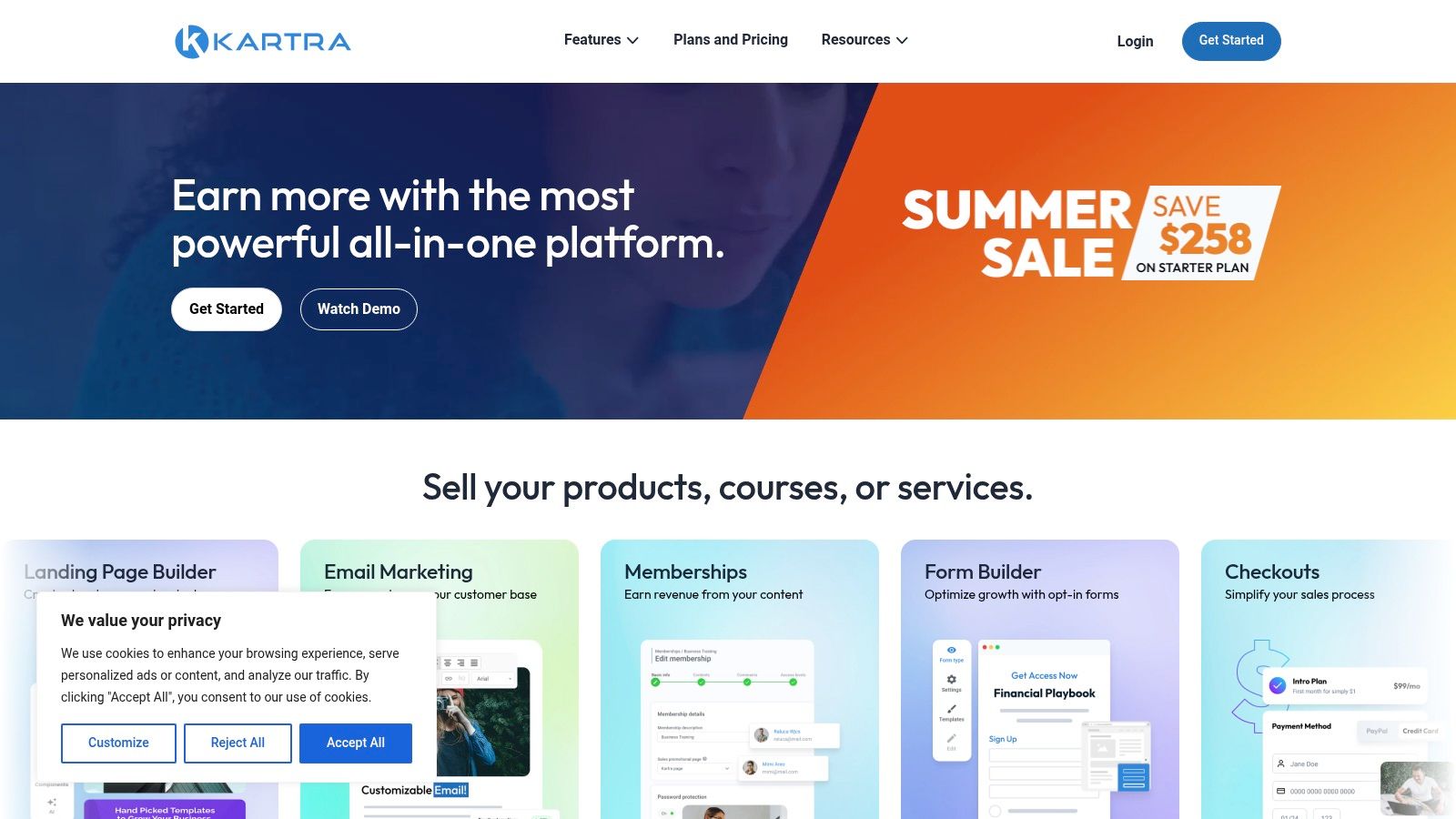
Kartra is what I recommend when someone wants a business-in-a-box setup and is willing to accept a heavier interface to get it. Funnels, email, checkout, memberships, calendars, helpdesk, video, and affiliates all sit under one roof.
For course sellers and info marketers, that can remove a lot of integration friction.
Best for info products and memberships
Kartra shines when the same team owns acquisition, checkout, delivery, and retention. A coaching business, education brand, or membership company can keep most of its customer journey inside one system, which is a real operational advantage.
The catch is that Kartra asks you to buy into its ecosystem. That's efficient when you want consolidation. It's less attractive when you already have best-in-class tools for CRM, support, or analytics and don't want overlap.
A lot of businesses underestimate how much platform sprawl hurts execution. Recent funnel guidance reflects that shift, with all-in-one tools increasingly favored where speed-to-lead and handoff quality matter. In B2B inbound flows, Dashly reports that 55% of leads are lost between inquiry and meeting because of slow manual response times, with a median delay of 5 hours. Kartra's value is less about prettier pages and more about reducing those handoff gaps inside one environment.
Kartra is strongest when your funnel doesn't end at the sale. It continues into onboarding, member access, support, and recurring engagement.
Website: Kartra
7. Systeme.io
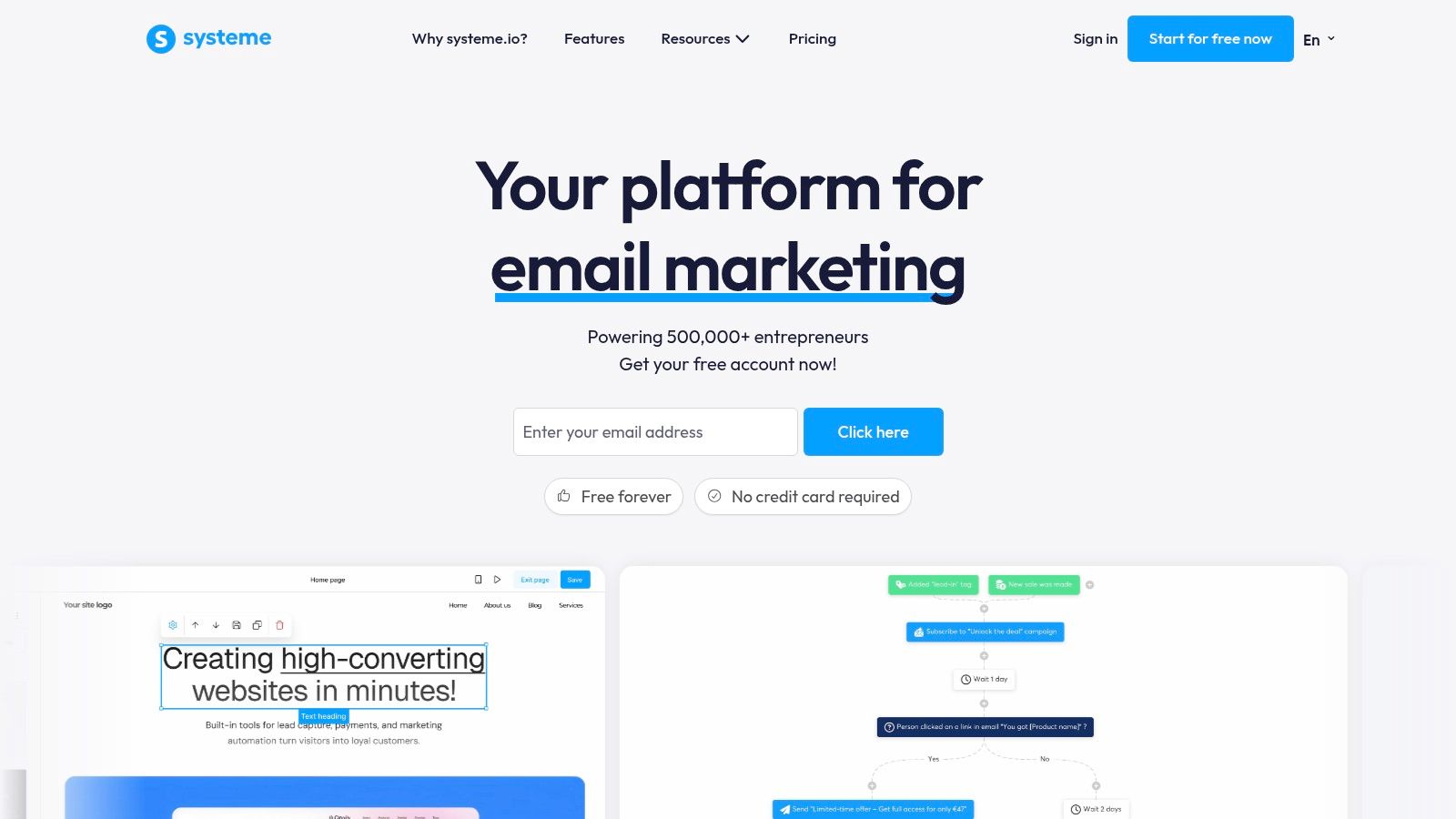
Systeme.io wins on practicality. It doesn't try to be the most polished tool in the category, but it gives creators and small operators a workable all-in-one setup without much friction.
That makes it one of the easiest entries into the best sales funnel builders category for budget-conscious teams.
Best for budget-conscious creators
The appeal is simple. You can build pages, run email campaigns, host courses, manage affiliates, and launch straightforward automations in one place. For early-stage businesses, that often matters more than having the most advanced design controls.
The limitations show up when your brand standards tighten or your funnel logic gets more complex. Compared with premium tools, the design system is simpler, the native integration range is narrower, and the overall experience feels more utilitarian.
Still, I wouldn't dismiss it. Many small businesses don't need a huge stack. They need a platform they'll use consistently.
- Good fit: coaches, creators, solo consultants, early info-product businesses.
- Less ideal: agencies managing many clients, sales-led SaaS teams, brands with strict design requirements.
- What works well: low-overhead execution for basic to intermediate funnels.
Website: Systeme.io
8. GetResponse
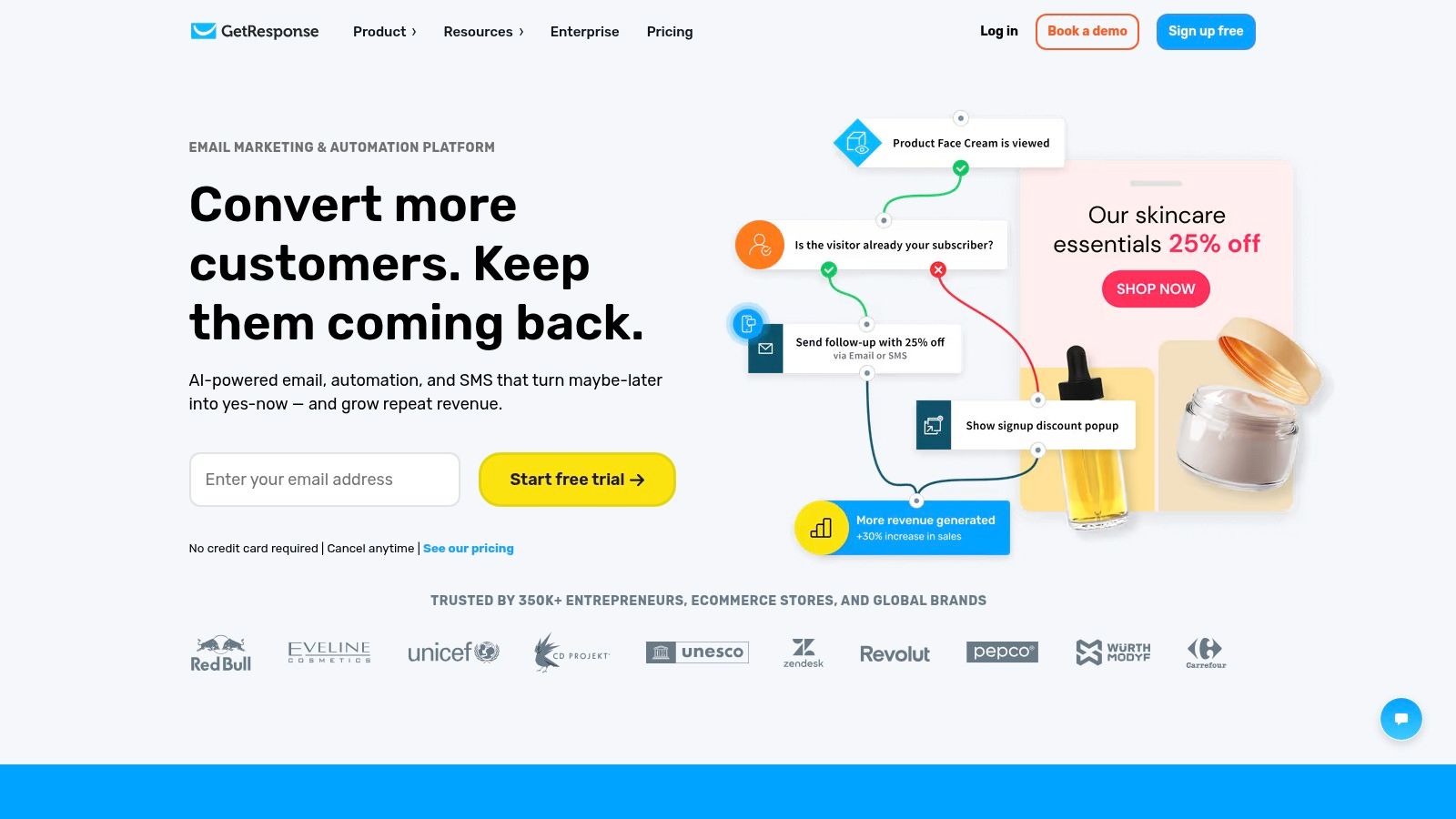
GetResponse makes the most sense when email is the funnel, not just a follow-up channel. Teams that rely on lead magnets, nurture sequences, product education, and webinars usually get more value here than they would from a page-first builder.
That makes it a better strategic fit for SaaS onboarding funnels, education businesses, consultants, and B2B teams running longer consideration cycles. It can also work for e-commerce, but I would only put it high on the list if retention, promotions, and list segmentation matter more than aggressive storefront optimization.
Best for email and webinar-driven funnels
GetResponse is strongest when the conversion path depends on timing and message relevance. Pages, forms, automation, segmentation, and webinars sit in one system, so teams can build a cleaner handoff from opt-in to nurture to demo or purchase. That reduces the usual integration friction, especially for smaller marketing teams that do not want to patch together separate tools for capture and follow-up.
The trade-off is clear. GetResponse is not the strongest option on this list for agencies that need serious white-label delivery, and it is not the first platform I would choose for brands obsessed with landing page experimentation. If your funnel strategy depends on heavy design customization, advanced client management, or conversational flows through channels like WhatsApp, other tools fit better.
Where it does well is operational control. Marketers can launch a campaign, segment engagement, trigger follow-up, and run webinars without switching platforms all day. Teams that also care about attribution and reporting hygiene should pair that workflow with disciplined analytics, including monitoring HubSpot analytics if HubSpot sits elsewhere in the stack.
GetResponse is a strong choice for SaaS and education funnels built around nurture. It is less convincing for agency resale models or e-commerce teams that need deeper channel-specific funnel customization.
Website: GetResponse
9. HubSpot Marketing Hub part of HubSpot Customer Platform
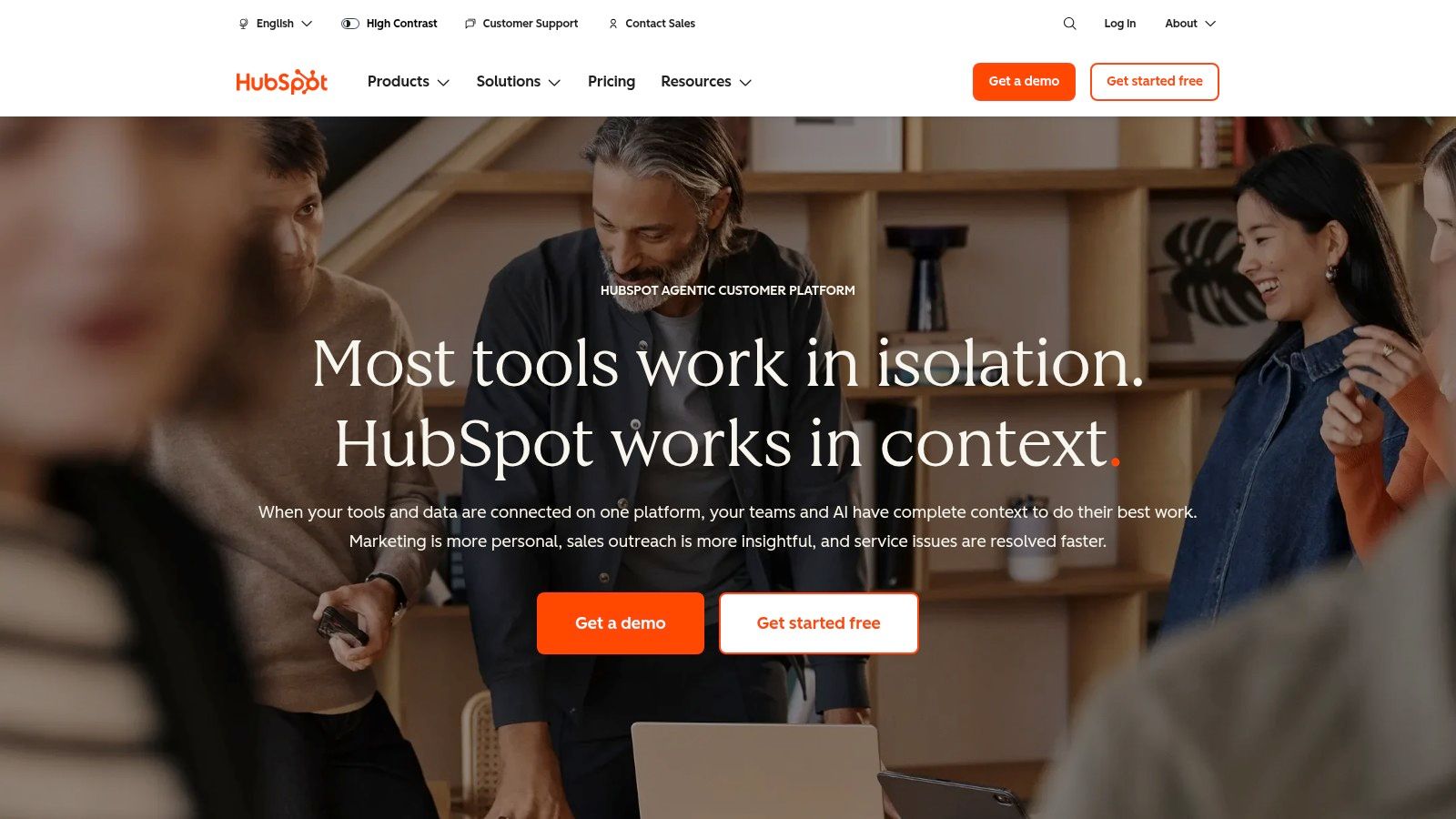
HubSpot makes sense when the funnel is only one part of the job. If marketing, sales, and service all need to work from the same customer record, HubSpot has a better strategic fit than tools built mainly for standalone pages and checkouts.
Best for CRM-driven B2B funnels
This is the platform I put in the SaaS and B2B growth bucket, not the agency or e-commerce bucket. The reason is simple. HubSpot ties landing pages, forms, email automation, lead scoring, attribution, and deal stages back to the CRM, so teams can see which campaigns create pipeline, not just leads.
That matters more as buying cycles get longer and handoffs get messier. A demand gen team can pass qualified leads to sales with context attached, then measure what happened after the form fill. For revenue teams that care about lifecycle reporting and pipeline accountability, that operating model is often more valuable than having the flashiest funnel builder.
There are real trade-offs. HubSpot can get expensive fast as contacts, teams, and reporting requirements grow. It also asks for more process discipline than lighter tools on this list. If an agency needs strong white-label delivery, or if a brand wants conversational funnels through WhatsApp and other messaging-first flows, I would look elsewhere first.
Where HubSpot wins is control across the full customer journey. The platform is less about spinning up quick campaign funnels and more about building a connected system that sales can use after the lead comes in.
For teams already invested in the ecosystem, it's worth monitoring HubSpot analytics carefully so attribution and event data stay trustworthy across campaigns.
Website: HubSpot
10. Landingi
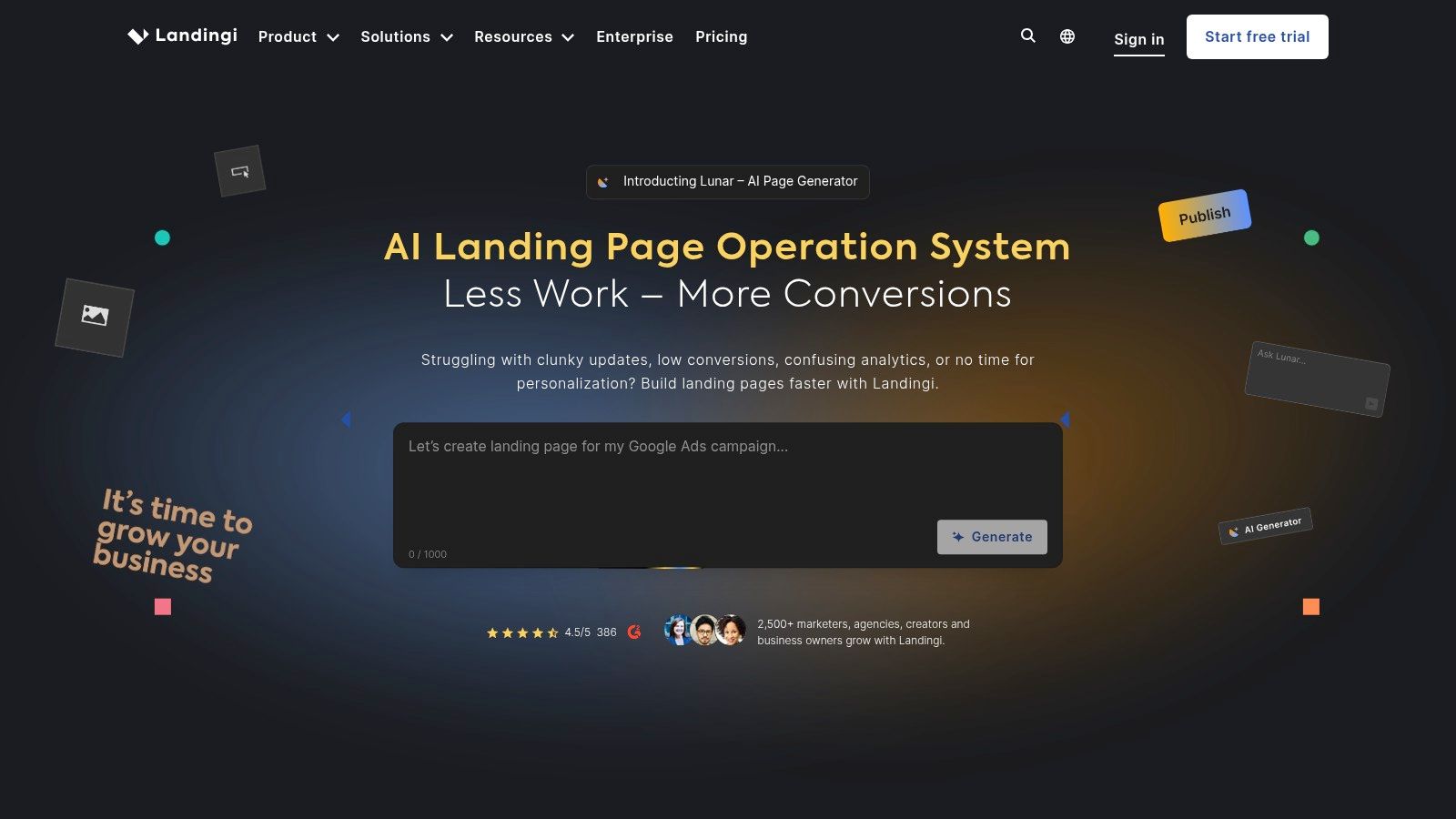
Landingi is a focused landing page tool that stretches into simple funnel use nicely. It's a sensible middle ground for marketers who want more than a basic page builder, but don't want the weight of a full marketing suite.
That alone makes it easy to overlook. It isn't the loudest brand in the category, but it's practical.
Best for fast landing page production
What Landingi does well is fast execution. Templates, AI assistance, testing, personalization blocks, and page-to-page lead flow support teams that need to produce and iterate quickly. If you already have a CRM and automation layer elsewhere, that can be exactly the right scope.
It's less suited to businesses looking for a command center. There's no pretense here that Landingi is your CRM, support desk, or end-to-end revenue platform.
That narrower focus can be an advantage in a growing market. One projection estimates the sales funnel builder software market could grow from USD 3.06 billion to USD 10 billion by 2035, with a 12.6% CAGR during 2026 to 2035. As the category expands, there's still room for specialist tools like Landingi that do one part of the job cleanly.
Website: Landingi
Top 10 Sales Funnel Builders, Feature & Pricing Comparison
| Platform | Core focus & USP (✨🏆) | WhatsApp & white‑label fit | UX & conversion quality (★) | Pricing / Value (💰) | Target audience (👥) |
|---|---|---|---|---|---|
| ClickFunnels 2.0 | Funnel-first templates, checkout & upsells ✨🏆 | WhatsApp via Zapier/webhooks; no native white‑label | ★★★★☆ | 💰 Premium | 👥 Info‑product sellers, funnel marketers |
| HighLevel (GoHighLevel) | Agency CRM + SaaS white‑label platform ✨🏆 | Native/partner WhatsApp options; SaaS resale supported | ★★★★☆ | 💰 Flat‑fee, strong margins | 👥 Agencies & resellers |
| Leadpages | Fast landing pages + AI templates ✨ | Integrations/webhooks; no native WhatsApp | ★★★★☆ | 💰 Mid / affordable | 👥 Small teams, lean marketers |
| Unbounce | CRO & experimentation (Smart Traffic) 🏆 | Third‑party integrations; no native WhatsApp | ★★★★☆ | 💰 Higher for CRO features | 👥 PPC agencies, conversion teams |
| Instapage | Post‑click optimization & AdMap 🏆 | Partner integrations; not native WhatsApp | ★★★★★ | 💰 Premium / enterprise | 👥 Large marketing teams, enterprises |
| Kartra | All‑in‑one business suite (memberships, checkout) ✨ | Limited native WhatsApp; API/webhooks possible | ★★★★☆ | 💰 Mid–high (bundle value) | 👥 Course creators, info marketers |
| Systeme.io | Budget all‑in‑one funnels & courses 💰✨ | Limited integrations; no native WhatsApp | ★★★☆☆ | 💰 Low‑cost + free tier | 👥 Creators, bootstrapped agencies |
| GetResponse | Email automation + built‑in webinars ✨ | SMS & integrations; no official WhatsApp | ★★★★☆ | 💰 Scales with list size | 👥 Email‑centric creators, webinar hosts |
| HubSpot Marketing Hub | CRM‑aligned marketing & attribution 🏆 | Marketplace/partner WhatsApp; white‑label complex | ★★★★★ | 💰 Expensive at scale | 👥 Mid→enterprise revenue teams |
| Landingi | Landing pages + server‑side A/B testing ✨ | Integrations (Zapier/webhooks); no native WhatsApp | ★★★★☆ | 💰 Reasonable with add‑ons | 👥 Marketers needing fast page launches |
How to Choose Your Winner & Final Thoughts
The best sales funnel builder is rarely the one with the longest feature list. It is the one that fits how your team sells, follows up, and reports revenue.
Start with the business model, because that narrows the field fast. Agencies usually need client sub-accounts, white-label control, rebilling, and one place to manage conversations across accounts. That makes HighLevel the strongest fit for agency operations. SaaS teams usually care more about CRM handoff, attribution, lead routing, and sales visibility, which pushes HubSpot higher if budget allows. E-commerce brands and paid acquisition teams often get more value from Unbounce, Instapage, or Landingi because speed, testing, and post-click optimization matter more than an all-in-one stack.
The next filter is handoff complexity.
A funnel does not stop at the form fill. It continues through email, CRM stages, sales follow-up, retargeting, and, for many teams, messaging. If a platform builds attractive pages but creates manual work after the lead comes in, the cost manifests in slower response times, broken attribution, and leads that never get worked properly.
That is why modern integration needs deserve more weight in the final decision. White-label capability matters if you sell funnel services to clients. Native or practical WhatsApp workflows matter if leads ask questions, book calls, or close inside chat. A tool can look strong in a template gallery and still be the wrong choice if your actual funnel runs through conversations instead of forms.
For agencies, that trade-off is especially clear. HighLevel is the better operational choice if you need sub-accounts, client reporting, and service packaging. ClickFunnels 2.0 can still work well for businesses selling their own offers, but it is less natural for agency delivery. For SaaS, HubSpot usually wins on downstream visibility, while Unbounce or Instapage can outperform broader platforms if the main job is improving paid traffic conversion. For budget-conscious creators or smaller businesses, Systeme.io gives a lot for the price, but teams with heavier integration needs may outgrow it faster.
The practical way to choose is simple. Shortlist two tools based on use case, not brand recognition. Build one live funnel. Connect the CRM, email, calendar, and messaging steps you use. Then look for friction. Where do leads get stuck, where does reporting break, and where does your team start doing manual work?
That test usually gives a better answer than another ten comparison tables.
If your agency or SaaS team needs more than pages and forms, Double My Leads fills the gap that most funnel platforms still leave open. It lets you launch a white-labeled WhatsApp offering in minutes, connect numbers by QR code, manage unlimited real-time inbox conversations, run broadcasts, sync CRM participants, and resell the whole setup under your own brand with predictable monthly margins. For HighLevel agencies and messaging-first operators, it is one of the fastest ways to turn conversational funnels into a real service line.
Produced via Outrank


