
If you run a GoHighLevel agency, you probably already have the core machine working. Funnels are live. Automations fire. Pipelines move. Calendars book.
Then WhatsApp enters the picture and the whole system gets awkward.
That’s where most “go high level alternative” articles miss the point. Agencies usually don’t need to rip out GHL just because one channel is painful. They need a way to fix the part that hurts margins, slows response time, and creates support chaos. In practice, that part is often WhatsApp.
The question isn’t “what replaces all of GoHighLevel?” It’s “what replaces the weakest part of the stack without breaking everything else?”
Table of Contents
- The GHL Agency Dilemma with WhatsApp
- The Go High Level Alternative Market in 2026
- Comparing WhatsApp Solutions for Go High Level
- Deep Dive Why Double My Leads Wins for Agencies
- Case Study A Home Services Agency’s 23 Percent Close Rate Rise
- Migrating to a WhatsApp First Workflow in Minutes
- Is Double My Leads the Right GHL Alternative for You
The GHL Agency Dilemma with WhatsApp
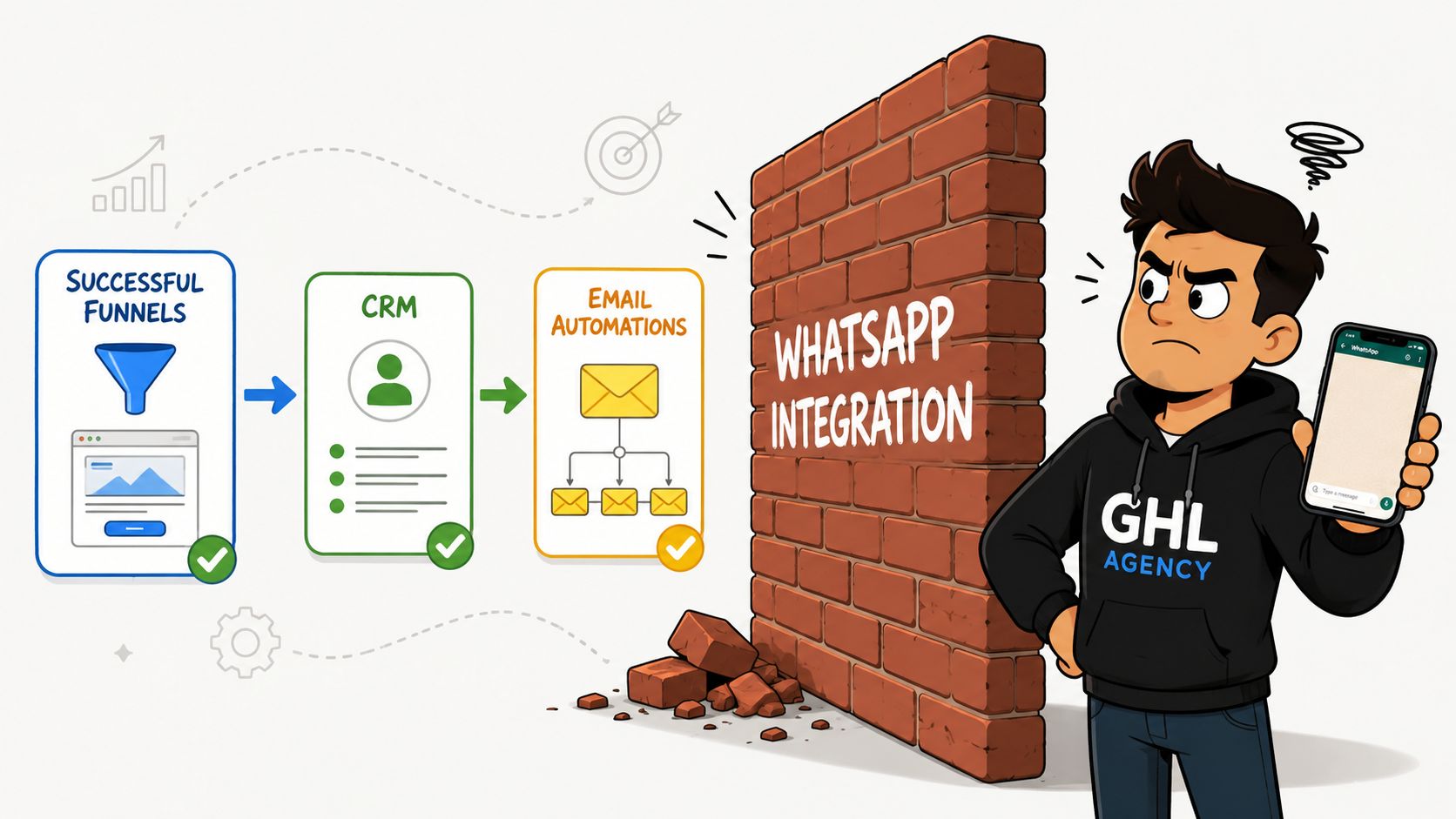
A lot of GHL agencies hit the same ceiling. Email is manageable. SMS is manageable. Funnels and CRM are manageable. WhatsApp is where the clean demo stack turns into a daily operations problem.
What the pain looks like in real agency ops
It usually starts small. One client says their leads reply faster on WhatsApp than email. Another wants a shared inbox. Another wants automations tied to conversations. Soon the team is juggling copied messages, forwarded screenshots, disconnected chat histories, and VAs acting as human middleware.
That workflow breaks in three places:
- Speed drops first: reps switch tabs, look up contacts manually, and lose context before they answer.
- History gets fragmented: the conversation lives partly in WhatsApp, partly in notes, and partly in someone’s memory.
- Accountability disappears: nobody can see who replied, who missed a message, or which leads went cold.
Agencies don’t usually lose WhatsApp deals because the offer is weak. They lose them because the lead replied in the one channel the stack never handled cleanly.
This isn’t a niche edge case
This is a system-wide issue because GHL itself became mainstream very fast. According to TechnologyChecker’s HighLevel adoption data, GoHighLevel went from 6 active domains in early 2020 to 72,458 in April 2025, a more than 12,000x increase. When a platform grows that fast, every gap inside it gets multiplied across a very large agency base.
For agencies, that matters more than the headline growth number. It means a huge share of the market is running nearly identical stacks and hitting the same operational snag at the same point. They can build the funnel, automate the nurture, and close the loop in CRM. They still don’t have a smooth answer for WhatsApp.
Where the real cost shows up
The cost isn’t only financial. It lands in day-to-day margin.
A messy WhatsApp workflow creates hidden labor. Someone has to reconcile messages. Someone has to move context from one tool into another. Someone has to explain to a client why the team missed a hot lead that did reply.
That’s why a smart go high level alternative discussion has to get narrower, not broader. The issue isn’t whether GHL can do a lot. It can. The issue is whether your agency can run WhatsApp as a first-class channel without duct tape.
The Go High Level Alternative Market in 2026
The market for a go high level alternative has changed. Buyers aren’t only comparing all-in-one platforms anymore. They’re choosing narrower tools for specific jobs and keeping the rest of the stack intact.
Buyers are separating jobs by economics
Published comparisons now reflect a segmented market instead of one giant “replace everything” category. WhatConverts’ roundup of GoHighLevel alternatives shows tools being chosen by role and price point, with lead tracking starting at $30/month, CRM options starting from free, and funnel tools starting at $129/year. The same comparison pattern also appears across other buyer guides cited in that roundup.
That matters because agencies have become more disciplined. They’re not asking whether one dashboard can technically include ten functions. They’re asking whether each function earns its place in the stack.
A few examples make that clear:
| Category | Example from comparison coverage | Pricing benchmark |
|---|---|---|
| Lead tracking and attribution | WhatConverts | $30/month |
| CRM | Bitrix24 free tier noted in market comparisons | From free |
| Funnels | OptimizePress in comparison coverage | $129/year |
The composable stack is replacing the monolith
For a lot of agencies, the practical answer isn’t to abandon GHL. It’s to keep GHL as the operating core and plug in specialists where GHL is weakest.
That composable model is healthier for agencies because it maps to how teams work:
- CRM stays in the system everyone already knows
- Funnels can move to a faster or simpler builder when needed
- Attribution can sit in a dedicated platform
- Messaging can be handled by a channel-specific tool
If you’re trying to sort out economics across channels, attribution, and conversion paths, this guide for B2B marketing ROI is useful because it frames tool choice around measurable return instead of feature checklists.
Why WhatsApp fits the specialist model
WhatsApp is exactly the kind of function that benefits from specialization. It has onboarding friction, reliability concerns, media handling requirements, and team workflow implications that don’t behave like email or basic SMS.
Practical rule: when one channel creates more operational work than revenue confidence, don’t replace your whole stack. Replace the weak channel layer.
That’s why the strongest go high level alternative angle today isn’t “find a new everything platform.” It’s “find the specialist that removes the most expensive friction from your current stack.”
Comparing WhatsApp Solutions for Go High Level
Most review pages still talk about funnels, CRM, and email first. That skips the operational question agencies wrestle with. How do you run WhatsApp inside a GHL-centered workflow without adding setup drag, messaging friction, and ugly channel costs?
That gap matters because Perspective’s market analysis notes that Meta reported in 2025 that more than 100 million businesses use WhatsApp. For agencies, that makes WhatsApp a core response and service channel, not a side experiment.
Go High Level WhatsApp Integration Options Compared
| Metric | GHL Manual Method | Official WhatsApp API | Double My Leads |
|---|---|---|---|
| Setup style | Manual workarounds, forwarding, copy-paste, fragmented routing | Formal provider setup and Meta-related process overhead | GHL Marketplace install, workspace creation, QR-based connection |
| Time to first usable inbox | Usually slow because teams assemble the workflow themselves | Often slower because setup has more dependencies | Fast in practice because the connection flow is short |
| Meta friction | Low at first, but no clean native operating model | High, because agencies often get pushed into Meta approval and API process complexity | Lower for QR-connected workflows because agencies can avoid that full approval path |
| Monthly cost model | Hidden labor cost plus scattered tools | Often usage-sensitive and harder to forecast | Flat workspace pricing is easier to resell |
| Message history inside ops workflow | Usually fragmented | Can be structured, but implementation varies by provider | Designed to appear inside the working conversation flow |
| Rich media handling | Often clunky | Possible, but depends on provider setup | Built for text, images, video, docs, and voice notes |
| Margin impact | Labor-heavy | Transport and setup overhead can squeeze margin | Predictable pricing helps preserve margin |
| Agency usability | Hard to standardize across sub-accounts | Harder to roll out at scale if each number needs process work | Easier to repeat across client locations |
Option one works until volume hits
The manual method is what a lot of agencies default to first because it feels cheap. It isn’t. It just hides the cost in people and response lag.
When the process depends on screenshots, browser tabs, and someone remembering to mirror a conversation into GHL, the team can’t scale it cleanly. Every new client location adds more exceptions. Every missed handoff creates a service issue.
Option two is official but operationally heavy
The official API route solves some structure problems, but it introduces its own burden. Agencies often end up dealing with verification steps, provider setup, message policy concerns, and channel economics that are harder to predict.
That doesn’t make it wrong. It makes it a specific choice. If your agency needs the official route for a certain client profile, you may still take it. But for many agencies, the biggest problem isn’t access to WhatsApp. It’s how long it takes to become usable, who has to maintain it, and what happens to margin after transport and support costs stack up.
Option three focuses on the workflow agencies actually need
A specialist layer changes the evaluation criteria. The main win isn’t “more features.” The win is a faster path from a client asking for WhatsApp to your team replying from the same place they already work.
The strongest solutions tend to share a few traits:
- They connect quickly
- They reduce Meta-related setup friction
- They keep message history where the team already operates
- They support media, not just plain text
- They make pricing predictable enough to resell
That’s why a go high level alternative for WhatsApp should be judged less like a CRM and more like infrastructure. If it’s unreliable, expensive to support, or painful to onboard, it will subtly eat margin no matter how good the demo looks.
Deep Dive Why Double My Leads Wins for Agencies
A client asks for WhatsApp on Monday. By Friday, the agency is still stuck in setup, the account manager is chasing screenshots, and the sales team is back to forwarding messages by hand. That is the moment this category stops being a feature comparison and becomes an operations problem.
What changed my view was not the inbox design. It was how fast a working WhatsApp number could start sending and receiving inside GHL, without turning onboarding into a mini implementation project.
The part agencies feel on day one
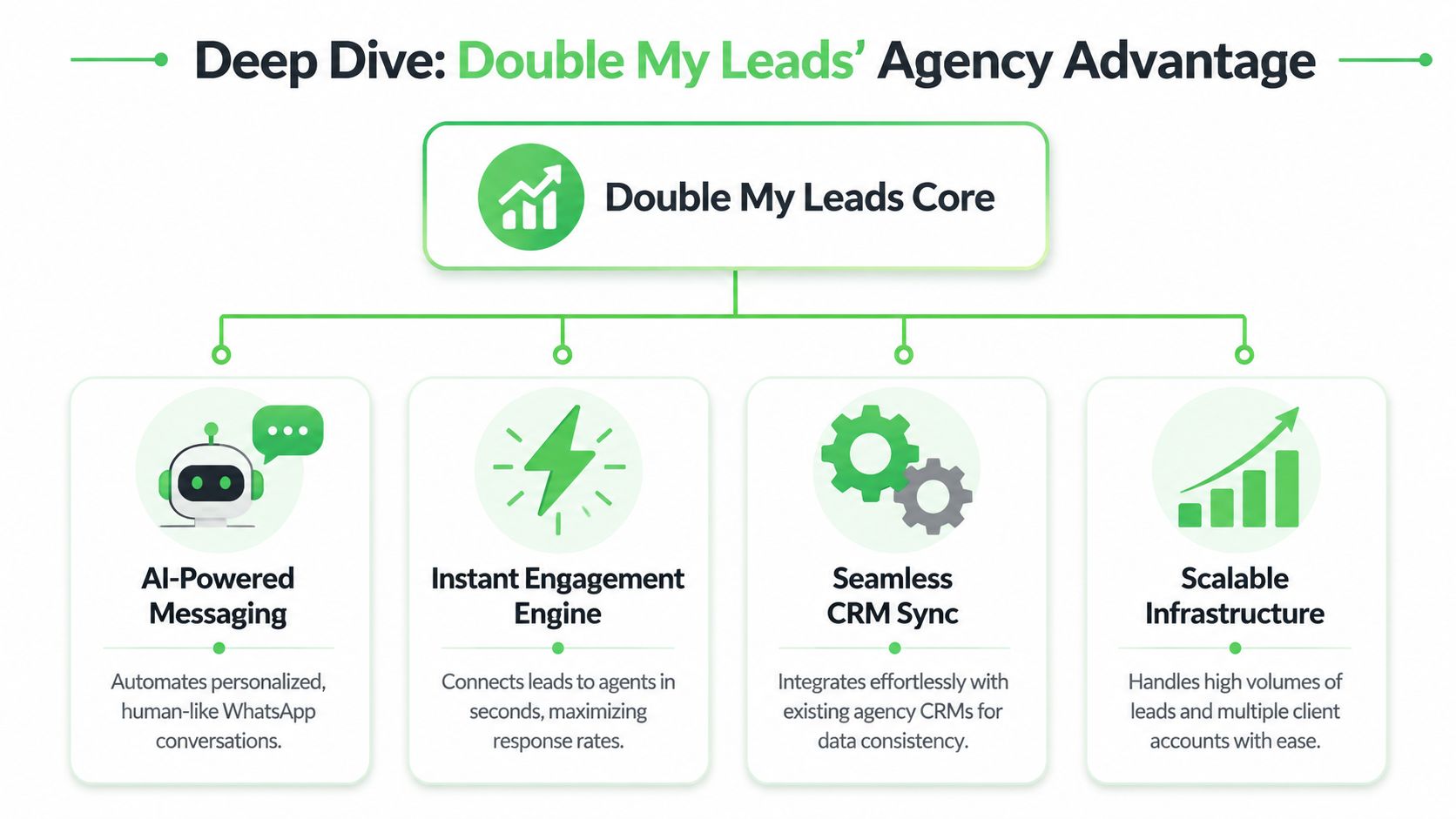
The first advantage is the QR-code sync flow. Install it from the GHL Marketplace, connect or create the workspace, scan the QR from an existing WhatsApp number, and the conversation starts showing up where the team is already working.
For agencies, that changes the economics of delivery. Setup hours drop. Client handholding drops. The chance of a stalled rollout drops.
That matters more than another feature tab.
Agencies do not need a new all-in-one every time GHL has a weak spot. They need the missing channel to stop draining time from account managers, onboarding staff, and support.
Why setup speed turns into margin
Short setup is not just convenient. It protects margins.
When a WhatsApp workflow is repeatable, agencies can deploy the same process across sub-accounts instead of rebuilding the channel every time a client wants access. That means fewer exceptions, less retraining, and fewer support tickets tied to one-off configurations.
In practice, it changes three operating metrics:
-
Launch time
Faster rollout cuts unpaid implementation work and gets clients to first value sooner. -
Adoption inside the team
Sales reps and support staff stay in the GHL conversation flow they already know, so usage sticks. -
Packaging and resale
A flat workspace fee is easier to mark up than a stack of variable channel costs, provider fees, and troubleshooting labor.
I have seen agencies lose money on WhatsApp before they ever billed for it. The problem was not demand. The problem was delivery overhead.
The stronger advantage shows up after rollout
A lot of WhatsApp tools look fine during a demo. Agencies find out what they bought when sessions disconnect, media stops syncing, or contact records start getting messy across multiple locations.
That is where Double My Leads stands out. The platform addresses several failure points that usually surface only after real client volume hits:
- Dynamic WhatsApp Web version fetching, which helps prevent widespread session issues tied to expired protocol versions
- Proactive pre-key refresh, which reduces message integrity and decryption problems
- LID-to-phone resolution, so contact records stay usable inside the CRM
- Automatic recovery logic, which helps stabilize sessions across multiple workspaces
Those are not flashy selling points. They are the details that keep an agency from burning support hours on reconnects and message cleanup.
If your service includes appointment booking, follow-up, or inbound sales handling, channel stability is not a technical footnote. It affects response time, reporting accuracy, and client trust.
It wins because it solves the right problem
This is why I do not evaluate a go high level alternative as a full GHL replacement by default. For many agencies, replacing the CRM is the expensive move. Fixing the channel that keeps breaking workflows is the better one.
Double My Leads fits that model. It gives agencies a WhatsApp layer built for QR-based number connection, white-label workspaces, rich-media inboxes, and predictable monthly pricing while keeping the rest of the workflow inside GHL.
That narrower scope is a strength. It solves the profitable gap instead of forcing a larger platform change.
Teams using lead generation chatbots already understand this pattern. The best tool is often the one that removes a specific bottleneck fast enough to change response speed, close rates, and support load without forcing the agency to rebuild its stack.
Case Study A Home Services Agency’s 23 Percent Close Rate Rise
One home-services agency gives the clearest before-and-after example I’ve seen because the problem wasn’t abstract. They had 14 GHL sub-accounts across Mexico, Colombia, and Spain and were already feeling the drag of a messy messaging stack.
Their old workflow mixed Twilio for SMS, manual WhatsApp forwarding by VAs, and occasional official API numbers for higher-volume locations. It worked just enough to stay in place, which is often the worst kind of setup. Nobody wants to rebuild it, but nobody likes operating it either.
Before the switch
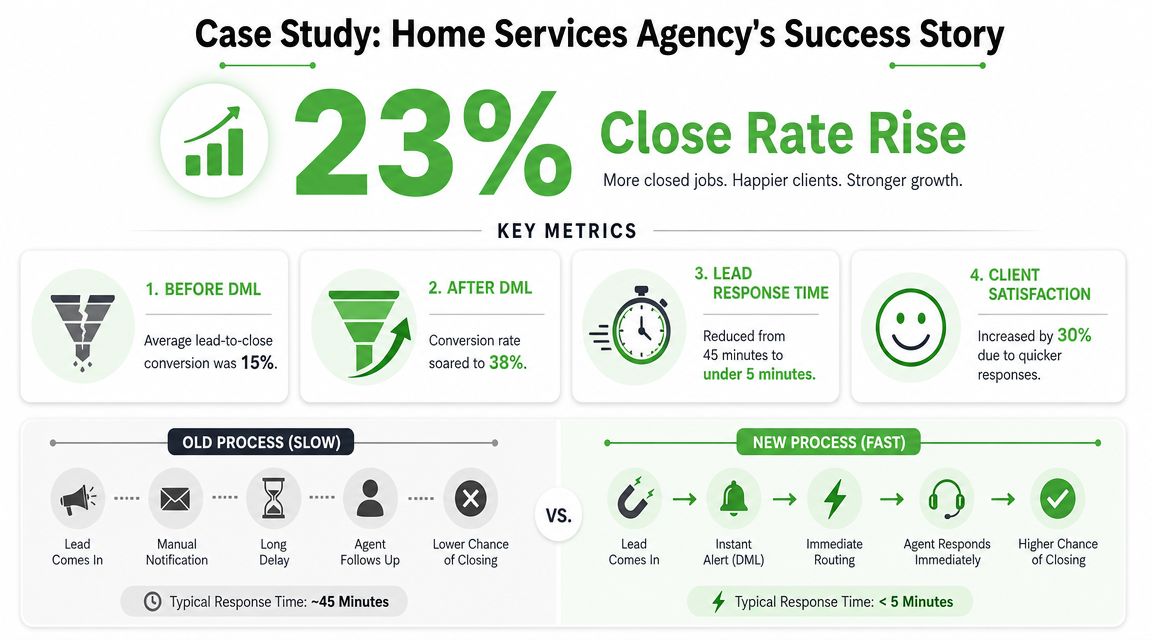
The agency was spending roughly $380 to $420 per month on that mixed channel stack. On top of cost, they dealt with flagged numbers, lost conversation history, and a team process that depended on manual relays.
The core damage stemmed from latency. Leads replied on WhatsApp, but the team wasn’t handling those conversations in the same environment where they were already managing the pipeline.
Before: average first-response time on WhatsApp leads sat around 45 minutes.
After the switch
After moving to the new setup, they ran all 14 locations on the WhatsApp stack and used the platform for a unified workspace experience. Monthly WhatsApp transport cost dropped to under $90 total, with additional SMS Android channel usage on a few locations.
More important than the savings, the workflow changed. Messages lived natively inside GHL conversations with full history and auto-created contacts, so the team stopped copy-pasting context between tools.
After: average first-response time fell to under 5 minutes during business hours.
WhatsApp-sourced lead close rate rose 23% in the first 60 days.
Net result: about $3,600 to $4,000 in annual savings on channels alone, plus lower VA hours.
Why those numbers moved
Nothing about this outcome is mysterious. Warm leads answered in the channel they already preferred. Reps responded faster because the chat lived inside the working system. Managers got cleaner history, which made follow-up and handoff less fragile.
If you’re also tightening the top of funnel, especially with conversational intake, these practical examples of lead generation chatbots are worth reviewing because they pair well with a WhatsApp-first response model.
The part I’d focus on as an agency owner isn’t only the 23% close rate rise. It’s the combination of lower transport cost, faster response, and fewer manual touches. That’s what makes the improvement durable instead of lucky.
Migrating to a WhatsApp First Workflow in Minutes
Most agencies delay this change because they assume migration will be another mini implementation project. In practice, the shortest path is the one that keeps GHL in place and changes only the messaging layer.
The flow that removes the usual setup drag
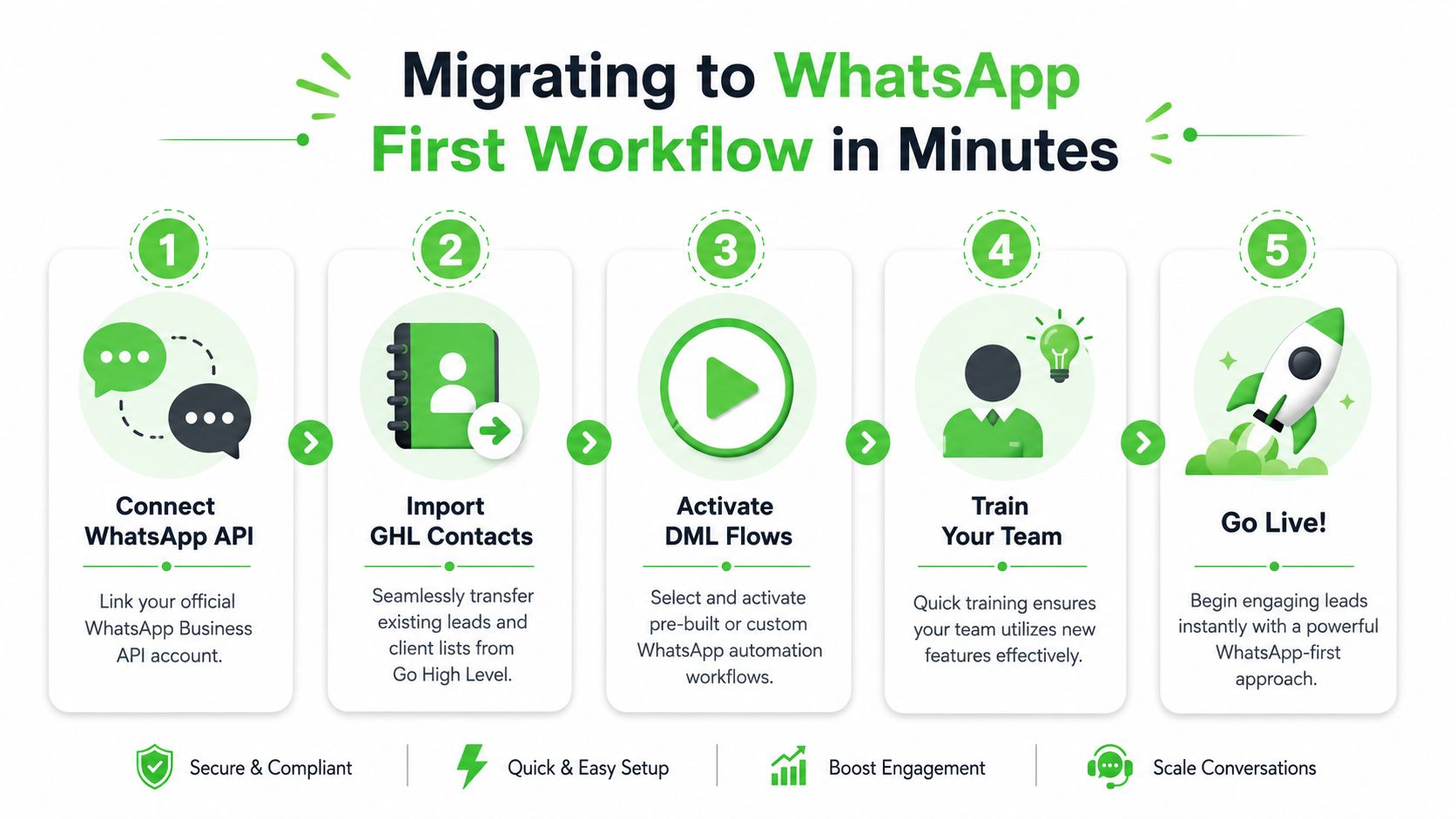
The onboarding sequence is simple because it starts from inside GHL instead of outside it.
-
Install the app from the GHL Marketplace
Start in the sub-account or agency view. The app install handles the initial connection point. -
Create or link the workspace
The provisioning flow connects the account and handles the authentication handshake without forcing the team into a separate technical setup project. -
Scan the QR code with an existing WhatsApp number
This is the moment most agencies care about. You’re not waiting on a long process just to test a live number. -
Watch conversations land in the familiar UI
Inbound messages appear inside the GHL conversation flow and the contact can be created automatically. -
Reply from the same place your team already works
That’s what reduces adoption friction. The team isn’t learning a whole new operating environment just to answer one channel.
What makes rollout manageable for agencies
The old setup ritual usually looked like this:
- Find a provider
- Configure webhooks
- Map fields
- Sort out approval steps
- Train the client on a disconnected inbox
That’s exactly the sequence agencies want to eliminate.
A better rollout looks more like operational templating. One install path. One connection method. One training motion. Then repeat it across locations.
Agencies don’t need “migration projects” for messaging. They need a repeatable install pattern their ops team can run without escalation.
Where teams save the most time
The biggest time saver isn’t the QR itself. It’s the fact that the install, authentication, and first device connection happen in one continuous flow.
That cuts down decision friction. It also makes onboarding easier to track internally because you can see who has connected a workspace and who still needs a push to complete setup. For agencies onboarding multiple client locations, that’s the difference between a clean rollout board and a pile of half-finished setups.
Is Double My Leads the Right GHL Alternative for You
A lot of agencies ask the wrong question here. They compare GoHighLevel against full-stack replacements, then miss the issue that hurts delivery, speed to lead, and client retention.
If GHL already runs your funnels, CRM, automations, and reporting, replacing the whole platform usually creates more operational work than it removes. The smarter decision is narrower. Fix the channel that creates the most manual follow-up, the most staff work, and the most friction in client onboarding.
For agencies, that channel is often WhatsApp.
It fits best when these conditions are true
- Your leads answer on WhatsApp before they answer email or SMS
- Your sales or support team is still copying conversations between tools
- You want to keep GHL as the system of record instead of splitting message history across platforms
- You need pricing that stays predictable as you roll out to more client accounts
- You want a client-friendly setup process your ops team can repeat without turning each onboarding into a custom project
That last point matters more than many agency owners admit. A tool can look fine in a feature table and still wreck margins if every new client setup eats coordinator time, tech time, and training time.
It’s probably not the right move when these are true
Agencies with little to no WhatsApp volume will not feel much benefit. Teams planning a full exit from GHL have a different buying decision to make. Some clients also require an official Meta path for compliance or procurement reasons, even if it adds more setup work.
For everyone else, the practical play is simple. Keep the platform your team already knows. Add the WhatsApp layer that removes the bottleneck.
If WhatsApp is the part of your stack creating slow follow-up, extra admin work, and avoidable labor cost, test Double My Leads on a single number first. Run real conversations through your current GHL workflow. Measure response speed, handoff quality, and how much time your team stops wasting once WhatsApp lives in the same place as the rest of the customer record.


